Indie Books. Real Authors. Real Readers.

Discover books, follow authors, and join a community that reads.

Home › MONSERRAT DIAZ
MONSERRAT DIAZ

MONSERRAT DIAZ

Monserrat Díaz Ortega is a Mexican independent researcher, author, and International Relations professional whose work explores the connections between history, political power, cultural identity, and artistic heritage.

She holds a Bachelor's degree in International Relations from the National Autonomous University of Mexico (UNAM), where she graduated with honors, and completed postgraduate studies in Social Development.

Her academic and professional background includes institutional research, international cooperation, and experience working with Mexican public institutions and academic organizations. Her travels and experiences in the Middle East have also shaped her interest in the historical relationships between Eastern and Western societies.

She is the author of Our Secret Geometry: A Fascinating Journey through Ibero-American Mudéjar Art, a richly illustrated exploration of the architectural traditions that connected the Iberian Peninsula with the Americas. Available in Spanish, English, French, Portuguese, Italian, and Catalan, the book examines how artistic knowledge crossed religious, political, and geographical boundaries.

Her research interests extend to geopolitics, international security, cultural heritage, and the historical transformation of societies.

Alongside her written publications, she produces historical and geopolitical documentaries, combining rigorous research with audiovisual storytelling to make complex subjects accessible to international audiences.

She has also published a five-part series of articles on Indie Reading Community examining Mudéjar architecture, cultural exchange in medieval Spain, and the transatlantic transmission of artistic traditions.

Through her books, articles, and documentaries, Monserrat seeks to uncover overlooked historical connections and encourage readers to question conventional interpretations of the past.

Her guiding principle is that understanding the connections between civilizations can transform the way we interpret history—and the contemporary world.

No books listed yet.

Inside the Mind of Monserrat Díaz Ortega: Uncovering the Hidden Connections Between East and West

MONSERRAT DIAZ
  • What inspired you to start writing?
    My interest in writing grew out of my passion for history, international relations, and the cultural connections that often remain hidden beneath conventional historical narratives. Throughout my academic and professional journey, I have been particularly fascinated by the ways civilizations influence one another, even across political, religious, and geographical boundaries. My experiences traveling through the Middle East and studying the region encouraged me to look beyond familiar interpretations of history. Eventually, I became interested in how these encounters could be traced through architecture. Buildings preserve extraordinary evidence of cultural exchange, sometimes revealing connections that written historical accounts overlook. Writing became a way for me to share these discoveries with a wider audience and invite readers to see familiar monuments from an entirely different perspective.
  • Can you tell us a little about your latest book?
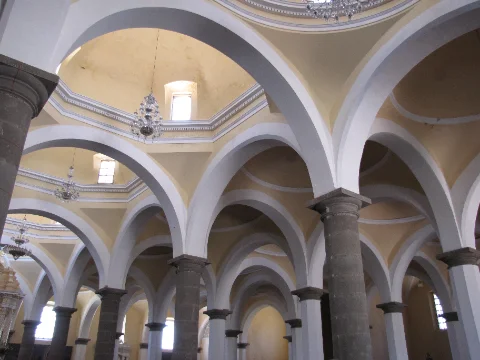
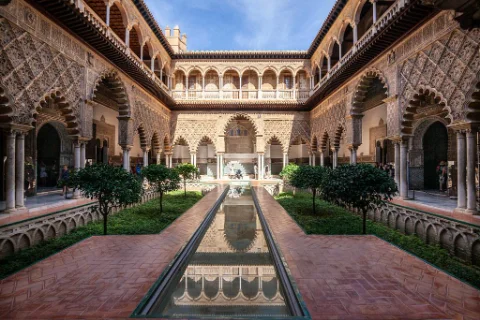
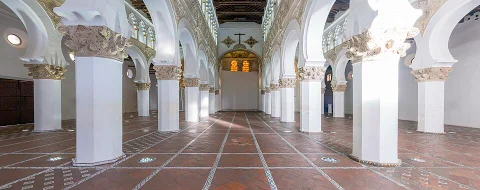
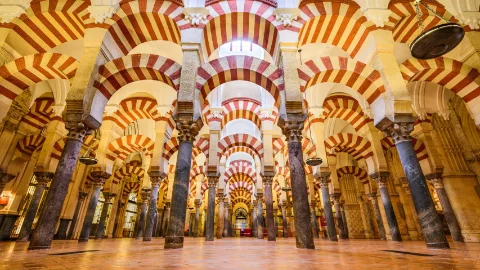
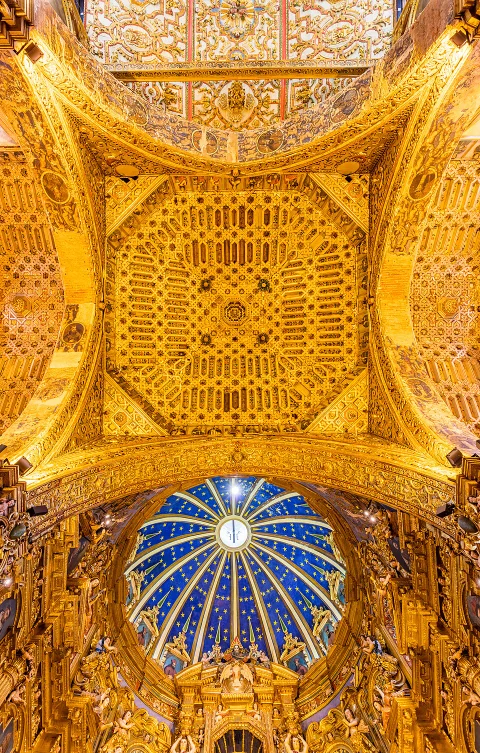
    My latest book, *Our Secret Geometry: A Fascinating Journey through Ibero-American Mudéjar Art*, explores one of the most remarkable yet frequently overlooked chapters of architectural history: the transformation and transmission of Islamic-derived artistic traditions across the Iberian Peninsula and the Americas. The book takes readers on a visual and historical journey through mosques, synagogues, Christian palaces, churches, and colonial buildings, revealing unexpected connections between seemingly different cultural worlds. From the magnificent architecture of Córdoba and Toledo to the artistic heritage of Mexico and other parts of Ibero-America, I examine how geometric ornamentation, wooden ceilings, architectural forms, and craftsmanship crossed religious and political boundaries. Rather than presenting architecture as a collection of isolated monuments, I explore it as evidence of cultural interaction, political transformation, and the circulation of artistic knowledge. The book is available in six languages: Spanish, English, French, Portuguese, Italian, and Catalan. My goal is to encourage readers to discover the extraordinary histories hidden in buildings they may have seen many times without recognizing their deeper cultural connections.
  • View More