
Home
›
Inside the Mind of Monserrat Díaz Ortega: Uncovering the Hidden Connections Between East and West
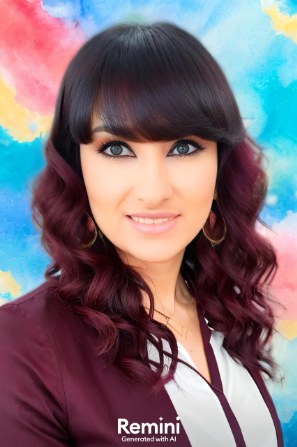
Inside the Mind of Monserrat Díaz Ortega: Uncovering the Hidden Connections Between East and West
-
Q: What inspired you to start writing?
My interest in writing grew out of my passion for history, international relations, and the cultural connections that often remain hidden beneath conventional historical narratives. Throughout my academic and professional journey, I have been particularly fascinated by the ways civilizations influence one another, even across political, religious, and geographical boundaries. My experiences traveling through the Middle East and studying the region encouraged me to look beyond familiar interpretations of history. Eventually, I became interested in how these encounters could be traced through architecture. Buildings preserve extraordinary evidence of cultural exchange, sometimes revealing connections that written historical accounts overlook. Writing became a way for me to share these discoveries with a wider audience and invite readers to see familiar monuments from an entirely different perspective.
-
Q: Can you tell us a little about your latest book?
My latest book, *Our Secret Geometry: A Fascinating Journey through Ibero-American Mudéjar Art*, explores one of the most remarkable yet frequently overlooked chapters of architectural history: the transformation and transmission of Islamic-derived artistic traditions across the Iberian Peninsula and the Americas. The book takes readers on a visual and historical journey through mosques, synagogues, Christian palaces, churches, and colonial buildings, revealing unexpected connections between seemingly different cultural worlds. From the magnificent architecture of Córdoba and Toledo to the artistic heritage of Mexico and other parts of Ibero-America, I examine how geometric ornamentation, wooden ceilings, architectural forms, and craftsmanship crossed religious and political boundaries. Rather than presenting architecture as a collection of isolated monuments, I explore it as evidence of cultural interaction, political transformation, and the circulation of artistic knowledge. The book is available in six languages: Spanish, English, French, Portuguese, Italian, and Catalan. My goal is to encourage readers to discover the extraordinary histories hidden in buildings they may have seen many times without recognizing their deeper cultural connections.
-
Q: How do you bring historical places and forgotten cultural connections to life?
As a nonfiction author, I do not create fictional characters. Instead, I work with historical places, architectural monuments, and the people whose knowledge and craftsmanship shaped them. My approach begins with a question: What can this building tell us about the society that created it? I examine its historical context, architectural features, artistic influences, and the political and cultural relationships surrounding its construction. I am particularly interested in revealing unexpected connections. A synagogue may contain architectural forms associated with Islamic traditions, while a Christian palace may display Arabic inscriptions and elaborate Andalusi ornamentation. These apparent contradictions make history fascinating. My challenge as a writer is to transform historical research into an engaging narrative without sacrificing accuracy. I want readers to experience the excitement of discovering something extraordinary in a place they thought they already understood.
-
Q: What does your typical writing day look like?
My writing process combines historical research, visual investigation, drafting, and revision. I often begin by exploring a particular architectural question, historical episode, or cultural connection. This may involve consulting academic publications, comparing photographs of monuments, examining historical contexts, and organizing research materials. Once I have identified the central argument, I focus on transforming the information into a narrative that is both accessible and intellectually engaging. Visual material plays an important role in my work because architecture is best understood when readers can actually see the details being discussed. I also dedicate time to creating audiovisual content, including short documentaries and promotional videos that introduce historical subjects through compelling visual storytelling. For me, writing and visual research are closely connected. Both are ways of making complex historical subjects accessible to a broader audience.
-
Q: What has been the most rewarding part of being an indie author?
The most rewarding aspect of independent publishing has been the freedom to develop a project that reflects my own intellectual interests and research priorities. I can explore subjects that may fall outside conventional publishing trends and present them through the combination of historical analysis, visual storytelling, and cultural interpretation that I consider most appropriate. Another particularly meaningful achievement has been making my book available in six languages. For a work dedicated to cultural exchange across geographical boundaries, reaching readers from different linguistic communities is especially significant. Independent publishing has also encouraged me to develop new skills in digital communication, audiovisual production, and international book promotion. Above all, I value the possibility of introducing readers to architectural treasures and historical connections they might never have encountered otherwise.
-
Q: What’s one challenge you’ve faced in your writing journey?
One of my greatest challenges has been transforming specialized historical research into a book that is both rigorous and accessible to a general audience. Architectural history involves complex terminology, overlapping cultural traditions, and historical interpretations that require careful examination. It is easy to simplify these subjects excessively or present cultural exchange as a harmonious process without acknowledging the political conflicts and inequalities that also shaped it. I have worked to find a balance between historical accuracy and engaging storytelling. Another challenge has been managing the many responsibilities of independent publishing, from developing the manuscript to preparing multilingual editions and promoting the finished work. These experiences have taught me that writing a book is only one part of the journey. Helping readers discover it requires an entirely different set of skills.
-
Q: Do you have any favorite writing tools or apps?
I value tools that help me organize historical research, manage references, and communicate complex ideas clearly. Zotero is particularly useful for organizing academic sources and bibliographic information. I also rely on digital research resources, historical archives, academic publications, and photographic collections to examine architectural monuments and compare artistic traditions. For audiovisual storytelling, I use video-editing tools such as CapCut to create documentaries and short visual presentations related to my research. However, I believe that technology is most effective when it supports a clearly defined research question. No digital tool can replace critical thinking, careful source evaluation, and the ability to construct a coherent historical argument.
-
Q: What advice would you give to new or aspiring indie authors?
My first recommendation is to write about a subject that genuinely fascinates you. Independent publishing requires persistence, and intellectual curiosity can be one of the strongest motivations for completing a demanding project. Second, never underestimate the importance of research, revision, and attention to detail. Readers deserve work that has been carefully prepared, regardless of whether it comes from a traditional publisher or an independent author. Third, think about how to communicate your ideas beyond the book itself. Articles, videos, interviews, and digital platforms can help introduce your work to audiences who might not otherwise discover it. Finally, remember that independence offers creative freedom, but it also requires responsibility. You are not simply writing a book. You are building a relationship with your readers.
-
Q: How do you handle book promotion as an indie author?
I approach book promotion as an extension of my research and educational work rather than simply as a sales activity. My strategy focuses on creating content that offers readers something valuable before inviting them to discover the book. For example, I produce short cinematic videos exploring unexpected architectural connections, such as the relationship between medieval Iberian artistic traditions and their later expressions in Ibero-America. I also publish articles examining individual monuments, historical questions, and lesser-known aspects of Mudéjar art. Recently, I developed a five-part article series for Indie Reading Community, exploring the architectural heritage of Córdoba, Toledo, Seville, colonial Mexico, and traditional Mudéjar wooden ceilings. I use platforms such as YouTube, LinkedIn, Facebook, TikTok, and Pinterest to reach different audiences. Because the book is available in six languages, international communication is an important part of my promotional strategy. My guiding principle is simple: generate curiosity through historical discoveries and allow that curiosity to lead readers naturally toward the book.
-
Q: What’s next for you? Are you working on a new book?
Yes. One of my next research interests is the evolution of Neo-Mudéjar architecture during the nineteenth and twentieth centuries. I am particularly interested in how architectural traditions associated with medieval Iberia were reinterpreted in modern contexts and acquired new meanings through changing political, cultural, and national identities. This subject offers fascinating opportunities to explore the relationship between architecture, historical memory, and the construction of cultural identity. I also plan to continue expanding my audiovisual work through historical documentaries examining geopolitics, international relations, political power, and cultural transformation. My long-term goal is to develop an interconnected body of research, books, articles, and documentaries that makes complex historical and international subjects accessible to a wider audience. Ultimately, I want my work to encourage people to question familiar narratives and discover the extraordinary connections that link different societies across time and space.