Sensory Anchors: Using One Specific Smell or Sound to Ground Abstract Emotion
Emotion becomes more powerful when readers can sense it. One smell or sound can carry more feeling than a paragraph of explanation.
No bio added yet.
No books listed yet.
Emotion becomes more powerful when readers can sense it. One smell or sound can carry more feeling than a paragraph of explanation.
Want readers to feel exactly what your characters feel? Stop relying on emotional adjectives and start changing the rhythm of your sentences.
What if your stories felt unearthed instead of assembled? Story as artifact invites you to excavate fiction rather than manufacture it.
Sometimes the most important chapter in a novel is the one readers almost forget. That is exactly why it works.
Sometimes a sentence speaks with two voices at once. One voice says the thing. The other quietly questions it.
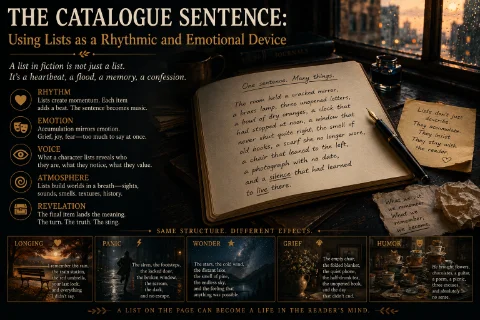
A list in fiction is not always a list. Sometimes it is a heartbeat, a memory, a confession, a flood, or the sound of a character trying to hold everything at once.
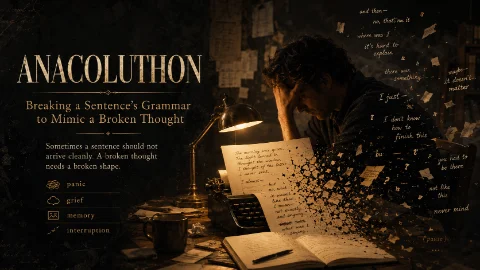
Sometimes a sentence should not arrive cleanly. A broken thought needs a broken shape.
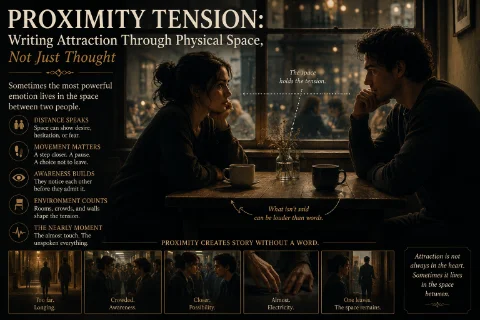
Sometimes attraction is not in what characters think. It lives in where they stand, how close they move, and the space neither of them crosses.
Some narrators don't read like writing at all. They read like someone talking. Here's how that effect is built.
Not every story needs a villain, a battle, or an argument. Some stories move forward through contrast, discovery, and revelation instead of conflict.
Sometimes the narrator does not stay outside the story. Sometimes the voice reaches in, touches the world, and reminds readers that fiction has walls.
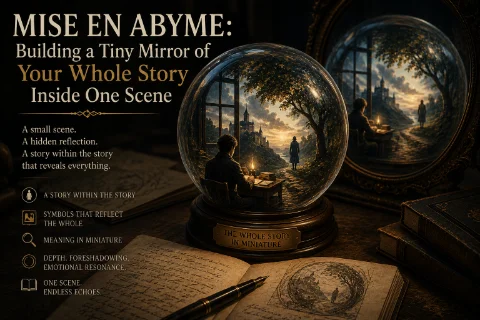
Sometimes one small scene contains the whole story in miniature. A broken toy, a painting, a dream, or a tale within the tale can quietly reveal everything.
No interviews yet.