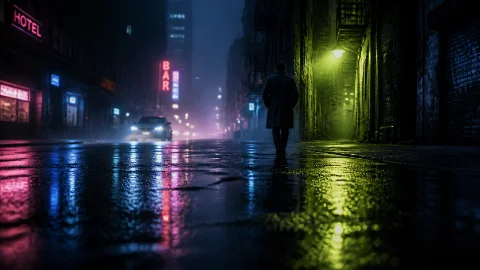
Walk down the right street in an urban fantasy novel and the city you think you know peels back to reveal something older, stranger and considerably more dangerous underneath. The coffee shop on the corner is a front for something else entirely. The alley between the office blocks is a boundary between worlds. The woman who sells newspapers outside the tube station has been there since before the station was built, and she is not selling newspapers for the reason you think.
Urban fantasy is built on this double vision, the familiar world and the hidden world coexisting in the same space, and the particular pleasure it offers readers is the feeling that the city they themselves walk through every day might be concealing exactly this kind of depth. That pleasure is what the best urban fantasy delivers consistently, and it is harder to achieve than the genre's pulpy reputation sometimes suggests.
The genre has produced some of the most commercially successful and genuinely beloved fiction of the past thirty years. Neil Gaiman's Neverwhere, Ben Aaronovitch's Rivers of London series, Leigh Bardugo's Ninth House, Jim Butcher's Dresden Files, Nnedi Ofofor's work, Charles de Lint's Newford novels. Different in tone, setting and approach, but united by the same fundamental architecture: a real city, a hidden world, a protagonist who exists uncomfortably at the crossroads of both, and a voice that makes the impossible feel lived-in and true.
Here are the four craft lessons that run through all of it.
Lesson one: the city is a character, not a setting
The single most important distinction between urban fantasy that works and urban fantasy that does not is what the writer does with the city itself. In lesser examples of the genre, the city is a backdrop, a collection of street names and landmark references that could be swapped for any other city without meaningfully changing the story. In the best urban fantasy, the city is a living participant in the narrative, with its own history, its own grudges, its own logic, and its own relationship to the magical world that is unique and irreplaceable.
This requires research of a specific kind. Not just the famous landmarks and the tourist geography, but the texture of a city's particular history. The neighbourhoods that changed and the ones that did not. The rivers that were buried and the ones that remain. The industries that shaped the architecture. The communities that settled and the ones that were displaced. The events, often dark ones, that left marks on the physical fabric of the place.
Ben Aaronovitch's Rivers of London series is the clearest example of this done exceptionally well. London in those novels is not a generic city with London's name attached. It is a city whose magical ecosystem grew directly out of its specific history, its river system, its Roman foundations, its class structure, its particular relationship to empire and migration and centuries of accumulated strangeness. The magic could not exist anywhere else because it grew out of that specific place. That rootedness is what gives the world its weight.
The practical implication for writers is that the magical elements of your city should grow out of its actual history rather than being layered on top of it. Ask what the city's real history might have produced if magic were real. What would the industrial revolution have meant for supernatural communities living through it. What traces would conquest and settlement leave on the magical landscape. What would a river that has been dammed or buried or rerouted carry in the way of grievance. These questions tend to produce world-building that feels discovered rather than invented, which is the texture that convincing urban fantasy requires.
If you are inventing a fictional city rather than using a real one, the same principle applies. Your invented city needs the same density of specific, particular history that real cities have, including the parts of that history that are uncomfortable and complicated. A city with only a pleasant, vague history will produce a magical world with no genuine weight.
Lesson two: the hidden world needs rules the reader can feel
Every urban fantasy constructs a hidden world that exists alongside or beneath the mundane one, and every hidden world needs an internal logic that the reader can learn, rely on and eventually use to anticipate consequences. The magic system, the supernatural hierarchy, the rules governing what is and is not possible in this particular world, do not need to be fully explained to the reader. But they need to be fully understood by the writer, because readers feel the presence or absence of underlying consistency even when they cannot articulate what they are sensing.
The most common failure in urban fantasy world-building is what might be called the convenience problem: a magical system that expands its capabilities precisely when the plot needs it to and contracts them precisely when that is convenient too. When magic solves exactly the right problem at exactly the right moment with no established reason why it can do that, the reader loses trust in the world. The tension evaporates because anything can happen, which means nothing genuinely feels at risk.
Rules do not mean limitations in the pejorative sense. They mean that the world has a coherent internal physics that the reader can learn alongside the protagonist. Brandon Sanderson, whose theoretical writing on magic systems has been widely discussed in genre fiction communities, articulates a useful principle: the more a writer intends magic to solve problems for the protagonist, the more clearly the rules and costs of that magic need to be established in advance. Magic that rescues characters from difficulty only works as a narrative tool if the reader understood from earlier in the story that this was a possible rescue, even if they did not know it was coming.
The costs of magic are as important as its capabilities. A magic system without cost is a fantasy of unlimited power rather than a world with genuine tension. The cost does not need to be dramatic or violent. It can be subtle: depletion, consequence, the attention of things that should not notice you, the erosion of something you did not know you were spending. But it needs to be consistent, and it needs to be present in the world from the beginning rather than appearing conveniently only when the plot needs a moment of vulnerability.
The hidden world also needs its own social structures, its own politics, its own factions with competing interests and histories of their own. A supernatural world that exists only to provide antagonists for the human protagonist is a thin one. The most satisfying urban fantasy worlds feel as though they would continue existing and having complicated political problems even when the protagonist is not in the room.
Lesson three: ground the extraordinary in the deeply ordinary
The particular magic of the best urban fantasy, the thing that makes it feel different from portal fantasy or secondary world fantasy, is the texture of the mundane world pressing constantly against the extraordinary one. The protagonist who just witnessed something cosmically terrifying still has to deal with a parking ticket. The ancient supernatural entity being interviewed by a detective still responds to being offered a cup of tea. The magical investigation is interrupted by the need to eat something, to sleep, to check a phone.
This is not comic relief, though it can be funny. It is the mechanism by which the extraordinary becomes believable. When characters in an urban fantasy exist in the same continuous world as supermarket queues and broken boilers and rent payments, the supernatural elements that exist alongside those things feel like they inhabit the same level of reality rather than a different register altogether. The mundane world is not the backdrop for the magical world. They are both the same world, experienced at different frequencies by different people.
Voice is the primary vehicle for this effect. Urban fantasy overwhelmingly favours first-person narration, and the reason is that a first-person narrator can carry the tone of both registers simultaneously in a way that third-person narration makes harder to sustain. The narrator who describes an encounter with a genuinely terrifying supernatural entity in the same deadpan, slightly tired, slightly wry voice they use to describe the preceding bus journey is doing something specific and important: they are insisting that both experiences belong to the same continuous reality, neither elevated nor deflated relative to the other.
Jim Butcher's Harry Dresden narrates encounters with creatures of enormous power with the same voice he uses to describe his car, his apartment, his unpaid bills. That consistency of voice is not stylistic laziness. It is the mechanism that makes the world feel genuinely inhabited rather than performed. The reader trusts the world because the narrator does not shift registers between the ordinary and the extraordinary, which implies that to this particular consciousness, both belong to the same continuous texture of experience.
The practical lesson is to resist the temptation to elevate your prose when the supernatural elements appear. Keeping the voice steady across both registers, trusting the events themselves to carry the weight rather than signalling their importance through a change in narrative register, is one of the most effective techniques available in urban fantasy writing.
Lesson four: put your protagonist at a crossroads that costs them something
The protagonist of an urban fantasy almost always exists at the intersection of the mundane world and the hidden one, belonging fully to neither. They are the detective who can see what others cannot. The person whose bloodline gives them access to a world they never asked to be part of. The ordinary individual who witnessed something they were not supposed to see and cannot now un-see it. The agent who operates in both worlds on behalf of institutions that do not fully trust them.
This position, the crossroads, is not simply a narrative convenience for moving between the two worlds. It is the source of the protagonist's central conflict, and it needs to cost them something real and ongoing in order to generate genuine story tension. The person who can perceive the supernatural world is also the person who cannot fully explain their life to anyone who does not share that perception. The agent who works for a supernatural authority is the person who may have to enforce rules they find morally troubling. The human who falls into a supernatural community belongs to it in some ways and will never fully belong in others.
Leigh Bardugo's Ninth House is one of the most effective recent examples of this positioning. The protagonist's ability to see the dead is not experienced as a gift. It is a lifelong experience of perceiving something that no one else can perceive, which has shaped her entire history and relationship to the world in ways that are painful and specific long before the novel begins. The ability is inseparable from the damage it has caused. That inseparability is what makes her position at the crossroads feel like a genuine condition rather than a plot device.
The crossroads position also gives urban fantasy protagonists a particular kind of dramatic question that tends to run beneath the surface of whatever external plot they are investigating: which world do they belong to, and what are they willing to give up to answer that question definitively. In many urban fantasy series, this question is never fully resolved, because the series structure depends on the protagonist remaining productively at the crossroads. But within a standalone novel or a single book in a series, the protagonist should be moving toward or away from some version of that resolution, even if they do not reach it.
The balance that makes urban fantasy work
All four of these lessons are, at some level, about the same thing: the specific balance that urban fantasy requires between two versions of the same world. Too far toward the mundane and the magical elements feel like intrusions that do not quite fit the world the author has established. Too far toward the magical and the grounding in real-world texture dissolves and the story becomes secondary world fantasy wearing a city's costume.
The sweet spot is a world in which both dimensions feel equally present and equally real, where the hidden world is genuinely ancient and strange and governed by its own logic, and the mundane world is genuinely specific and contemporary and unglamorous in the right ways, and the protagonist moves between them with the particular exhausted competence of someone who has spent a long time not being able to explain their life to anyone they care about.
Finding that balance in a specific novel is a process of drafting and revision rather than planning, because it is one of those qualities that you can feel on the page rather than predict on an outline. But the four lessons above give you the structural conditions that make the balance achievable, which is where the writing has to begin.
The city is waiting. It has more history than anyone told you. The hidden world beneath it has been there longer than the city has. And somewhere at the crossroads between them is a character who is about to have a very difficult week.