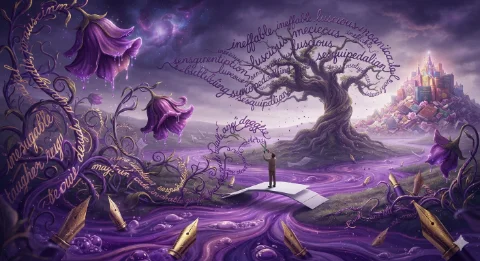
Have you ever read a book where a simple walk to the door takes three pages of description? If a character does not just cry but instead sheds crystalline spheres of liquid sorrow, you are dealing with purple prose.
This term refers to text that is so loud and colorful that it stands out for all the wrong reasons. Instead of helping the reader picture the scene, it forces them to notice the writer's vocabulary.
Why Flowery Writing Harms Your Narrative
Good descriptions act like a window pane. They let the reader look directly at the story action. When you overcomplicate your phrasing, you smudge that window.
Pacing slows down: Readers get stuck wading through a swamp of adjectives.
Emotion feels unearned: Dramatic words can make a scene feel fake or overly theatrical.
Clarity gets lost: High-level vocabulary can confuse your audience and ruin the momentum.
How to Spot and Trim Excess Words
You do not need to delete every single adjective from your draft. The goal is balance. Look for places where you used three words when one strong verb would do the job.
Instead of writing that a character walked in an incredibly slow and majestic manner, just say they paced or strode. Trust your reader to fill in the minor details. When you cut away the fluff, your actual story shines much brighter.