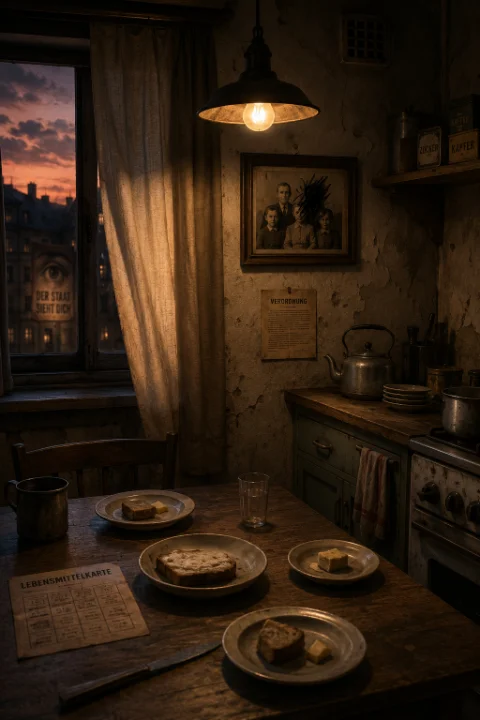
The most chilling dystopias often reveal themselves not in grand speeches or epic battles, but in the quiet spaces of daily life. A carefully rationed meal. A forbidden book hidden under a mattress. The way a family speaks in lowered voices even when they are alone. These small, domestic moments can carry more weight than any sweeping description of a totalitarian regime.
This approach, which we can call dystopian intimacy, uses the familiar textures of home, routine, and personal relationships to show how oppressive systems infiltrate every corner of existence. Instead of building the world from the top down through politics and technology, it builds from the inside out through what characters eat, wear, touch, and protect.
When done well, the oppression feels personal, inescapable, and deeply human.
Why Domestic Details Make Dystopia More Powerful
Large-scale world-building can sometimes feel distant or abstract. Readers may admire the scope without feeling the weight of the system on individual lives. By contrast, domestic details make the consequences immediate and relatable.
Everyone understands what it means to prepare a meal, to long for privacy, or to worry about what children are learning. When these ordinary acts become sites of control or resistance, the dystopia stops being theoretical. It becomes something the reader can almost taste and touch.
This method also creates space for emotional complexity. Oppression does not erase love, humor, or tenderness. It distorts and pressures them. Showing how characters navigate these pressures within the home reveals both the system’s cruelty and the resilience of ordinary people.
Techniques for Building Oppressive Worlds Through the Domestic
Focus on routines and rituals.
Show how daily life has been reshaped. A simple act like hanging laundry, preparing coffee, or putting children to bed can reveal surveillance, scarcity, or enforced conformity when described with care.
Use objects as carriers of meaning.
A ration book, a hidden photograph, a government-issued piece of furniture, or a once-cherished item now treated as contraband can speak volumes. Let objects accumulate emotional and political weight over the course of the story.
Reveal control through relationships.
How family members speak to each other, what they are allowed to share, and what they must hide all become ways to map the reach of the oppressive system. Intimacy itself can become dangerous or carefully managed.
Pay attention to sensory details.
Describe the texture of food that is always the same, the quality of light in a monitored room, or the way voices sound when someone fears being overheard. These details make the world feel lived-in and oppressive on a bodily level.
Show both compliance and quiet resistance.
Characters rarely live in total submission or total rebellion. Most exist in the complicated middle ground. A character might follow the rules in public while creating small pockets of freedom at home. These contradictions create rich dramatic tension.
Let the domestic space evolve.
As the story progresses, show how the home changes under pressure. A once-warm kitchen might grow colder. A private space might be invaded. Or characters might slowly reclaim parts of their domestic life as acts of resistance.
Examples That Use This Approach Effectively
Many powerful dystopian and speculative stories succeed by grounding large systems in small, personal moments. Works that focus on what people eat, how they dress, how they raise children, or how they maintain relationships under duress often feel more immediate and haunting than those that rely primarily on big-picture exposition.
These stories show that oppression is not only enforced from above. It is lived from within kitchens, bedrooms, and daily routines. The most memorable examples make readers feel the weight of the system through what characters lose, protect, or secretly cherish in their private lives.
Pitfalls to Avoid
One risk is making every domestic detail serve the plot or theme too obviously. When every object or routine directly symbolizes oppression, the effect can feel mechanical. Let some details simply exist as part of lived experience.
Another common issue is creating a world that feels uniformly grim without moments of warmth, humor, or connection. Even in oppressive systems, people find ways to care for one another. These moments of humanity make the darkness more meaningful rather than numbing.
Be careful not to overload early scenes with too much explanatory detail. Trust that readers will absorb the rules of the world through the characters’ interactions with their environment over time.
Finally, avoid treating domestic life as purely passive. The home can also become a site of subtle resistance, memory-keeping, and quiet defiance. This complexity strengthens both character and world.
Practical Exercises for Your Writing
Choose one ordinary domestic scene from your story (making dinner, getting ready for bed, a family conversation). Rewrite it so that the details reveal something about the larger oppressive system without any direct exposition.
List five everyday objects in your protagonist’s home. For each one, write a short note about how it has been changed or restricted by the world of the story.
Write a scene in which two characters must have an important conversation while performing a mundane domestic task. Let the task itself create tension or limitation.
Read a section of your draft and highlight every domestic detail. Ask yourself whether each one could carry more weight in revealing the world or the character’s experience of it.
The Strength of the Small Scale
Dystopian intimacy does not diminish the scale of oppression. It makes it more visible and more felt. By focusing on kitchens, bedrooms, and daily rituals, writers can show how systems of control reach into the most private corners of life.
This approach creates stories that feel both politically aware and emotionally grounded. Readers recognize their own domestic worlds in the fiction and feel the threat more acutely because it arrives through the familiar rather than the spectacular.
When the ordinary becomes charged with meaning, even the smallest details can carry the weight of an entire oppressive world. The home stops being a refuge and becomes the clearest map of what has been lost and what might still be fought for.
What domestic details have stayed with you in dystopian or speculative stories you have read? Have you experimented with revealing larger systems through small, personal moments in your own writing? Share your thoughts and examples in the comments. The Indie Reading Community is always interested in these intimate approaches to world-building.