There's a strange thing happening in fiction right now, and most writers haven't clocked it yet. While everyone argues about AI and algorithms, a much older idea is creeping back into relevance: stories that respond to the reader instead of simply being read.
Interactive fiction, the kind where readers choose paths, make decisions for characters or unlock different endings, used to live in a fairly niche corner of gaming culture. Now it's spilling into web fiction, apps, indie publishing experiments and even traditional prose writers borrowing its techniques without calling it that. And the writers paying attention to it are picking up skills that make their linear fiction sharper too.
This isn't a piece about learning to code a choose-your-own-adventure app. It's about what interactive fiction teaches you, even if you never write a single branching story yourself.
The reader stops being a passenger
In a traditional novel, the reader trusts you completely. They sit back and let the story happen to them. Interactive fiction breaks that contract immediately. The reader has to decide something, and the moment they do, they're implicated in the outcome.
That shift forces a writer to think differently about consequence. Every choice needs to feel like it matters, even the small ones, or the reader disengages fast. Writers who spend time in this space often say it retrains their instinct for stakes. They stop writing scenes where nothing is really at risk, because in an interactive structure, a scene with no consequence is dead weight that readers can feel within seconds.
Branching teaches causality better than any craft book
Most fiction craft advice tells you that scenes should cause the next scene, not simply follow it. Interactive fiction makes that rule unavoidable. If a choice doesn't lead anywhere different, the whole branch collapses and readers notice immediately.
Writers who experiment with branching narratives, even briefly, often come back to linear prose with a much sharper eye for the difference between an event and a consequence. They start asking a question that's easy to skip in traditional drafting: if I removed this decision point, would the story actually change? If the answer is no, that's usually a sign the scene needs to be tightened or cut.
Characters reveal themselves through choice, not description
There's a particular kind of characterisation that interactive fiction demands. You can't just tell the reader who a character is through narration, because the reader is partly inhabiting that character through the choices they make. This pushes writers to build personality into decision points rather than adjectives.
It's a useful discipline to borrow even outside the format. Instead of writing "she was stubborn," a writer who has spent time with interactive structures might instead construct a moment where stubbornness is the only way the plot can move forward, letting the trait emerge through behaviour rather than label.
Pacing becomes a structural skill, not a feeling
In a linear story, pacing is something you sense and adjust during revision. In interactive fiction, pacing has to be engineered up front, because the reader might hit a branch quickly or slowly depending on their choices, and the story still needs to feel coherent either way.
Writers who work in this format often become much more deliberate about scene length, information release and tension curves, simply because the format punishes vagueness. That discipline tends to carry over. Many writers who've spent serious time with branching fiction describe their linear drafts becoming noticeably tighter afterwards, almost as a side effect of having to think in structures rather than just instinct.
It's an unusually good fit for indie and self-published writers
There's a practical angle here too. Interactive fiction lowers some of the traditional barriers around format and length. A short branching story can be published as a web project, a simple app or even a structured ebook, without needing the scale of a full novel. For self-published authors looking for a low-risk way to build an audience or test an idea, this is worth a serious look.
It also tends to create unusually engaged readers. Someone who has made choices inside a story feels more invested in its outcome than someone who has simply read it, which can translate into stronger word of mouth and repeat readership, two things every indie author is chasing.
You don't have to abandon linear storytelling to benefit from this
None of this is an argument that every writer should pivot to building branching narratives full time. Most won't, and that's fine. The real value is in borrowing the thinking, even occasionally.
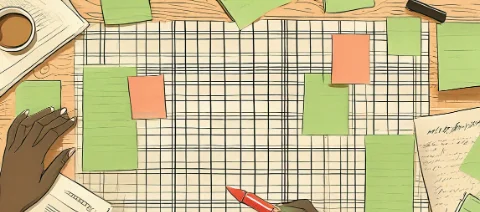
Try sketching one key scene in your current manuscript as a decision point with two or three branches, just as an exercise. Notice what changes when you're forced to commit to consequence rather than simply narrate it. Most writers find this single exercise reshapes how they handle tension everywhere else in the book.
Interactive fiction isn't trying to replace the novel. It's quietly offering a different lens to look through, and writers who take a look usually come back with sharper instincts than they had before.