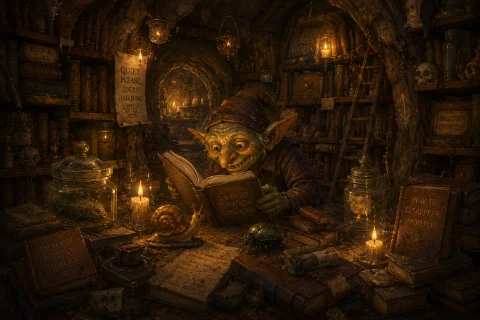
In an era where digital content vanishes at the touch of a button and fast-print paperbacks dominate retail shelves, a dedicated global community is moving in the exact opposite direction. For antiquarian collectors, books are treated as precious works of fine art, historical time capsules, and highly stable alternative financial assets.
The rare book market can seem incredibly intimidating to outsiders, filled with complex catalog jargon, strict evaluation criteria, and auction houses that trade millions of dollars for a single volume. However, entering this fascinating subculture does not require an endless fortune. It simply requires a deep appreciation for material history and a mastery of the core rules that dictate a book's true value.
±-------------------------------------------------------------------------+
| THE RARE BOOK VALUE METRIC |
±-------------------------------------------------------------------------+
| |
| [Scarcity] + [Historical Importance] + [Impeccable Condition] |
| | |
| v |
| MAXIMUM MARKET VALUATION |
| |
±-------------------------------------------------------------------------+
1. The Golden Rule of Collecting: Scarcity and True First Editions
The foundational pillar of book valuation is the concept of the first edition. When a book is printed for the very first time, the publisher typically risks a very small initial print run to test market demand.
If that book later goes on to become a massive cultural phenomenon, those scarce initial copies instantly skyrocket in value. For example, a flawless first printing copy of Harry Potter and the Philosopher’s Stone—of which only 500 copies were initially produced regularly commands upwards of ₹84,00,000 to ₹1,25,00,000+ ($100,000 to $150,000+ USD) at modern auctions. Collectors look for specific print numbers, typo variations, and date stamps to verify they are holding a true first printing.
2. Condition Dictates the Final Financial Worth
In the rare book world, a book's physical preservation is absolutely everything. An incredibly rare 19th-century novel can lose up to 90% of its potential market value if it suffers from torn pages, severe water damage, or a broken spine binding.
Connoisseurs evaluate volumes using a strict grading scale ranging from "Poor" to "As New." Furthermore, for modern first editions published in the 20th and 21st centuries, the condition of the paper dust jacket is often far more valuable than the actual hardcover book itself. A pristine, unclipped dust jacket can easily double or triple a book's total worth at an estate sale or auction.
3. Tracking Provenance, Signatures, and Association Copies
A book’s value increases dramatically if it possesses a documented trail of ownership, known in the industry as provenance.
Signed Copies: A book physically signed by the author on a promotional tour adds a modest premium to the price.
Inscribed Copies: If the author personalized the book to a generic fan, the value often decreases slightly compared to a clean signature.
Association Copies: This is the absolute holy grail of collecting. An association copy is a book that the author signed and gifted directly to another famous figure, historical icon, or close literary contemporary. For instance, a copy of The Great Gatsby signed by F. Scott Fitzgerald and gifted directly to Ernest Hemingway holds an astronomical cultural and financial value that defies standard pricing models.
4. The Shift Toward Hyper-Specific Niches and Contemporary Rarity
Traditional antiquarian collecting heavily favored centuries-old religious texts, classical Shakespeare folios, and foundational scientific treatises. While those markets remain strong, the modern generation of collectors is radically expanding the field's boundaries.
Today, there is an explosive demand for hyper-specific modern niches. Collectors are aggressively hunting down early editions of mid-century science fiction paperbacks, rare counter-culture underground magazines, vintage cookbook manuals, and foundational software coding texts from the early computing era. Shifting your focus toward an overlooked niche allows you to build a highly significant, historically important collection on a reasonable budget.
5. Sourcing Treasures Beyond Elite Auction Houses
You do not need to attend high-end evening auctions in London or New York to discover valuable books. The true joy of the hobby lies in the thrill of the hunt across ordinary, everyday settings.
Valuable first editions are regularly uncovered by diligent searchers browsing rural estate sales, quiet charity thrift shops, library clearance sales, and dusty independent used bookstores where owners may have missed a rare variant printing. Educating yourself on publisher code marks, binding materials, and historical printing houses turns every single pile of old paper into a potential goldmine waiting to be discovered.