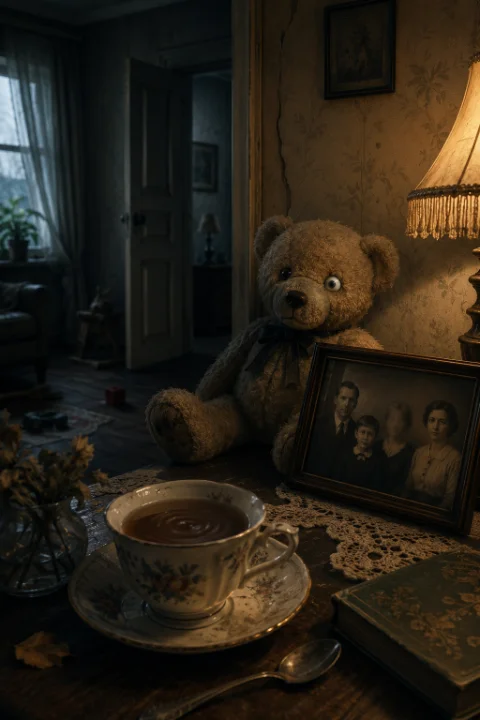
One of the most common pieces of advice given to developing writers is to "show, don't tell." We are taught to swap out a flat statement like he was angry for a physical description like he slammed his fist onto the table. While this is a useful starting point, advanced literary fiction demands something far more subtle and deeply psychological.
To bridge the gap between a character's internal mind and the external world, top-tier authors rely on a concept known as the objective correlative.
Coined as a literary term by T.S. Eliot, the objective correlative is a technique where a writer uses a specific object, a situation, or a chain of events to serve as the formula for a particular emotion. Instead of describing a feeling directly, you anchor that feeling into the physical scenery. The setting becomes an active mirror for the soul.
If you want to move past basic sensory descriptions and write atmospheric, emotionally resonant prose, here is how to master this advanced craft technique.
1. Reject Generic Atmosphere
When a character is sad, it is easy to make it rain. When a character is trapped in a failing marriage, it is easy to describe a dark, claustrophobic room. This is not the objective correlative; this is a cliché.
A true objective correlative relies on specificity and unexpected friction. The emotion should not be inherent to the object itself, but rather projected onto the object by the character's current mental state.
Consider a character who has just suffered a catastrophic professional failure. Instead of walking through a bleak storm, have them sit in a brightly lit, overly cheerful ice cream parlor. The stark, jarring contrast between the forced joy of the pastel-colored walls and the character's internal devastation creates a powerful, specific emotional resonance that rain never could.
2. Utilize the History of Objects
Objects are rarely neutral. We carry emotional baggage, and so do our characters. You can use a single physical item to track a character's entire emotional arc by changing how they interact with it over time.
Imagine a vintage typewriter passed down from a grandfather.
- At the start of the novel, when the protagonist feels inspired, the typewriter is described with reverence, the brass keys gleaming like small shields.
- Midway through the book, during a period of creative burnout, the very same typewriter is described as a heavy, iron anchor, its keys striking the page with a mechanical, aggressive clacking that sounds like a countdown.
The typewriter hasn't changed, but the character's psychology has. By focusing on the shifting descriptions of the object, the reader experiences the emotional decline without the author ever needing to explain it.
3. Let the Landscape Carry the Subtext
When characters are dealing with heavy, unexpressed grief or trauma, they rarely talk about it openly. This is where the physical landscape can do the heavy lifting for your subtext.
If two characters are driving through a desert landscape while avoiding a conversation about their dying relationship, do not write about their silent anger. Focus on the passing scenery. Describe the cracked, parched earth that refuses to hold water, the skeletal trees, or the relentless, oppressive heat of the horizon.
By detailing the harsh reality of the external world, you are secretly giving the reader the exact emotional vocabulary needed to understand the internal world of the car.
The World as a Canvas
Your setting should never be a static backdrop. It is not a painted stage design where characters happen to stand. Every room, every street corner, and every discarded coffee cup is an opportunity to reveal the deep, hidden currents of human psychology.
By mastering the objective correlative, you stop writing about emotions and start creating environments where emotion is woven directly into the fabric of reality.