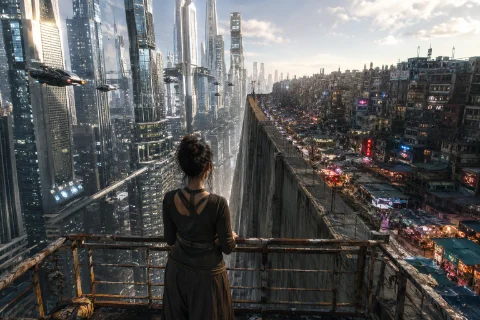
Socio-political science fiction captures the imagination because it serves as a direct mirror to our own societal structures. Too often, speculative world-building falters because it introduces radical future technologies without considering how those innovations would affect the distribution of wealth and resources. If your setting features instantaneous teleportation or unlimited clean energy, the immediate narrative question should not be how the machine works, but who owns the patent. By using real economic theory as the foundation of your world-building, you turn passive world design into an active engine for plot and conflict.
To build a rigorous economic thought experiment, you must trace the secondary and tertiary consequences of a speculative premise. Consider automation: if robotic labor completely replaces human workers, a realistic economy would face an immediate collapse in consumer spending because unemployed citizens cannot purchase goods. A narrative exploring this crisis could focus on the political battle over a universal basic income or the rise of a black-market economy driven by human-made craftsmanship. By centering the conflict on how people survive within a changing financial system, you elevate your story from a simple tech showcase into a deep exploration of human behavior under systemic pressure.
This level of realism also keeps your political themes from flattening your characters into simple caricatures. Instead of creating a cartoonish corporate villain who destroys the environment purely for the sake of being evil, frame their decisions through the cold lens of market incentives and quarterly profit margins. When characters act out of logical economic self-interest, their conflicts feel inevitable rather than forced. Grounding your speculative fiction in the concrete realities of supply, demand, and resource allocation gives your narrative thought experiments the weight and urgency needed to truly challenge your reader's worldview.