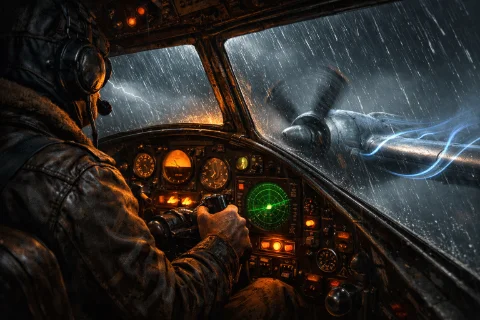
Aviation fiction holds a unique power when it treats the cockpit not just as a setting, but as a boundary line between life and death. The technical sublime is a literary approach that captures the awe and terror of human flight through the precise language of machinery and physics. Instead of skimming over technical jargon, compelling aviation stories lean directly into the mechanics of flight. The goal is to make a mathematical reality like a changing lift coefficient feel as visceral and frightening to a reader as an attacking monster.
To achieve this level of tension, you must map aerodynamic limitations directly to human stakes. Consider stall speed, which is a cold aerodynamic calculation of weight, velocity, and wing area. In a narrative, that calculation becomes a ticking clock as an aircraft slows down in heavy cloud cover, shuddering on the edge of falling out of the sky. By explaining the high physical cost of pulling back too hard on a control column, you transform an abstract physics principle into an immediate threat to your characters' survival.
The true secret to this technique is maintaining a tight focus on the human reaction to mechanical failure. A masterfully written flight sequence shows the reader how a pilot reads a dial, processes a drop in oil pressure, and fights the overwhelming aerodynamic force pushing against the rudder pedals. The machinery serves as an extension of the protagonist's nervous system under extreme pressure. By treating aerodynamic mechanics with absolute technical respect, you elevate a simple mechanical mishap into an epic battle against the invisible laws of the universe.