Indie Books. Real Authors. Real Readers.

Discover books, follow authors, and join a community that reads.

Words Worth Reading, Beyond the Books

Author-written articles on reading habits, book culture, writing life, and indie publishing. Fresh perspectives from the community, every week.

Created with Avocode

Crafting Depth: How to Use Sentence Variety to Build Complex Archetypes

Great characters are not built solely through dialogue and backstory; they are revealed through the very rhythm of your prose. By intentionally altering your sentence variety, you can subtly reflect a character's internal psychology and explore the fascinating grey areas of their personality. Mastering this structural technique allows you to create deeply complex archetypes that completely defy the mainstream mold.

The Grey Areas of Syntax: Finding Your Unique Voice Between the Lines

Mainstream publishing often demands rigid and predictable sentence structures that can easily strip a story of its underlying soul. By intentionally exploring the grey areas of syntax, you can cultivate a unique authorial voice that resonates with profound depth. Finding this delicate balance allows you to craft literature that feels genuinely passed down rather than mass-produced.

Breaking the Mold: When and How to Break Grammar Rules for Artistic Effect

Rigid grammar rules provide structure, but true artistry often requires knowing when to strategically ignore them. Breaking conventions like sentence structure or punctuation can create unique rhythm, voice, and emotional resonance. This article explores how to bend the rules with purpose, elevating your prose from technically correct to compellingly creative.

The Architecture of a Paragraph: Building Stronger Scenes One Block at a Time

Many writers focus entirely on sentence structure while completely ignoring the larger architecture of their paragraphs. By treating each paragraph as a distinct building block, you can construct vivid scenes with incredible emotional and physical depth. Mastering this structural flow allows you to craft immersive literature that stands apart from conventional storytelling.

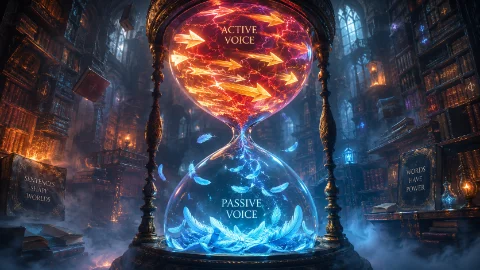
Active vs. Passive Voice: Taking Complete Control of Your Narrative Pace

Many writers are taught to fear the passive voice, treating it like a grammatical error that must be eradicated. However, understanding how to balance both active and passive structures gives you absolute control over the pacing of your narrative. By mastering this invisible dynamic, you can craft stories that break the mainstream mold and pull readers into the deeper grey areas of your world.

The Intentional Curator: How to Choose the Perfect Noun for Every Scene

Many writers spend hours agonizing over the perfect verbs and adjectives while letting generic nouns clutter their prose. By intentionally curating the specific objects and places in your narrative, you can instantly transform a flat setting into a living, breathing world. Mastering the art of the perfect noun is the secret to building rich atmospheres that truly anchor your reader in the story.

The Architect and the Sculptor: Rules for Writing and Editing

Editing is the crucial phase where your raw inspiration is transformed into a polished, powerful narrative. By applying a few foundational rules of writing and self-editing, you can intentionally curate your prose to ensure every single word serves a clear purpose. This focused approach allows you to craft unique stories that break the mainstream mold while maintaining absolute clarity for your audience.

Behind the Red Pen: What Your Editor Wants You to Know

Editors do not enforce grammar rules to stifle your creativity; they use them to ensure your narrative translates perfectly to the reader. Mastering these foundational mechanics allows you to craft stories that feel passed down rather than written, preserving the raw emotion of your original draft. When you understand exactly what an editor looks for, you can elevate your manuscript from a rough concept to a polished masterpiece.

The Magic of the Pause: Mastering Colons and Semicolons

Punctuation marks are the traffic signals of your writing, guiding readers through the twists and turns of your thoughts. Colons and semicolons often cause confusion, yet they are incredibly powerful tools for controlling the pace and connection of your ideas. By mastering these two distinct symbols, you can elevate your prose from simple sentences to sophisticated, flowing narratives.

The Hidden Music of Syntax: Why Sentence Length Matters for Writers

Great writers know that syntaGreat writers know that syntax is the secret sheet music of literature. By varying the length and structure of your sentences, you can control the breathing and heartbeat of your reader. Mastering this rhythm transforms flat text intx is the secret sheet music of literature. By varying the length and structure of your sentences, you can control the breathing and heartbeat of your reader. Mastering this rhythm transforms flat text into a captivating symphony of words.