Spoilers and Plot Twists Are Not the Same Thing
Spoilers and plot twists are often discussed together, but they serve completely different purposes.
A plot twist belongs to the story. It is carefully planted, timed, and revealed by the writer. It changes what the reader believes, adds a new meaning to earlier scenes, or forces the characters into an unexpected direction.
A spoiler comes from outside the story. It reveals information before the reader reaches the moment naturally.
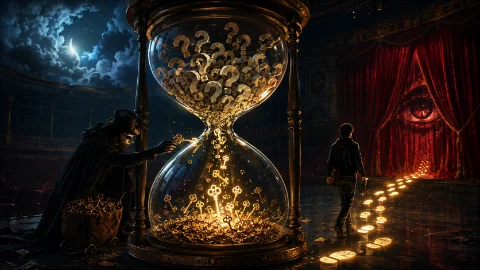
The twist is the locked room.
The spoiler is someone handing you the key before you have even entered the house.
Both involve hidden information, but only one allows the story to control when that information becomes meaningful.
Why Plot Twists Feel So Powerful
The best plot twists do more than surprise the reader. They reorganize the entire story.
A character who seemed trustworthy becomes suspicious. A harmless conversation suddenly carries a darker meaning. An object mentioned in the first chapter becomes the answer to a mystery near the end.
Strong twists create two stories at once.
The first is the story readers believe they are reading.
The second is the story that was quietly happening beneath it.
When the truth is finally revealed, readers mentally return to earlier chapters. They remember clues, expressions, silences, and details they overlooked. This is why a satisfying twist often makes people want to reread the book.
The surprise happens once.
The new understanding lasts much longer.
What Spoilers Take Away
A spoiler does not always ruin a story, but it can change the way the story is experienced.
Imagine reading a mystery while already knowing the identity of the killer. Instead of wondering who committed the crime, you begin watching how the writer hides the truth.
That may still be interesting, but it is a different experience.
The original emotional journey has been replaced by analysis.
Spoilers can reduce:
- Suspense
- Curiosity
- Emotional shock
- Narrative uncertainty
- The pleasure of discovering clues
The reader may still admire the writing, characters, and structure. However, the first encounter with the revelation can never be repeated.
A twist arrives like lightning.
A spoiler gives you the weather report.
Do Spoilers Always Ruin Stories?
Not necessarily.
Some readers enjoy knowing what will happen. Advance knowledge can make a story feel safer, especially when the book includes emotionally difficult material. Other readers find that spoilers help them focus on character development, symbolism, or writing style.
There are also stories that remain powerful even when the ending is widely known.
Many readers already know the fate of famous literary characters before opening the book. They continue reading because the value lies not only in what happens, but in how it happens.
This creates an important distinction.
A story that depends entirely on one surprise may feel weaker after the secret is revealed.
A story with rich characters, emotional depth, strong themes, and careful construction can survive repeated readings.
The twist opens the door.
The rest of the story gives readers a reason to stay inside.
The Difference Between Surprise and Satisfaction
Writers sometimes focus so heavily on surprising readers that they forget to make the twist believable.
A random revelation is not automatically a good twist.
For example, introducing a completely new villain in the final chapter may shock the audience, but it can also feel unfair. Readers want to be surprised, but they also want the opportunity to recognize the clues afterward.
A successful plot twist usually has three qualities:
1. It feels unexpected
The reader does not immediately predict it.
2. It feels possible
The twist makes sense within the rules of the story.
3. It feels inevitable in retrospect
Once revealed, the reader realizes the answer was present all along.
This balance is difficult to achieve. Too many clues make the twist obvious. Too few clues make it feel artificial.
The writer must hide the truth without removing it.
How Writers Can Protect Their Twists
Writers cannot completely prevent spoilers, especially after a book becomes popular. However, they can create a reading experience that remains valuable even when certain details are known.
One method is to build multiple layers of mystery.
The reader may discover who committed the crime but still wonder why it happened. They may learn that a character has been lying but remain uncertain about the reason. One answer can create a larger question.
Writers can also make the emotional consequences more important than the factual revelation.
Knowing that a betrayal will happen is different from experiencing the scene, understanding the motive, and watching the characters deal with the damage.
Another useful strategy is misdirection.
Misdirection does not mean lying to the reader. It means presenting true information in a way that encourages the wrong interpretation.
A character avoids a question. The reader assumes guilt, but the character may actually be protecting someone else.
A locked drawer appears suspicious. The reader focuses on what is inside, while the real clue is the person who owns the key.
The best twists often hide behind accurate details.
How to Discuss Books Without Spoiling Them
Book discussions help stories travel from one reader to another. However, excitement can quickly become accidental revelation.
A good spoiler-free recommendation focuses on the reading experience rather than the hidden events.
Instead of saying:
“The main character discovers that her brother caused the accident.”
You could say:
“The story contains a revelation that completely changes the main character’s understanding of her family.”
This preserves curiosity while still communicating the emotional power of the book.
Writers, reviewers, bloggers, and readers can also use clear spoiler warnings before discussing major events. This allows people to choose how much information they want.
A thoughtful recommendation invites readers toward the door.
It does not push them through it.
Why Readers Love Twists
Plot twists appeal to something deeply human.
We enjoy patterns, but we also enjoy discovering that the pattern was larger than we realized. We want to solve the mystery, yet we secretly hope the writer remains one step ahead.
A good twist creates a brief conflict between confusion and understanding.
For a moment, the reader thinks, “That cannot be true.”
A second later, the reader remembers the clues and thinks, “Of course it is true.”
That movement from disbelief to recognition is one of storytelling’s most satisfying experiences.
It makes the reader feel surprised and intelligent at the same time.
Spoilers Reveal Information. Twists Reveal Meaning.
The real difference between spoilers and plot twists is not simply when information appears.
It is how that information is experienced.
A spoiler tells the reader what happens.
A plot twist allows the reader to discover why everything that came before suddenly means something different.
Stories are not only collections of events. They are journeys of expectation, doubt, recognition, and emotional change.
Protecting a twist does not mean treating every detail as a secret. It means respecting the order in which a story was designed to unfold.
Sometimes the most memorable part of a book is not the answer.
It is the moment when the answer finally finds you.