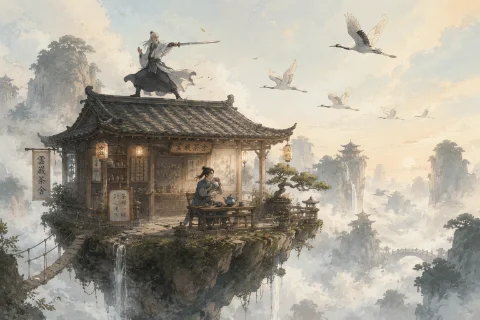
Wuxia, meaning martial heroes, is one of the oldest and richest storytelling traditions in Chinese literature. It follows skilled martial artists, often outsiders or wanderers, who move through a world called the jianghu, a shadow society of sects, masters, rivals and outlaws that runs alongside ordinary civilisation. Heroes are defined not by birth or magic but by discipline, code and skill. Duels are elaborate. Loyalties are complicated. Justice is personal. And gravity, more often than not, is optional.
What Makes Wuxia Different
Wuxia has centuries of history, from Tang dynasty tales to the massively influential twentieth century novels of Jin Yong (Louis Cha) and Gu Long, whose works have shaped Chinese pop culture the way Tolkien shaped Western fantasy. In the last two decades, wuxia has found a wider global audience through films like Crouching Tiger, Hidden Dragon and Hero, through television adaptations, and through the recent wave of English translations.
Three qualities tend to mark a wuxia story. First, martial arts elevated to near-superhuman skill, with named techniques, secret manuals and legendary weapons. Second, a strong code of honour, expressed through the concept of xia, roughly the chivalric ideal of a righteous warrior who protects the weak and repays debts. Third, the jianghu itself: a world of sects, sworn brotherhoods, forbidden romances, betrayals and long revenge plots that gives the genre its unmistakable atmosphere. Wuxia is often confused with its cousin xianxia, but the distinction matters: xianxia involves gods, immortals and cultivation, while wuxia keeps its heroes human, however extraordinary their skills.
Why Readers Love It
Wuxia delivers a specific and thrilling combination. The action is spectacular, with duels and chases that feel like dance. The emotional stakes are high, because honour, loyalty and reputation carry real weight. And the moral texture is rich, since even the greatest hero must navigate rival sects, old debts and impossible choices.
The genre also offers Western readers a chance to step into a fully realised storytelling tradition with its own conventions, tropes and pleasures. Recognising a wuxia archetype, the humble master, the arrogant young prodigy, the mysterious swordswoman, is part of the joy, like meeting old friends in new stories.
Where to Start
Jin Yong's Legends of the Condor Heroes, now available in English, is the definitive entry point. Gu Long's shorter, moodier works are also being translated. Modern authors writing in English are producing wuxia-inflected fantasy that pulls in new readers beautifully. Films remain a wonderful gateway too, and can point readers back to the novels they were adapted from.
From there, dive into indie territory, where wuxia and wuxia-inspired fiction is finding fresh voices. Independent authors, especially those from the Chinese diaspora, are writing bold new takes on the genre for global audiences.