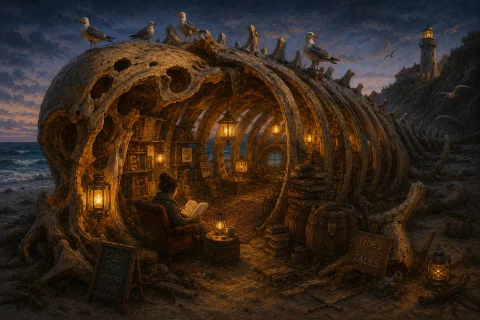
Steampunk gave us brass, gears and airships. Whalepunk asks a stranger question: what if the age of industry ran not on coal and steam but on the oil of monstrous sea creatures? Set in worlds inspired by the 19th century whaling era, whalepunk blends gaslamp fantasy, maritime adventure and eldritch horror. The cities are gaslit and grimy. The seas are full of things that should not exist. And somewhere between the harpoon and the grimoire, the genre finds its voice.
What Makes Whalepunk Different
The term whalepunk emerged largely from indie and tabletop RPG communities before spreading into fiction, and it retains that grassroots energy. The aesthetic borrows from Melville's Moby-Dick, from gothic sea tales, from Lovecraftian ocean horror and from the muddy, lamplit London of Dickens. Then it electrifies the mix with magic, alchemy or forbidden knowledge, usually pulled up from the deep along with the catch.
Three markers tend to define a whalepunk story. First, a maritime industrial setting where hunting sea beasts is central to the economy. Second, a gaslamp fantasy tone: cobbled streets, coal smoke, corsets and quiet dread. Third, a willingness to let the ocean be genuinely terrifying, full of leviathans, cults and things older than the maps. Where steampunk tends towards adventure and invention, whalepunk leans towards atmosphere and unease.
Why Readers Love It
Whalepunk offers a sensory world unlike anything else in speculative fiction. The smell of oil and rope, the creak of a wooden hull, the sway of a gaslit tavern above a black harbour: these books immerse you in texture. Readers who love steampunk aesthetics but crave something darker and saltier find exactly what they were missing.
The genre also plays beautifully with moral weight. Whaling itself is uncomfortable history, and whalepunk rarely looks away from that. The best books use the setting to explore industry, exploitation and the monsters humans become when profit meets the deep.
Where to Start
Because whalepunk is still emerging, discovery is part of the fun. Look for indie fantasy tagged gaslamp, maritime or nautical, and for books that promise sea monsters, harpoons or Victorian sorcery. Tabletop games like Scum and Villainy adjacent worlds and settings like Blades in the Dark have helped shape the aesthetic and often point readers towards the fiction. This is a genre where indie authors are quite literally drawing the map.