You send a polite, friendly email asking a local bookstore if you could come in for a signing or a small event. You wait. Sometimes you get a kind but vague reply. Often you get nothing at all. It's easy to read that silence as a judgement on your book, your writing, or whether you're "established enough" to be taken seriously.
Most of the time, none of that is true. Bookstores, especially independent ones, are usually running on a small staff with a long list of competing priorities, and the way most visit requests arrive makes it genuinely difficult for them to say yes, even when they'd quite like to. There are a few things bookstores almost universally wish authors understood before reaching out, and knowing them tends to make the difference between silence and an actual invitation.
Stock Comes Before Anything Else
The single most common reason a request goes nowhere has nothing to do with the pitch itself. It's that the store doesn't stock the book, and has no straightforward way to get it. Many indie authors approach a bookstore assuming the visit comes first and the stocking question can be sorted out afterwards. From the store's side, it usually works the other way round. They need to know the book is available through their normal supplier, in a format and at a discount that makes sense for them to sell, before they can seriously consider hosting an event around it.
Asking about stocking and supplier details before pitching a visit, rather than after, immediately signals that you understand how a bookstore actually operates, and removes the single biggest obstacle before it has a chance to stall the conversation.
They Need to Know What Kind of Event It Actually Is
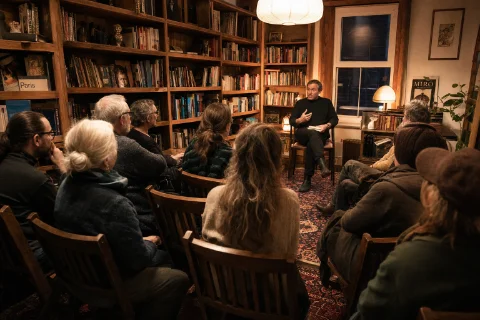
A vague request to "come in and meet readers" asks the store to imagine the entire shape of an event themselves, which is more effort than most staff have time for. Bookstores generally want to know, fairly specifically, what they're agreeing to. Is this a quiet signing where you'll sit at a table for an hour. A short talk with a reading. A small panel with other local authors. Each of these requires different staffing, different space, and different promotion, and an unclear request often gets put aside simply because nobody has time to clarify it before passing it along to whoever makes that decision.
Local Connection Matters More Than Most Authors Assume
Bookstores, particularly independents, tend to prioritise authors with some kind of genuine link to the area, whether that's living locally, setting a book nearby, or having an existing relationship with the shop through previous visits or purchases. This isn't snobbery. It reflects who's actually likely to walk through the door for the event. An author with no local tie at all can still get a yes, but it usually takes a clearer case for why local readers would specifically want to attend, rather than assuming the connection is implied just because the request was sent.
They're Wary of Events That Won't Draw a Crowd
Hosting an event costs a bookstore more than it might seem from the outside. Staff time, floor space, sometimes lost browsing traffic for an hour or two, all for an event that might draw four or five people if nobody outside the immediate friend group shows interest. Stores have understandably become cautious about saying yes to events without some indication that the author can bring people in, not just rely on the shop's own foot traffic to fill the room.
Mentioning, briefly and without overselling it, what you plan to do to promote the event yourself, a mailing list, a local following, a history of decent turnout at past events, reassures a store that they're not the only ones responsible for filling the room.
Timing Requests Matter More Than Authors Realise
Many stores plan their events calendar weeks or even months ahead, particularly around busy seasonal periods. A request sent with only a week or two of lead time, hoping for a quick yes, often arrives too late to be slotted in properly, even if the store would otherwise be interested. Reaching out well in advance, and asking directly how far ahead they typically plan their calendar, avoids requests disappearing simply due to bad timing rather than any lack of interest in the book itself.
A Short, Clear Email Beats a Long, Warm One
It's a natural instinct to write a warm, detailed email introducing yourself properly, hoping that personality and sincerity will help your case. In practice, store staff are usually skimming a stack of similar requests, and a long email asks for more time than most are able to give it before moving on to the next task. A short, clear message covering exactly what's being proposed, what's available for stocking, and a rough sense of timing tends to get read fully and answered, while a long, friendly one often gets set aside with good intentions and never quite returned to.
What This All Adds Up To
None of this means bookstores are difficult to work with. Most genuinely enjoy hosting local authors when the logistics line up cleanly. The difference between silence and a yes usually comes down to how much of the groundwork, stocking, format, promotion, and timing, has already been thought through before the request lands in their inbox, rather than left for the store to figure out on the author's behalf.
The Part Worth Remembering
A bookstore visit request isn't really being judged on how good your book is. It's being judged on how easy you've made it for a busy, small team to say yes without creating extra work or risk for themselves. Make that part simple, and the rest tends to follow far more easily than most authors expect.