The visit went well. A decent turnout, a few good conversations, some books sold. You drive home feeling pleased with how it went, and at some point in the following days you send a quick thank-you message to the store, something polite and brief, and then you move on to the next thing.
Six months later, you wonder why you were never invited back, even though the event itself seemed to go fine. The visit usually isn't the deciding factor here. The follow-up is, and most authors send one that's too thin to actually do the job of getting them rebooked.
Why a Good Visit Doesn't Guarantee a Second One
Bookstores host a steady stream of authors, and a single pleasant evening, even a genuinely successful one, can blur into the general memory of "that was a nice event" without leaving much of a specific impression behind. Staff are busy, turnover happens, and the person who hosted you might not even be the one deciding on future events by the time another slot opens up.
A thin, generic thank-you note does nothing to fix this. It confirms you're polite, which the store probably already assumed, but it gives them no real reason to think of you specifically when they're next considering who to invite back.
What the Follow-Up Actually Needs to Do
A follow-up that leads to a second invitation needs to do more than say thank you. It needs to leave the store with a clear, specific impression of the value you brought, make it easy for them to picture working with you again, and remove as much friction as possible from the idea of rebooking.
Be specific about what actually happened, not just grateful that it happened. Rather than "thanks so much for having me, it was a lovely evening," mention something concrete. The number of books sold, if you know it. A particular moment that stood out, a great question from someone in the audience, a comment a staff member made that you appreciated. Specifics make the email memorable in a way that politeness alone never does.
Acknowledge the staff by name where you can. If someone in particular helped set up, promoted the event, or made you feel welcome, mention them directly. A note that says "please pass on my thanks to Priya for sorting the table setup so quickly" tends to get shared internally and remembered far better than a message addressed generally to "the team."
Mention something you noticed about how they run events. A brief, genuine observation, "I really liked how you had the chairs set up close together rather than spread out, it made the Q&A feel much more relaxed," shows you were paying attention to their event, not just focused on your own performance. This signals you'd be easy and considerate to work with again.
Offer something concrete for next time, without being pushy about it. Rather than vaguely hoping to be invited back, mention a specific idea. A different format you'd be happy to try, a seasonal tie-in for an upcoming release, or simply stating plainly that you'd love to come back whenever it suits them. A concrete offer is easier for a store to act on later than a vague, open-ended hope.
Send it within a day or two, while the event is still fresh. A follow-up sent a week or two later arrives after the impression has already faded into the general blur of past events. Sending it promptly, ideally the next day, keeps the specific details sharp for both of you and shows a level of attentiveness that a delayed message doesn't.
What This Looks Like in Practice
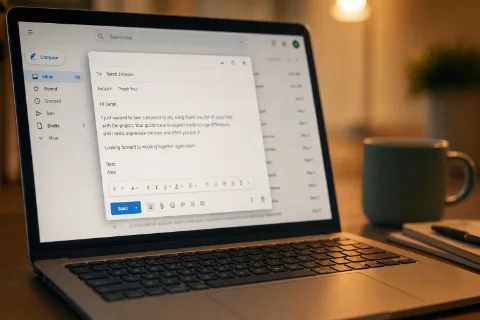
A follow-up built this way might read something like this. A warm but brief opening thanking them for hosting. A specific, genuine detail about how the evening went, mentioning a staff member by name if relevant. A short note about something you appreciated about how they organised things. A simple, low-pressure mention that you'd love to come back, with a loose idea of what that might look like next time. And a closing that keeps the door open without demanding an immediate answer.
This isn't a long email. It's a focused one, built to leave a clear, specific impression rather than a generic, forgettable one.
Following Up Again, Later
If you don't hear back about a future visit within a reasonable stretch, a separate, brief note a few months later, mentioning a new book, an upcoming local event, or simply checking in, keeps the relationship alive without relying entirely on the original follow-up to do all the work. Bookstores rebook authors they remember clearly and feel good about working with, and that impression is built cumulatively, not just from one perfectly worded email.
The Part Worth Remembering
Getting rebooked rarely comes down to how the event itself went on the night. It comes down to whether the store walks away with a clear, specific, positive impression of you afterwards, and whether you've made it easy for them to picture doing it again. A thoughtful, specific follow-up does more for your next invitation than almost anything that happened during the visit itself.