The collapse of the river basins marks the final boundary between natural biodiversity and a permanent dust bowl. When the great seasonal floods fail to arrive, the landscape stops being a living ecosystem and transforms into a countdown clock written in clay. The concept of the Silt Ledger represents the absolute accounting of a dying watershed, where every remaining drop of moisture is tracked by the roots of the plants that rely on it. In this eco-lit landscape, environmental survival is no longer about conservation, but about managing the final, desperate retreat of life into the deep soil.
The Survival of the Subterranean Net
As the surface water evaporates under a warming sky, the only active resistance against total ecological collapse occurs out of sight. Intricate, underground rhizome networks act as a collective biological computer, sharing resources across miles of parched terrain.
Nutrient Redirection: The root systems systematically cut off dying surface shrubs to channel remaining moisture toward deep-rooted keystone trees.
Silt Binding: The network uses specialized organic glues to hold the loose soil together, preventing the wind from stripping away the fertile topsoil.
Stress Signaling: Chemical warnings travel through the fungal pathways, triggering premature seed drop across entire plant communities before the heatwaves strike.
When these subterranean connections are severed by human development or deep soil cracking, the landscape loses its structural anchor, causing desertification to accelerate exponentially.
The Logistics of the Drying Delta
The advance of the sand dunes is a mechanical process that systematically chokes out the remaining wetland channels. Managing a modern ecological crisis requires a strict understanding of how dust alters the local climate loop.
[Upstream Water Diversion] ➔ [River Basin Drying] ➔ [Rhizome Network Fragmentation] ➔ [Rapid Dune Advance]
Without the cooling presence of active plant transpiration, the ambient temperature of the valley floor spikes, creating high-pressure zones that repel rain clouds. Dust storms systematically coat the remaining hydroponic outposts, fouling filtration arrays and burying human settlements under tons of irradiated silt. The local communities must transition into a lifestyle of aggressive ecological defense, clearing irrigation ditches with mechanical scrapers while trying to sustain a dying agricultural heritage.
The Archive of the Final Spark
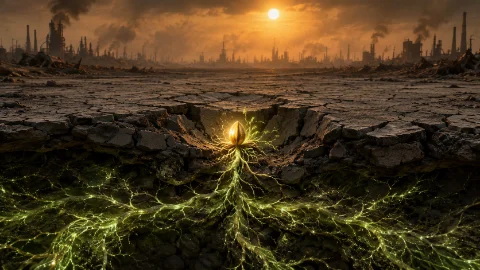
The ultimate symbol of survival in this parched world is the preservation of the last viable seed harvested from the historic floodplain. This single organic artifact holds the genetic memory of a complex, self-sustaining river ecosystem that no longer exists in nature.
Protecting this seed requires more than a sterile vault; it demands a complete societal commitment to finding or creating a habitat capable of hosting its revival. Until that day arrives, humanity exists as a temporary guardian of a biological ledger that is dangerously close to closing forever.