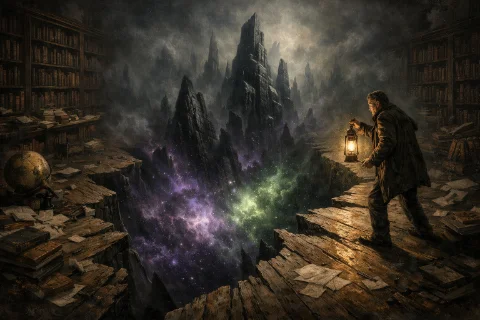
The monster is the least important thing in a monster story.
That sounds like heresy for a genre built on claws and teeth, but every writer who has spent time with creature features eventually learns it. The beast itself might get twenty minutes of screen time, or thirty pages out of three hundred. Everything else, the long everything else, is territory. The stretch of forest the locals will not name. The lake with a boat rental shack that closed in 1987 and never explained why. The gap in the county map where the trails simply stop.
This guide is for writers building that territory. We will look at how sightings work as a narrative currency, why local silence is scarier than local legend, and how the unwritten rules surrounding an uncatalogued beast do more work than any full reveal ever could. Because the creature feature is not really about the creature. It is about the negotiated space between a community and the thing it has agreed not to see.
The Territory Comes Before the Beast
Before your creature appears, before the first paw print or the first missing hiker, the land itself should already feel claimed.
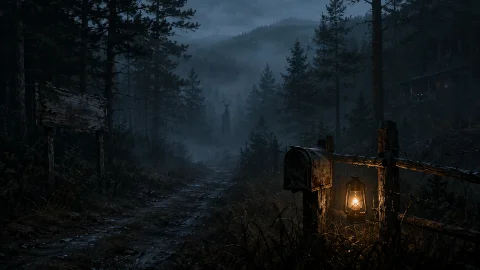
Territory in a creature feature is not just a setting. It is a boundary the reader learns to feel. On one side of it, the world behaves. Cell service works, dogs bark at squirrels, and teenagers park by the reservoir on Friday nights. On the other side, small things go quietly wrong. The birdsong stops at a particular bend in the trail. Deer are plentiful right up to a certain ridgeline and absent beyond it. The old logging road is in perfect condition because nothing, not even weather, seems willing to use it.
The craft move is to draw this boundary with absences rather than events. Do not show the reader the beast's territory by staging an attack. Show it by removing things. No insects. No roadkill past the third mile marker. No graffiti in the one highway underpass that every other underpass in the county has. Readers are pattern-hunting animals, and an absence in the pattern unsettles them far more deeply than a shadow in the trees.
By the time your protagonist crosses the line, the reader should already know exactly where the line is. That knowledge is the dread.
Sightings Are a Currency, Spend Them Slowly
In cryptid country, a sighting is not information. It is a social event with a cost attached, and how your characters spend that currency defines them.
The drunk who saw it clearly and tells everyone is not believed, and the not-believing is a ritual the whole town performs with relief. The retired game warden who saw it twice and never told anyone holds authority in every scene precisely because the reader can sense the weight of what he is not saying. The teenager who caught eleven blurry seconds on a phone becomes a local celebrity for one summer and a cautionary tale for the next ten years.
For the writer, the rule is simple and strict. Each sighting must be more expensive than the last. The first can be secondhand, a story told at a gas station. The second should be physical evidence with an innocent explanation attached, a shed hair the lab report calls undetermined canid. The third should be your protagonist's own glimpse, partial, peripheral, over before the mind can accept it. The full sighting, if you grant one at all, is the most expensive purchase in the book, and it should cost someone everything.
Hold that structure and the reader stays hungry for four hundred pages. Break it, and give the full creature away in chapter two, and you have spent your entire fortune before the story has begun.
The Locals Are Not Ignorant, They Are Fluent
The laziest version of the creature feature treats the local community as fools who refuse to see the obvious. The strongest version understands the opposite. The locals see everything. They have simply developed a language of silence, and that language is one of the richest worldbuilding tools the genre offers.
Fluency in the silence looks like this. The diner owner who serves hunters all season but never sells a topographical map of the northeast quadrant, because she is out of them, permanently. The pastor who holds a small service every October for the missing, and prints the word missing in the program even though everyone in the pews would use a different word in private. The way three generations of a family have owned the land along the creek and never once cut the timber, despite the money it would bring, and the way the reason has decayed from a warning into a habit into a simple family fact that no one questions.
When your outsider protagonist arrives asking direct questions, the locals should not lie. Lying is crude. They should redirect, understate, and change the subject with the smooth expertise of people who have been doing it since childhood. Great, the fishing is great up there, though most folks stay south of the fork. Old trail washed out years back. You want pie? Pie just came out.
The reader hears everything the sentence is stepping around. That negative space is where the creature actually lives for most of the book.
The Rules of the Uncatalogued Beast
Every cryptid territory runs on rules, and the fascinating thing is that both sides obey them.
The community's rules are half safety protocol and half superstition, worn so smooth by time that no one remembers which half is which. You do not run the ridge trail alone. You do not whistle after dark past the second bridge. You bring the dogs in by dusk in the last week of October, every year, no exceptions, and if a visitor asks why, the answer is coyotes, delivered in a tone that closes the topic.
But here is the deeper craft opportunity. The beast has rules too. It does not cross the highway. It does not touch the farms along the river, though it could. It takes livestock only in the weeks before hard winter, and never twice from the same family. Something in its behavior suggests not mere instinct but something closer to a treaty, negotiated generations ago in a language of losses, and maintained by both parties out of a shared understanding that the alternative is worse.
The plot of your creature feature, in almost every case, is the story of that treaty breaking. A logging company buys the northeast quadrant. A new highway cuts the territory in half. An outsider shoots something they should not have shot. The rules fail, and both the town and the beast are forced into behavior neither has needed for a hundred years. Write the treaty first, and the breaking of it will structure your entire second act.
The Beast Should Be Wrong, Not Big
When the time finally comes to put your creature on the page, resist the instinct toward scale. Big is not frightening. Big is a special effect. Wrong is frightening.
Wrong is a gait that almost works, a stride pattern in the mud that a biologist would stare at for an hour because the weight distribution makes no sense. Wrong is a shape that reads as elk at first glance and then does not survive the second glance, and the mind's failed attempt to file it is the true source of the fear. Wrong is silence where there should be sound, a body of that size moving through dry October woods without a single branch protesting.
Describe your beast the way witnesses actually describe cryptids, in fragments that do not assemble. The eyes were too far apart. It bent the wrong way when it turned. It was there and then it was forty feet away and I never saw it move. Let every account contradict the others slightly, because contradiction is what real fear does to memory, and the reader's imagination will build something worse than any paragraph of clean description ever could.
The uncatalogued beast stays uncatalogued for a reason. The moment your prose catalogues it, measures it, and explains its diet, it stops being a cryptid and becomes an animal. Animals can be hunted. Keep yours one description short of complete, all the way to the final page.
The Ending Belongs to the Territory
Creature features offer three traditional endings. The beast is killed, the beast is revealed, or the beast is escaped. All three can work. But the endings that haunt readers longest belong to a fourth category: the territory endures.
The outsiders leave or are buried. The logging company quietly sells the quadrant back. The new trail signs are taken down within a year, and the county map returns to its old, incomplete self. The diner owner orders new topographical maps and keeps them under the counter. And on the last page, a family brings its dogs in at dusk in the final week of October, and a child asks why, and the parent says coyotes, and the treaty, mended at terrible cost, holds for another generation.
This ending works because it honors what the whole book has been about. Not a monster, but an arrangement. Not a hunt, but a border. The reader closes the book understanding that the territory was never the setting of the story. It was the story, and it is still out there, patient and uncatalogued, keeping its side of the bargain.
Building Your Own Cryptid Territory
Before you draft your creature feature, work through this quick checklist.
Draw the boundary with absences. Decide what is missing inside the territory, and let your reader discover the pattern before your protagonist does.
Budget your sightings. List every glimpse of the creature in the whole book, put them in order of rising cost, and make the final one the most expensive scene you have ever written.
Teach the locals fluency. Give three townspeople a redirect, an understatement, and a subject change, and never let them lie outright.
Write the treaty. List the rules the town obeys and the rules the beast obeys, then break exactly one of them to start your plot.
Keep the beast wrong, not big, and one clean description short of catalogued.
End with the territory intact, if you can bear it. The mended treaty is the ending the genre was born for.
The cryptid territory is the creature feature's true protagonist. Sightings are its currency, silence is its language, and the treaty between the town and the beast is its constitution. Spend the sightings slowly. Trust the absences. Let the locals speak fluent silence, and keep your beast forever one glimpse away from being fully seen.
Write the border first. The thing that patrols it will take care of itself.