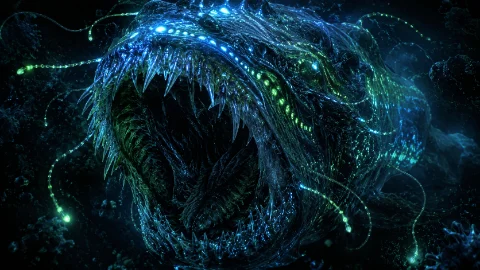
The absence of sunlight in the deep ocean has forced a radical evolutionary shift in the creatures that rule the trenches. Down past the midnight zone, normal vision is completely useless, giving rise to unique biological survival strategies. The most terrifying predators do not hunt in total darkness; instead, they manipulate light to trap their prey. Bioluminescence at these extreme depths is an active tool for hunting, communication, and absolute dominance.
The Mechanics of Phantom Lures and False Horizons
Many giant leviathans use specialized organs called photophores to produce light through precise chemical reactions. These biological lights are carefully managed to manipulate the behavior of smaller deep-sea organisms.
Angler Tendrils: Long, fleshy appendages tipped with glowing bacteria dangle directly in front of massive, hidden jaws.
False Bait Swarms: Patterns of flashing blue dots along the predator's flank mimic harmless, edible deep-sea shrimp pools.
Acoustic Syncing: Some species pulse their lights in direct rhythm with their bio-sonar pings to disorient prey tracking systems.
By creating these mesmerizing visual illusions, the apex predator forces its prey to swim directly into striking range.
Flash Blindness and Chemical Shock Tactics
In a world of permanent darkness, the sudden introduction of intense light is highly destructive to sensitive deep-sea eyes. Certain abyssal monsters utilize explosive bursts of bioluminescence as an offensive weapon.
[Target Acquired] ➔ [Sudden High-Output Flash] ➔ [Retinal Overload] ➔ [Defenceless Prey Captured]
When an apex predator closes in on a target, it activates high-output chemical cells located around its face. The resulting blinding flash instantly overloads the highly sensitive, low-light eyes of deep-sea prey animals. Temporarily blinded and completely disoriented, the target cannot execute evasive maneuvers or escape the oncoming attack. This tactical use of light ensures a high hunt success rate while consuming minimal physical energy.
Counter-Illumination and the Art of Ghostly Camouflage
The most advanced use of deep-sea bioluminescence is not for attraction or blinding, but for complete invisibility. Large predators must remain hidden from both their prey and rival monsters occupying the same trench territory.
By matching the faint, ambient downwelling light from higher zones, these giant creatures can completely erase their own silhouettes. A diver or a deep-sea submersible looking upward would see absolutely nothing until the massive jaws open.