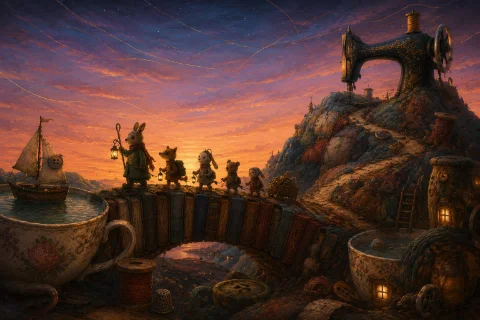
Most speculative fiction imagines the future in chrome or the past in castles. Stitchpunk imagines it in fabric. This niche genre centres on small handcrafted beings, often ragdolls or stitched creatures animated by some spark of life, surviving in worlds assembled from salvage: rusted machines, broken toys, thread, buttons and bone. The name follows the punk suffix tradition of steampunk and dieselpunk, but where those genres run on engines, stitchpunk runs on needle and thread.
What Makes Stitchpunk Different
The genre's defining touchstone is the animated film 9, produced by Tim Burton, in which nine burlap dolls carry the last remnants of humanity through a machine-ravaged wasteland. That film crystallised an aesthetic that had been gathering for years in dark fairy tales, puppet animation and gothic children's stories: the handmade hero in a broken world.
Stitchpunk stories tend to share three threads. First, protagonists who are literally constructed, which raises tender questions about what makes something alive. Second, worlds of ruin and salvage, where every object was once something else. Third, a tone that balances darkness with warmth. These are often stories about very small, very fragile beings showing enormous courage, which gives the genre a fairy tale heart beneath its post-apocalyptic surface.
Why Readers Love It
Stitchpunk offers intimacy on a scale most speculative fiction ignores. When your hero is twenty centimetres of stitched burlap, a staircase becomes a mountain and a cat becomes a dragon. That shift in scale makes familiar worlds strange again and turns modest acts into epics.
The genre also carries a quiet emotional charge. Handmade characters wear their fragility openly, every seam and patch visible, and readers respond to that honesty. These are stories about being imperfectly made and enduring anyway, which may be why the genre resonates so deeply with readers who feel a little hand-stitched themselves.
Where to Start
Stitchpunk remains gloriously niche, which makes it a treasure hunt. Look for dark fairy tales featuring living dolls and constructed beings, illustrated fiction with a handcrafted aesthetic, and stories tagged alongside steampunk that trade brass for burlap. Indie authors are the genre's true home, crafting stitchpunk tales with the same care their characters are sewn with.