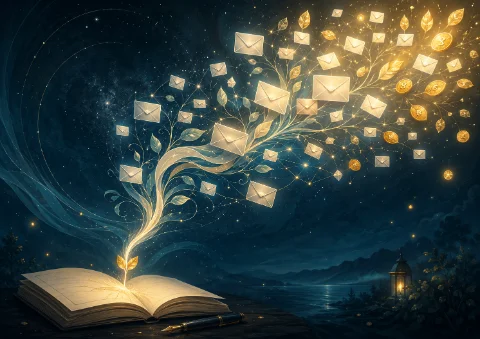
When we log into our favorite digital retailer or reading app, the experience feels incredibly personalized. The home page is immediately populated with a grid of covers perfectly tailored to our past purchases. It feels like the system knows exactly what we want. But this convenience hides a subtle and pervasive problem.
Recommendation engines do not exist to expand your worldview. They exist to eliminate friction and maximize immediate engagement.
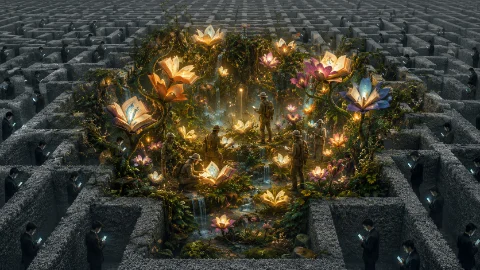
To achieve this, algorithms rely on collaborative filtering and predictive modeling, grouping you with millions of other users who share similar data points. If you bought a gritty fantasy novel, the system will show you ten more books with the exact same pacing, the exact same cover design, and the exact same character archetypes. Instead of being exposed to a narrative that might challenge you, you are fed a continuous loop of what you already know.
The Illusion of Choice
Over time, this constant reinforcement creates a deep homogenization of taste. The strange, the complex, and the deeply regional stories simply fall through the cracks because they do not fit neatly into an easily categorized box.
When a reader is only ever presented with slight variations of the same mainstream tropes, their expectation of what a story should be begins to narrow. We slowly lose our appetite for narratives that require patience or operate in the uncomfortable grey areas of human morality. The algorithm trains the reader to want predictability, and in turn, the reader trains the algorithm to serve nothing else.
The Death of Serendipity
The greatest joy of discovering literature manually is serendipity. It is the experience of walking into a library looking for a thriller and walking out with a dense, poetic memoir because the cover caught your eye or a bookseller placed it in your hands.
Algorithms actively destroy serendipity. They remove the beautiful friction of stumbling upon something completely unexpected. This has a chilling effect on creators. When authors know their books must satisfy the rigid parameters of an algorithm to be seen, they are financially incentivized to write formulaic plots. The stories that take massive structural risks or feature truly unconventional anti-heroes are quietly buried under a mountain of algorithmically optimized content.
Breaking the Algorithmic Loop
Escaping this homogenization requires deliberate action from both readers and authors. We have to actively seek out friction and embrace intentional curation.
As readers, this means stepping outside the walled gardens of major tech platforms. It means subscribing to author newsletters and utilizing alternative, peer-to-peer discovery platforms like ReadIntent or Indie Book Lovers. These spaces champion the exact kind of deep storytelling that automated feeds ignore.
As independent authors, our responsibility is to refuse the pressure to write to market. We must continue to craft complex narratives and build our own dedicated ecosystems. By fostering professional community spaces, selling direct, and trusting human curation over machine learning, we ensure that truly original literature survives the era of opaque recommendations.