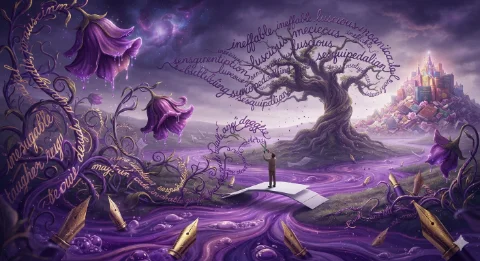
Most speculative fiction rests on a promise. The author sets up the rules of the world, whether it is a magic system, a technology, or an altered law of physics, and then honors those rules for the rest of the book. Readers love this, and for good reason. A consistent world feels trustworthy, and trust lets them relax into the story.
But there is a bolder, stranger kind of story that breaks this promise on purpose. In it, reality is not a sealed container but a leaky vessel. The rules do not hold. Gravity works until it does not. Time runs forward except when it doubles back. Cause and effect fray at the edges. The world itself becomes unstable, and the characters, and the reader, can never be entirely sure what is possible from one page to the next.
This is enormously difficult to pull off. Done carelessly, it reads as an author who simply does not know their own world. Done with control, it produces a vertiginous, dreamlike dread that few other techniques can match. Here is how to write reality as a leaky vessel without letting your story spring a fatal leak.
Why Break the Rules of Reality at All
Before learning how, it is worth understanding why. Deliberate instability is not just a gimmick. It serves powerful purposes that a stable world cannot.
First, it generates a unique kind of dread. In a consistent world, the reader learns the rules and can predict the dangers. In a leaky world, that safety never arrives. The reader can never fully settle, because the thing they rely on most, the basic reliability of reality, is precisely what keeps failing. This produces a low, constant unease that colors every scene, a sense that the floor could give way at any moment.
Second, it mirrors real states of human experience. Grief, trauma, dreams, mental illness, profound disorientation. These states genuinely feel like reality coming loose at the seams, like the rules no longer applying. A story where reality leaks can capture the texture of these experiences in a way that a stable world simply cannot. The instability becomes a kind of emotional truth, even when it is literally impossible.
Third, it keeps the reader in a state of active engagement. When the rules might change, the reader cannot coast. They lean in, watching for shifts, trying to map a world that refuses to be mapped. That heightened attention, that sense of walking on ground that might not hold, is a large part of the pleasure of this kind of fiction.
The Paradox of Controlled Chaos
Here is the central challenge, and it is a genuine paradox. A story where the rules keep breaking still needs rules, or it becomes meaningless. If literally anything can happen at any moment, then nothing that happens carries weight, because there were never any stakes to violate. Instability only frightens and moves us against a backdrop of expectation.
The solution is to make the instability itself the rule. The reader should understand that in this world, reality is unreliable, but that unreliability must follow its own deeper logic. Perhaps the leaks intensify near a certain place, or when a character feels a certain emotion, or according to some pattern the reader can sense even if they cannot name it. The breaking of rules should feel governed by a hidden order, a set of meta-rules that the reader gradually intuits.
This is the difference between chaos that feels intentional and chaos that feels like a mistake. When a rule breaks and the reader senses that it broke for a reason, even a mysterious one, they trust the author and lean deeper into the strangeness. When a rule breaks and it feels arbitrary, they conclude the author has lost control, and the spell shatters. Your whole craft in this genre lives in that distinction. The reader must always feel that you know exactly what you are doing, even as you convince them that reality does not.
Techniques for Writing a Leaky Reality
With that paradox in mind, here are the practical tools for making instability work on the page.
Establish normal before you break it
You cannot feel a rule break if you never felt the rule. Begin by grounding the reader in something stable and familiar, a world that behaves. Let them settle. Then introduce the first small leak, a detail that is subtly, impossibly wrong. That first crack lands with tremendous force precisely because you took the time to build the surface it breaks. The more solid the initial reality feels, the more disturbing its first failure.
Start small and escalate
Reality should not shatter all at once. It should leak, slowly at first. Begin with wrongness so minor the characters might dismiss it, a shadow falling the wrong way, a memory that does not match, a door that leads somewhere it should not. As the story builds, let the leaks widen and multiply. This escalation gives the instability an arc, a mounting pressure, rather than a flat wall of weirdness. The reader feels the vessel failing gradually, which is far more unnerving than a single dramatic rupture.
Anchor the reader in the character
When the world will not hold still, the character becomes the reader's only stable point of reference. Keep the emotional reality of your character consistent and clear, even as the physical reality dissolves around them. The reader needs someone to hold onto. If the character's feelings, fears, and desires remain coherent and human, the reader can endure almost any amount of external chaos, because they are anchored to a soul that still makes sense.
Let the leaks mean something
The most powerful instabilities are not random. They resonate with the story's themes and the character's inner life. A character wracked by guilt might find time looping them back to the moment they regret. A character losing their sense of self might watch the world literally lose its edges. When the way reality breaks reflects what the story is truly about, the instability stops being mere spectacle and becomes metaphor made physical. That is where this technique reaches its full power.
Balancing Disorientation With Readability
There is a real danger here. A story where reality constantly breaks can become so disorienting that the reader gives up, unable to find any footing at all. Confusion is not the same as dread, and a lost reader feels nothing but frustration.
The remedy is to be generous with clarity everywhere else. If your reality is unstable, then your prose, your character motivations, and your emotional beats should be exceptionally clear and grounded. The reader can handle a world that does not make sense only if the storytelling itself makes perfect sense. Give them clean sentences, legible feelings, and a strong emotional throughline to follow. The strangeness should live in what happens, not in whether they can understand what happened. When the writing is clear and the world is strange, the reader feels productive unease. When both are murky, they simply feel lost.
A Simple Exercise to Try Today
Take a completely mundane scene from your work in progress, something utterly ordinary like a character making coffee in their kitchen. Write it grounded and normal, then introduce a single small impossibility partway through, one detail that quietly violates the rules of reality. Do not explain it. Do not let the character fully react. Let the scene continue as if the world has not just cracked. Read it back and notice the specific unease that one small leak creates against an ordinary backdrop. That precise feeling, wrongness inside the familiar, is the entire technique distilled into a single moment.
Readers trust authors to build worlds that hold together, and most of the time that trust is well placed. But there is a rare and haunting kind of story that betrays that trust on purpose, that lets reality itself become a leaky vessel, dripping and buckling and refusing to stay whole. When it is done with true control, it produces a dread and a wonder that stable worlds can never reach, because it unsettles the one thing readers assumed they could count on.
Write reality as a leaky vessel, but never forget the paradox at its heart. The instability must be the most carefully controlled thing in your book. Make the breaking follow a hidden order, anchor your reader in a character who still makes sense, and let every leak carry meaning. Do that, and you will give your reader the extraordinary experience of watching the world come apart in their hands while trusting, completely, that you meant for it to.