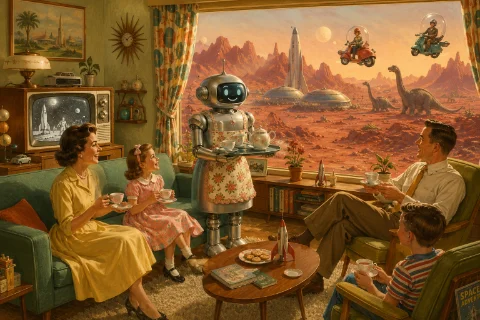
Every so often, science fiction remembers that it started with ray guns and rocket fins, not equations. Raypunk is the loving tribute to that older, wilder tradition. The name captures a whole aesthetic: retro-futuristic technology powered by mysterious rays, bright bold visuals, and worlds where the impossible is not only allowed but expected. Where hard science fiction asks could this actually work, raypunk asks does this look amazing on a book cover, and answers yes.
What Makes Raypunk Different
The genre draws from the golden age of pulp science fiction, from Flash Gordon and Buck Rogers to 1950s B-movies, atomic age advertising and mid-century sci-fi magazine art. It also overlaps with atompunk and the retro-future sensibilities of games like Fallout and shows like The Jetsons, but raypunk pushes further into strangeness. The point is not nostalgia alone but permission. Permission to have jungle planets. Permission to have brain-in-a-jar villains. Permission to have a hero who fights space pirates with an atomic sword and never once explains the physics.
Three qualities tend to define raypunk. First, retro-futuristic visual signatures: chrome fins, glowing tubes, bulbous helmets, streamlined rockets. Second, a willingness to break scientific plausibility in favour of imagination and style. Third, a tone that leans towards adventure, wonder and occasional camp, rather than grim realism. Raypunk is the shelf where science fiction remembers how to grin.
Why Readers Love It
Raypunk offers something modern science fiction often forgets: sheer visual pleasure. These books practically demand illustrated covers and vivid imagery, and readers respond because the worlds are just plain fun to picture. Even in prose, raypunk generates images the mind lingers over.
The genre also delivers a rare emotional flavour. It is optimistic without being naive, imaginative without being demanding, and playful without being shallow. In a genre landscape crowded with dystopias and grimdark futures, raypunk is a bright, defiant shrug. It insists that wonder is still worth chasing.
Where to Start
Start with the pulp classics if you want the roots, then explore modern homages: the Fallout novels for atompunk cousins, and short story anthologies celebrating pulp science fiction. Comics such as Saga and older Flash Gordon collections carry the flame visually. From there, dive into indie territory, where raypunk truly lives today. Independent authors and small presses are keeping the ray guns firing, publishing bold, illustrated, wildly imaginative work that mainstream publishing rarely risks.