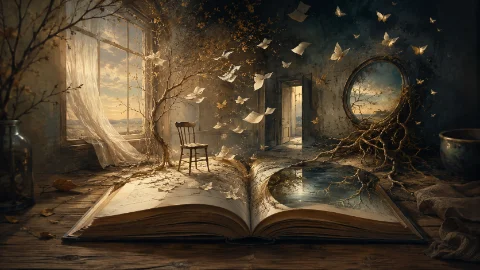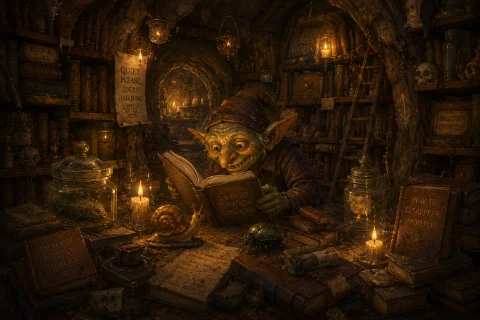
Goblincore began as an internet aesthetic, a joyful celebration of mushrooms, moss, snails, crooked teeth, mismatched jewellery and things most people overlook. Fiction quickly picked up the vibe. Goblincore stories centre on small, odd, often overlooked characters, goblins, kobolds, hedgewitches, forest imps, unfashionable fae, who live close to the earth, hoard cheerfully strange treasures and refuse to be tidied. It is fantasy with dirt under its fingernails and a big grin.
What Makes Goblincore Fiction Different
The genre pulls from a lot of good soil. Beatrix Potter's small woodland lives. The messy magic of Terry Pratchett's witches. The Bogglewood and burrow scenes of classic children's fantasy. Studio Ghibli's love of tiny, cluttered, wonder-filled spaces. And more recent cosy fantasy that has helped make room for stories not driven by chosen ones or dark lords.
Three qualities tend to mark a goblincore story. First, small-scale protagonists and settings. A hoard beneath a mushroom, a village of hedge folk, an apothecary run by a snaggle-toothed witch. Second, an aesthetic love of the overlooked: moss, mushrooms, beetles, bones, buttons, broken cutlery, damp forests, secondhand everything. Third, a tone that is playful, slightly feral and unabashedly cosy. Goblincore fiction is cheerfully anti-perfection. Mess is not a problem to be solved; it is a lifestyle to be celebrated.
The genre overlaps with cottagecore fantasy and cosy fantasy, but has its own flavour. Where cottagecore fantasy tends towards clean kitchens and herb gardens, goblincore leans into the wilder, mustier, sillier corners of the same wood.
Why Readers Love It
Goblincore fiction meets a very specific and increasingly loud reader wish: the wish to be small, strange and safe. In a culture that demands endless self-optimisation, these books insist that being a little odd, a little cluttered and a little offbeat is not just acceptable but delightful. Readers finish them feeling seen in a way that neat, aspirational fiction rarely manages.
The genre also delivers real sensory pleasure. Goblincore prose loves texture: damp leaves, warm burrows, tarnished trinkets, mushroom stew. Reading it feels like a walk in a wet autumn forest, and there are not many genres that can honestly claim that.
Where to Start
Because the label is young, discovery involves happy wandering. Kingfisher's cosy fantasies, especially the Saint of Steel and standalone titles, sit close to goblincore in spirit. Terry Pratchett's Tiffany Aching books have serious goblincore energy in their hedge magic and mucky boots. Children's classics like The Wind in the Willows and The Borrowers are honorary ancestors. From there, dive into indie territory, where goblincore fiction is really coming into its own. Independent authors are writing hedge witch novellas, goblin found-family stories and forest-floor mysteries with all the mossy joy the aesthetic promises.