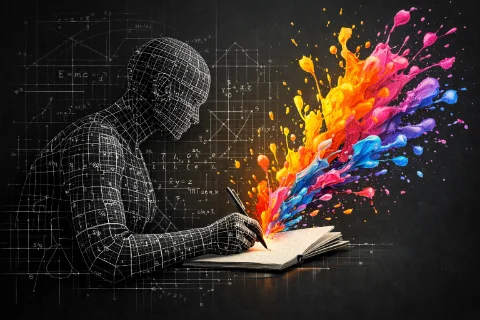
Many writers view blank pages and endless possibilities as the ultimate freedom, but too many choices can paralyze the creative process. The Oulipo movement, founded in the mid-twentieth century, offers a radical alternative: freedom through restraint. By intentionally adopting rigid, often mathematical rules, Oulipian writers bypass their subconscious filters and habitual phrasing. These artificial boundaries force the mind to work harder, leading to innovative word choices and narrative structures that would never emerge under normal conditions.
Implementing a constraint acts as a puzzle that the writer must solve. Consider the lipogram, a technique where an author completely avoids using a specific letter, or the N plus 7 method, which replaces every noun in a text with the seventh noun after it in the dictionary. When you cannot rely on your standard vocabulary, you are forced to explore the furthest corners of your language. The constraint stops being a prison and becomes a catalyst, pushing you toward unique metaphors and rhythmic cadences.
Ultimately, these strict rules strip away the ego and the pressure of perfectionism. Instead of staring at a blank screen waiting for inspiration, you focus on the mechanical challenge of the rule. The narrative emerges naturally from the structure itself, often surprising the author in the process. By introducing deliberate obstacles into your creative routine, you break free from predictable patterns and discover a more profound, deliberate form of artistic expression.