Every story needs an antagonist, some force that pushes against the characters and forces them to change. We usually imagine that force as a person. The tyrant, the rival, the monster at the door. But in survival fiction and the harder edges of dystopia, the most relentless antagonist is often not a person at all. It is a number that keeps dropping. Liters of water. Cans of food. Rounds of ammunition. Days until the crops fail.
Scarcity is the antagonist that never sleeps, never negotiates, and cannot be defeated in a single climactic scene. It simply keeps counting down. When you learn to write it well, scarcity stops being a bit of background worldbuilding and becomes a living presence in your story, one that squeezes your characters, tempts them, and slowly reveals who they truly are. Here is how to bring it to life.
Why Scarcity Makes Such a Powerful Antagonist
A human villain can be reasoned with, outsmarted, or killed. Scarcity offers none of those exits. It is indifferent to cleverness and immune to persuasion. You cannot talk a drought out of continuing. You cannot intimidate an empty fuel tank. This impersonal, unstoppable quality is exactly what makes scarcity so frightening on the page.
It also generates tension automatically and continuously. A human antagonist has to keep showing up to stay threatening. Scarcity is threatening every single moment, whether or not anything dramatic is happening, because the reader always knows the supply is finite and shrinking. Every meal eaten, every mile driven, every bullet fired brings the characters closer to the edge. That constant background pressure means your story is tense even in its quietest scenes, which is a gift few other antagonists can offer.
Most powerfully, scarcity is a moral engine. It forces impossible choices and reveals character under pressure. Who eats and who goes hungry. Whether to share with a stranger or hoard for your own. These are the decisions that expose the soul, and scarcity manufactures them relentlessly, without the author ever having to force the plot.
Giving Scarcity a Personality
To make scarcity feel like a true antagonist rather than a spreadsheet, you have to give it presence and character, the same way you would with a person. This sounds strange, but it is the key to the whole technique.
Make the reader feel the count
The reader should always have a rough sense of how much is left, because dread lives in the arithmetic. You do not need to state numbers constantly, but the awareness of dwindling supply must hum beneath every scene. A character glancing at the water level. The sound of a nearly empty can. The way a family measures out portions a little smaller than last week. When the reader feels the count dropping, scarcity is always present in the room, even when no one mentions it.
Let it tempt as well as threaten
A great antagonist does not only attack. It seduces. Scarcity is at its most interesting when it offers terrible bargains. The stranger has food, but taking it means abandoning your principles. There is enough for one to survive, but not two. Scarcity whispers that the rules no longer apply, that survival justifies anything. When you let it tempt your characters, not just threaten them, it becomes a genuine adversary for the soul rather than a simple obstacle.
Give it moods and rhythms
Even scarcity has texture. There are moments of false relief, a sudden windfall, a full tank, a good harvest, when the pressure lifts and hope creeps back in. Then the decline resumes, all the crueler for that brief reprieve. By giving scarcity these rhythms of relief and renewed pressure, you keep it from feeling like a flat, unchanging grind. It becomes a presence with its own arc, tightening and loosening its grip like a living thing.
Make it corrupt slowly
The deepest way scarcity works as a character is by changing the people it touches. Watch how it hardens them over time. The generous character who starts to hoard. The honest one who begins to lie about supplies. The group that slowly stops sharing. Scarcity does not just kill bodies. It erodes values, and showing that erosion is where the true horror of the genre lives.
Building the World Around What Is Missing
In a story where scarcity is the antagonist, the missing resource should shape everything. It becomes the center of gravity that the entire world orbits.
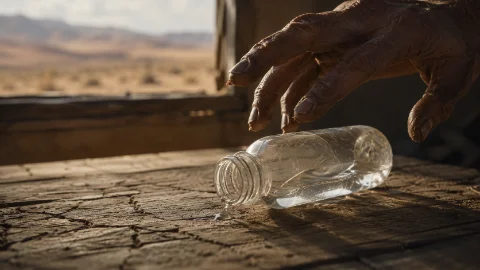
Let the scarce resource dictate the culture. If water is the scarcity, then water shapes the greetings, the crimes, the status symbols, the rituals. The wealthy are the ones who can waste it. The gravest insult is to spill it. Marriages, alliances, and betrayals all flow from access to it. When the missing resource visibly organizes society, the reader understands its power without a single line of explanation. The world itself testifies to the antagonist's dominance.
Be specific about the mechanics too. Vague scarcity is weak scarcity. The reader needs to understand the real rules. How long does the food last. What exactly happens when the water runs out. How is the resource acquired, stored, defended, and lost. This specificity is not dull bookkeeping. It is what makes the threat concrete and believable, and it gives the reader the information they need to feel the tension in their gut rather than just their head.
Balancing Pressure With Breathing Room
A story that is nothing but relentless deprivation can wear the reader down until they stop caring, and a numb reader feels no tension at all. Scarcity works best when it is not the only note in the story.
Give your characters moments of relief and even abundance, however brief. A found cache. A shared feast before the lean months. These moments do more than pace the story. They raise the stakes, because now the reader knows exactly what fullness feels like and dreads its loss all the more. They also keep the characters human, reminding the reader of the ordinary joys that scarcity is stealing. Contrast is what gives deprivation its meaning. You cannot feel the weight of an empty table if you never saw it full.
A Simple Exercise to Try Today
Take a scene from your work in progress and attach a dwindling resource to it, something the characters need and are quietly running out of. Do not make it the subject of the scene. Let the conversation and action proceed as normal, but keep the shrinking supply humming in the background, shaping small gestures and unspoken worries. Read it back and notice how much tension has crept into an ordinary moment. That quiet pressure, felt but rarely named, is scarcity doing its work as a living antagonist.
Readers have met countless human villains, and many of them blur together. What they do not forget is the slow, remorseless pressure of a world running out, the empty tank, the last can, the number ticking toward zero. When you write scarcity as a character, you give your story an antagonist that is always present, impossible to defeat, and capable of revealing the very best and worst in the people fighting to survive it.
So the next time your story needs a force to push against your characters, look past the obvious villain. Sometimes the most unforgettable antagonist is not someone your characters can fight at all. It is simply the thing they cannot afford to lose, growing scarcer with every page.