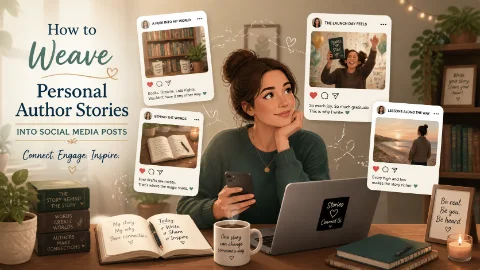
Personal author stories can make your social media presence feel more human, more memorable, and more trustworthy. For indie authors, this matters because readers often connect with the person behind the book before they decide to buy. When you share the right story in the right way, your posts stop feeling like promotion and start feeling like connection.
The good news is that you do not need dramatic life events to make this work. A small moment, a quiet realization, or a simple writing struggle can become powerful content if it is told with honesty and purpose. The key is learning how to shape personal experiences into posts that feel natural and relevant.
Start With a Real Moment
The best author stories usually begin with something real. It might be the day you finished your first draft, the moment you doubted your work, or a memory that inspired one of your characters. You do not need to search for something huge. You just need a moment that carries emotion.
Once you have the moment, ask what changed in it. Did you learn patience, confidence, courage, or clarity. That shift is what gives your story meaning. Readers do not only respond to events. They respond to transformation, even in a small form.
Keep the Story Focused
A social media post is not the place for every detail of your life. It works best when the story is focused, clear, and easy to follow. Think of it as a short scene, not a full chapter.
You can structure the post in a simple way. Begin with the moment, add a feeling or challenge, share the insight, and end with a connection to your writing life. This keeps the post readable while still giving it emotional weight. If the post takes too long to get to the point, readers may scroll past before the message lands.
Connect It to Your Books
Personal stories become stronger when they point back to your work. A memory from childhood might explain why you write certain themes. A struggle with rejection might show why your protagonist fights so hard. A place you loved might have inspired the setting of your novel.
This connection matters because it helps readers understand your books on a deeper level. They are not just seeing an update from an author. They are seeing the creative roots of your story world. That gives your posts more meaning and gives your readers a reason to care.
Use a Conversational Tone
The most effective personal posts sound like a person speaking to another person. They do not feel overly polished or forced. They feel honest, warm, and easy to read.
Write as if you are telling a friend what happened and why it mattered. Then trim anything that feels repetitive or heavy. The goal is not perfection. The goal is connection. A conversational tone helps readers feel like they know you, which makes your author brand feel more approachable.
Turn One Story Into Multiple Posts
One personal story can give you content for more than one platform. You can use it as a short caption, a carousel, a newsletter note, or a longer blog post. This makes your content work harder without requiring you to create something entirely new each time.
For example, a memory about finishing a manuscript after many revisions can become a reflective Instagram post, a Facebook update, or a thread about persistence. You can also expand it later into a blog post about writing resilience. Repurposing stories saves time and keeps your content consistent across channels.
Invite Reader Connection
A personal story becomes more engaging when it opens the door for readers to respond. You can end with a question, a reflection prompt, or a gentle invitation to share their own experience. This turns your post into a conversation rather than a broadcast.
For example, if you write about a time you almost gave up on a project, you might ask readers whether they have ever pushed through a difficult creative season. That simple invitation can increase comments and make your audience feel included. People remember how a post made them feel, and participation helps create that feeling.
Share With Purpose
Not every personal story needs to be posted. The most useful stories are the ones that support your brand, your books, or your relationship with readers. Before posting, ask whether the story adds value, builds trust, or deepens understanding of your work.
It is also important to protect your boundaries. You can be open without sharing everything. Sometimes the strongest stories are the ones that suggest emotion without exposing private details. Selective honesty often creates a better balance between authenticity and comfort.
A Simple Formula to Follow
If you are unsure how to start, use this simple structure:
- Open with a specific moment.
- Share the emotion or challenge.
- Reveal the lesson or shift.
- Connect it to your author journey or book.
- End with a question or invitation.
This structure keeps your posts clear and purposeful. It also helps you avoid turning a personal story into a random thought. When you have a repeatable format, writing social content becomes much easier.
Weaving personal author stories into social media posts is one of the best ways to make your content feel alive. Readers want more than updates. They want to understand the voice, values, and real person behind the books they love. When you share stories with honesty and direction, you create posts that feel memorable and meaningful.
For indie authors, this kind of storytelling can support both connection and promotion at the same time. It helps your audience see your creative journey while also strengthening your brand. Over time, those small stories build trust, and trust is one of the most valuable parts of author marketing.