I bought my first copy of British Vogue in 1977 (the cover: the model Jerry Hall biting into a green jelly), and I still remember the feeling of opening it. The pages seemed to carry another world, a world of dreams, one made of colour, fabric, imagination, and possibility.
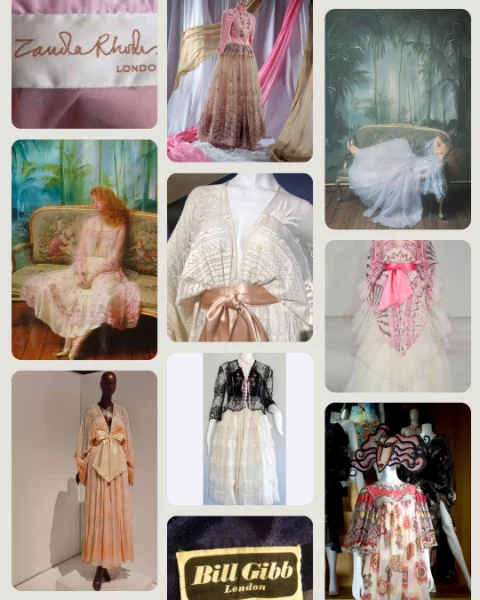
I did not know then that a magazine could become a doorway. I only knew that the clothes spoke to me. They were not just garments. They were characters. They had drama, humour, softness, confidence, and secrets. Among the designers who caught my attention were Zandra Rhodes and the late Bill Gibb, two British names whose work helped shape the way I came to see fashion.
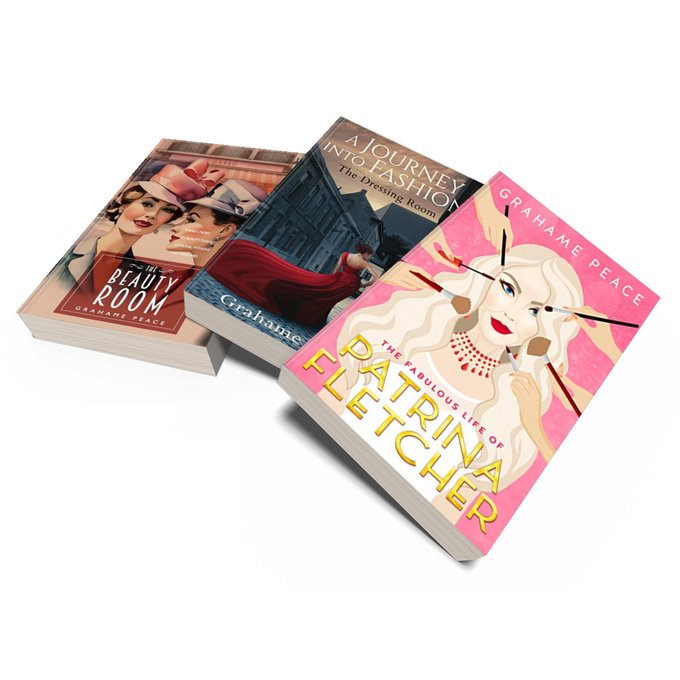
That single issue began a love affair with fashion that has never left me. It followed me through the years, through changing trends and personal taste, and eventually into my own writing. It inspired three books of fashion fiction: A Journey into Fashion (The Dressing Room), The Beauty Room, and The Fabulous Life of Patrina Fletcher, all collected from the journey that began for me in those Vogue pages almost 50 years ago.
The first Vogue that changed how I saw clothes
There are magazines you read, and there are magazines that stay with you. My first British Vogue belonged to the second kind.
In 1977, Britain was alive with style contradictions. Glamour sat beside rebellion. Romance met punk. Designers played with print, shape, texture, and history. Fashion did not feel tidy or obedient. It felt expressive.
The issue I bought featured clothes by British designers of the day, including Zandra Rhodes and Bill Gibb. For someone beginning to fall in love with clothes, it was a revelation. These designs did not simply follow the body. They told stories around it.
I saw that fashion could create a mood before a word was spoken. A dress could suggest a party, a heartbreak, a family secret, a new life. A sleeve could have attitude. A print could carry memory. A hemline could change how a person walked into a room.
That was the beginning of my understanding of fashion as language.
It also taught me something that later became central to my fiction: clothes are never only clothes. They can reveal desire, fear, ambition, class, rebellion, longing, or reinvention. They can hide a character as much as they can announce one.
Why Zandra Rhodes made colour and prints feel fearless
Zandra Rhodes brought a kind of joyful boldness to fashion that was impossible to ignore. Her work made colour feel alive. Her prints had movement, wit, and confidence. They did not whisper from the fabric. They sang.
What struck me most was the freedom in her designs. They seemed to reject the idea that elegance had to be quiet. They celebrated the decorative, the theatrical, and the handmade.
Her influence on my writing comes through in the way I think about visual detail. I am drawn to scenes where clothes carry emotional weight. A vivid scarf, a printed dress, a sweep of colour in a dressing room mirror. These are not background details. They help build the atmosphere of the story.
In fiction, a garment can do what a long explanation cannot. It can show a character’s confidence returning after disappointment. It can show someone performing a version of themselves they do not quite believe in. It can show joy, even when the character has not admitted to feeling it.
Zandra Rhodes helped me see that fashion could be playful and serious at the same time. That sense of freedom has stayed with me.
Why Bill Gibb made romance feel dramatic
Bill Gibb offered a different kind of enchantment. His clothes often carried romance, but not in a fragile way. They had depth, richness, and theatrical presence. They seemed to belong to women with histories, secrets, and strong inner lives.
There was something storybook about his designs, yet they did not feel childish. They could suggest another era while belonging very much to their own. Layers, texture, pattern, and shape came together to create clothes with character.
When I looked at his work, I felt the drama of transformation. Fashion became a way of stepping into another role, not falsely, but truthfully.
That idea sits close to the heart of fashion fiction. Many stories in the genre are about change. A character may enter a boutique, a workroom, a beauty room, or a glamorous social world and find herself altered by what she sees and wears. The clothing does not perform the whole transformation, but it gives the story a visible sign of it.
Bill Gibb’s influence helped me understand the emotional power of romance in fashion. Not romance as sentimentality, but romance as atmosphere. A dress can carry expectation. A coat can make an entrance. A beautifully made garment can give a scene a sense of ceremony.
In my own books, I often think about how clothes create inner weather. A character may feel exposed, protected, admired, or out of place because of what they are wearing. That emotional response can move a scene forward.
How fashion became fiction for me
My love of fashion did not stay neatly on the page of a magazine. Over time, it became part of how I imagined stories.
The world of fashion offers everything a novelist needs:
ambition and insecurity
beauty and pressure
reinvention and rivalry
craft and commerce
glamour and private doubt
public image and hidden truth
Fashion is a natural setting for fiction because it is both intimate and visible. Clothes touch the skin, yet we wear them in front of other people. They belong to the private self and the social self all at once.
That tension fascinates me.
In a fashion story, a dressing room can become a place of confession. A beauty room can become a space where masks are applied and removed. A glamorous life can glitter on the outside while hiding uncertainty underneath.
Those ideas helped shape my three books of fashion fiction.
The Dressing Room grew from my fascination with transformation. A dressing room is a small, enclosed space, yet it can hold huge emotion. People step inside with one version of themselves and step out with another, or at least with the hope of becoming another.
The Beauty Room allowed me to explore appearance, confidence, and the rituals that surround how people present themselves. Beauty can be pleasure, performance, protection, or pressure. It can be generous and creative, but it can also ask difficult questions.
The Fabulous Life of Patrina Fletcher gave me the chance to look at glamour from a closer range. A fabulous life is often more complicated than it appears. The shine is part of the story, but so are the choices, sacrifices, and private moments behind it.
Together, these books became my own Journey into Fashion, a phrase that feels right because fashion has never been a passing interest for me. It has been a route into character, setting, memory, and imagination.
The link between magazine pages and character creation
Looking back, I can see how much that first Vogue taught me about character before I fully understood it.
A fashion photograph invites the viewer to ask questions. Who is this person? Where are they going? What happened before the picture was taken? What will happen after? Why this dress, this pose, this expression, this room?
When I write, I often begin by seeing a character visually. I may picture the cut of a jacket, the colour of lipstick, the way someone fastens a necklace or smooths a skirt before entering a room. These small actions can reveal more than dialogue.
A character who dresses with precision may be seeking control. A character who clings to an old coat may be holding on to the past. A character who buys something wildly unlike her usual style may be standing at the edge of change.
Fashion gives the writer a set of visible clues. The challenge is to make them meaningful rather than decorative.
The designers who first inspired me showed that clothing could have a point of view. Zandra Rhodes gave me colour, print, courage, and playfulness. Bill Gibb gave me romance, richness, and drama. British Vogue gave me the stage on which all of that could be seen.
From Vogue to Fiction: How Zandra Rhodes and Bill Gibb Sparked My Fashion Journey is more than a title for me. It is a truthful line through my creative life.
Why British fashion mattered to my imagination
The designers I discovered in that magazine felt close enough to be real and dazzling enough to be aspirational. They were part of British fashion, with all its eccentricity, tradition, defiance, and wit.
British fashion has often had a love of contradiction. It can be romantic and rebellious, polished and strange, elegant and mischievous. That mixture appealed to me then, and it still does.
Zandra Rhodes and Bill Gibb both showed how strongly a designer’s voice could be. Their work did not feel anonymous. It had identity and an imaginative quality.
That is something I value in fiction too. A novel should have its own texture. It should feel as if a particular person made it, with a particular eye for the world.
Fashion helped me trust that. It taught me that style is not decoration added at the end. Style is part of the meaning.
The journey that began with one issue
When I think about that first copy of British Vogue, I think about beginnings. Not grand beginnings, but quiet ones. A purchase. A page turned. A young imagination catching fire.
I could not have known in 1977 that those fashion pages would stay with me for a lifetime. I could not have known that Zandra Rhodes and Bill Gibb would help shape not only my taste, but also the way I would later write about women, beauty, ambition, and transformation.
Yet that is what happened.
Fashion gave me a way to look at the world. Fiction gave me a way to extend it. Between the two, I found a creative path that still feels full of possibility.
My books, A Journey into Fashion (The Dressing Room), The Beauty Room, and The Fabulous Life of Patrina Fletcher, all owe something to that first spark. They carry my belief that clothes can change the mood of a room, reveal a hidden self, and turn an ordinary moment into the start of a new story.
One magazine began the journey. Two remarkable designers helped light the way. The love affair with fashion continues.