I used to think I read diversely. I had authors from different countries, books with protagonists of various backgrounds, a few translated works. But when I looked honestly at my shelves, the majority of names were still white, still from a handful of English-speaking countries, still telling stories that felt safe and familiar. The gaps weren’t intentional, but they were real.
Then I joined an indie book club that prioritised diverse indie authors, and everything shifted. I read a self-published fantasy rooted in West African mythology. I read a contemporary romance featuring a protagonist with a chronic illness, written by an author who shared that experience. I read a thriller set in Mumbai that refused to explain itself to a Western gaze. Book after book, I felt my reading world expand, and I felt a quiet grief for all the years I’d spent in a narrower literary lane.
The truth is, traditional publishing has long struggled with genuine representation. The gatekeepers have been, historically, a homogenous group, and that homogeneity has shaped what stories reach the mainstream. But indie publishing doesn’t ask for permission. BIPOC indie writers, LGBTQ+ authors, disabled storytellers, and voices from every margin have built thriving careers outside the traditional system. They’ve found readers hungry for inclusive self-published books that reflect the full, glorious, complicated spectrum of human experience.
Here are fifteen diverse indie authors you should be reading right now. Their books have moved me, challenged me, and made my reading life infinitely richer.
15 Diverse Indie Authors Who Deserve a Place on Your Shelf
Each of these authors is self-published or published through a small independent press. Their work spans genres, continents, and identities. This isn’t an exhaustive list, it’s a starting point, a doorway.
1. Amara Okafor (Fantasy)
The hook: Okafor writes sweeping fantasy epics rooted in Nigerian cosmology, where gods walk among mortals and ancestral memory is a literal magic system. Her Children of the Dust trilogy is an emotional, visually stunning journey through grief, power, and belonging. I finished the first book at 2 a.m. and immediately ordered the sequel.
2. Diego Muñoz (Literary Fiction)
The hook: Muñoz writes quiet, devastating novels about queer Latinx life in the American Southwest. His prose is spare and luminous, and his characters, often caught between cultures and generations, are drawn with aching tenderness. The River Remembers is one of the most beautiful novels I’ve ever read, indie or otherwise.
3. Priya Nair (Romance)
The hook: Nair writes warm, witty contemporary romances featuring Indian diaspora protagonists navigating love, family expectations, and their own ambitions. Her novels are joyfully specific, you’ll crave chai and samosas by chapter two, and her banter sparkles. The Wedding Planner’s Second Chance is a perfect weekend comfort read.
4. Jamal Thompson (Thriller)
The hook: Thompson pens relentless, socially conscious thrillers that explore race, justice, and corruption in modern America. His debut, Blind Corners, follows a Black journalist investigating police misconduct in a small Southern town, and the tension never lets up. It’s propulsive and deeply human.
5. Yuki Tanaka (Science Fiction)
The hook: Tanaka writes cerebral, emotionally resonant sci-fi that blends Japanese aesthetics with questions of identity and technology. The Paper Garden imagines a future where memories can be cultivated like bonsai trees, and the result is meditative and unforgettable. This is speculative fiction at its most poetic.
6. Grace Okonkwo (Contemporary Fiction)
The hook: Okonkwo’s novels explore the lives of British-Nigerian women navigating dual identities with grace, humour, and heartbreak. Half a Sky follows three generations of women in one London family, and her ability to hold joy and sorrow in the same paragraph is extraordinary.
7. Raúl Castillo (Horror)
The hook: Castillo writes visceral, atmospheric horror steeped in Mexican folklore. His novel The Tooth Collector uses the myth of La Llorona to explore grief, motherhood, and intergenerational trauma. I read it with every light on and still couldn’t stop.
8. Zara Ahmed (Young Adult)
The hook: Ahmed writes YA contemporary novels about Muslim teens falling in love, fighting for their communities, and figuring out who they want to be. Her books are full of warmth, humour, and aching authenticity. Hijab and Heartbreak is a standout tender, funny, and deeply real.
9. Elijah Park (Mystery)
The hook: Park writes whip-smart mysteries featuring a Korean-American detective in Chicago. His novels are procedurally sharp but emotionally rich, delving into identity, family loyalty, and the immigrant experience. The Eighth Ward kept me guessing until the final chapter.
10. Laila Hassan (Memoir/Essays)
The hook: Hassan’s self-published essay collection, Threads of a Wandering Heart, explores displacement, belonging, and the search for home as a Somali woman living across three continents. Her voice is lyrical, unflinching, and deeply wise. This book felt like a long conversation with a brilliant friend.
11. Theo Vasquez (Romantasy)
The hook: Vasquez blends romance and fantasy with a queer, Latine sensibility that feels fresh and electric. His Sunfire Covenant series features magic-wielding rebels, slow-burn love, and a world where chosen family is just as powerful as ancient prophecy. These books are pure, addictive joy.
12. Mei-Lin Chen (Historical Fiction)
The hook: Chen writes meticulously researched historical novels that centre Chinese voices often erased from Western history. The Silk Merchant’s Daughter traces a family through the fall of the Qing Dynasty, and her ability to render intimate lives against sweeping historical backdrops is masterful.
13. Kwame Asare (Speculative Fiction)
The hook: Asare’s Afro-futurist novels imagine African futures that are complex, hopeful, and unapologetically bold. The Drone King is a political thriller set in a Lagos of the near-future, and his worldbuilding is so rich I could taste the street food and feel the harmattan wind.
14. Sarah El-Masry (Women’s Fiction)
The hook: El-Masry writes about Arab women navigating love, faith, and independence with nuance and emotional depth. Olive Branches follows a Lebanese-British woman returning to Beirut to confront a past she fled, and it’s both tender and fiercely honest.
15. Isaiah Washington (Literary Horror)
The hook: Washington merges Southern Gothic tradition with Black American spiritual practices to create horror that is both terrifying and transcendent. The Root Doctor’s Lament is a haunting exploration of generational trauma and healing, written in prose that sings like old hymns.
Why Diverse Indie Voices Are Thriving Outside Traditional Publishing
The authors on this list share a common thread: they’ve chosen to publish independently, often after encountering doors that wouldn’t open in the traditional world. Some were told their stories were “too niche.” Others were asked to tone down cultural specificity or straight-wash queer relationships. Rather than compromise, they built their own paths.
The result is a body of inclusive self-published books that is more vibrant, more honest, and more varied than anything a single boardroom could produce. Diverse indie authors are proving that stories don’t need institutional approval to find their audience. They need only courage, craft, and readers willing to step beyond the bestseller lists.
How to Find and Support Diverse Indie Authors
Building a reading life rich in diverse voices takes a little intentionality. Here’s what works for me.
Follow hashtags like #DiverseIndieBooks, #BIPOCIndieAuthors, and #OwnVoicesIndie on Instagram and TikTok. These communities are active and generous with recommendations.
Use StoryGraph’s filter tools. You can search for books tagged “BIPOC author,” “LGBTQ+ author,” “disabled author,” and more, then filter by “independent publisher.” It’s a powerful way to discover new voices.
Support indie bookshops that champion diverse presses. Many independent bookshops curate collections specifically highlighting marginalised authors, including self-published and small-press titles.
Leave reviews. Reviews are oxygen for diverse indie authors. A few sentences on Amazon, Goodreads, or StoryGraph can meaningfully boost a book’s visibility.
Request indie books at your library. Library acquisitions are a powerful form of support that costs you nothing.
Join our Indie Reading Community. We regularly spotlight BIPOC indie writers and other marginalised voices, share themed reading lists, and host buddy reads of inclusive books. It’s a space where discovering new perspectives feels like a shared adventure, not a homework assignment.
The Shelf That Changed Me
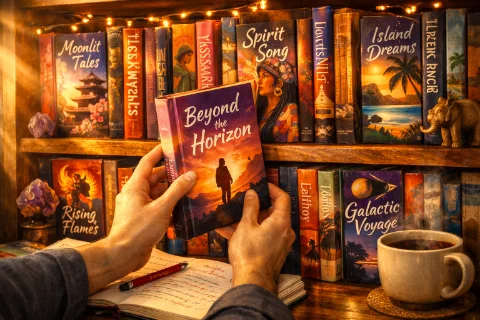
The first shelf on my bookcase now holds the books that broke my reading life open. They’re a mix of genres and styles, but they share one quality: each one taught me something I didn’t know I needed to learn. They introduced me to laughter that felt like my own, grief that mirrored histories I’d never lived, and joy that expanded my understanding of what fiction can do.
Diverse indie authors gave me that shelf. Their inclusive self-published books built a library inside me that’s broader, kinder, and truer. I’m still adding to it, and I hope I never stop.
Now I want to hear from you: Which diverse indie author changed the way you read? Whose book made you see the world differently, feel more deeply, or finally feel seen yourself? Share their name and the book in the comments. Let’s build a living, growing directory of voices that deserve to be shouted from every rooftop or at least from every reading nook.