When you are building a narrative that feels less like a manufactured product and more like a secret passed down through generations, the standard three-act structure often feels too rigid. Traditional outlines force a straight line. Unconventional stories, especially those dealing with complex archetypes and moral ambiguity, require maps that loop, twist, and deepen.
Here are three structural outlining methods designed for crafting stories that live in the beautiful, murky grey areas of the human experience.
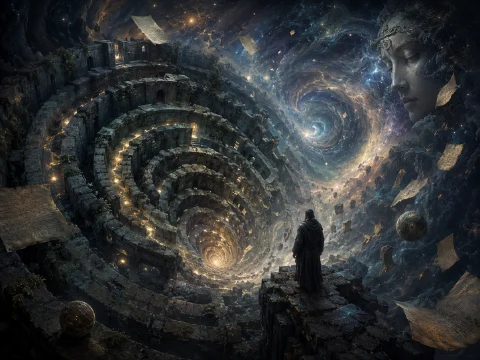
1. The Labyrinth (The Spiral Method)
Instead of moving a character from point A to point B, the Labyrinth method moves them from the outer edge to the center.
- The Concept: The protagonist repeatedly confronts the same core moral ambiguity or trauma, but from different angles and deeper levels of understanding each time.
- The Execution: You plot the story in concentric circles. Each loop represents a phase of the story where the character faces a variation of their central conflict. The closer they get to the center, the more surreal, dangerous, and intensely personal the obstacles become.
- The Result: This method mimics the way memory and deeply ingrained flaws actually work. It creates a psychological narrative where progress is measured by internal revelation rather than physical distance.
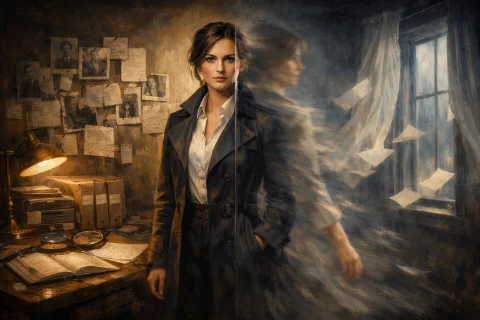
2. The Braided Cord (Interwoven Timelines)
Folklore rarely tells one story at a time. It weaves the past, the present, and the mythic together to create something that feels entirely organic.
- The Concept: You select two or three distinct narrative threads. These could be different generations of a family, different perspectives on the same surreal event, or a parallel myth that echoes the main plot.
- The Execution: Outline each thread completely on its own. Then, weave them together, looking for thematic intersections rather than chronological sense. A bitter betrayal in a past timeline should be placed right next to a moment requiring absolute trust in the present timeline.
- The Result: This creates that ancient feeling of inherited wisdom. It allows you to explore the depths of human nature across time, showing how complex traits and archetypes repeat, mutate, and survive through generations.
3. The Mosaic (Vignette Plotting)
For stories that refuse to follow a continuous sequence of cause and effect, the Mosaic method offers absolute freedom and embraces the power of the unsaid.
- The Concept: The narrative is built from fragmented scenes, dreamscapes, and isolated moments that do not connect linearly.
- The Execution: You draft core scenes as independent pieces. These scenes are shards of a much larger picture. You then arrange and rearrange them based on emotional resonance rather than a timeline. A scene of intense, cold logic might be placed right next to a scene of childhood whimsy to create a jarring, surreal contrast.
- The Result: The reader must actively participate in piecing the story together. This creates a haunting, unforgettable reading experience perfectly suited for narratives that thrive on unresolved mysteries and deep subtext.