A novel with only one storyline can work, but most novels that stay with readers long after the last page have more going on beneath the surface. Subplots are part of what creates that depth. They give secondary characters room to breathe, add layers to your themes, and create the kind of narrative texture that makes a fictional world feel real rather than constructed.
But subplots can also be one of the biggest structural problems in a manuscript. A subplot that wanders, that has no connection to the main story, or that simply stops without resolution is worse than no subplot at all. It pulls reader attention away from the story that matters and then offers nothing in return.
The difference between a subplot that enriches a novel and one that derails it comes down to intention. Strong subplots are not added to make a story longer or more complex. They are added because they serve the main story in a specific, identifiable way.
This guide covers how subplots work, what they need to accomplish, and how to write them so they make your main story stronger rather than weaker.
What a Subplot Actually Is
A subplot is a secondary storyline that runs alongside the main plot. It has its own characters, its own conflict, and its own arc, but it exists in relationship to the main story rather than independently of it.
That last point is the one most worth holding onto. A subplot is not a second story. It is a story that serves another story. If you could lift your subplot out of the novel and publish it separately without losing anything from the main narrative, it is not functioning as a subplot. It is functioning as a distraction.
Effective subplots are woven into the main story so tightly that removing them would damage the whole. They reflect on the central conflict, develop the protagonist in ways the main plot cannot, or deepen the thematic argument the novel is making. Often they do all three at once.
The Functions a Subplot Can Serve
Before you add a subplot to your novel, it helps to know what job you need it to do. Subplots tend to serve one or more of the following functions.
Developing the protagonist: The main plot puts your protagonist under external pressure. A subplot can put them under a different kind of pressure, one that reveals something about who they are that the main conflict cannot reach. A character who is brave in battle but struggles to be honest with someone they love is more fully drawn than one we only see in the context of the main story.
Exploring the theme: If your main plot is about justice, a subplot might explore what happens when justice fails, or what mercy costs. The subplot does not need to repeat the theme. It needs to interrogate it from a different angle, which makes the thematic argument of the novel richer and less simplistic.
Creating contrast: A subplot that ends happily while the main plot ends in loss creates contrast that deepens the emotional impact of both. A subplot with a darker resolution alongside a hopeful main story works the same way. The contrast between storylines can do more emotional work than either storyline could do alone.
Raising stakes: When a subplot involves a character or relationship that the protagonist cares about, the main plot's stakes become personal in a new way. What happens in the subplot can make the cost of failure in the main story feel more concrete and more real.
Managing pacing: A subplot gives the writer somewhere to go when the main plot needs to breathe. Cutting away from a moment of high tension in the main story to check in with a subplot character can build anticipation rather than releasing it, so that when you return to the main plot, the reader is even more invested.
Knowing which of these functions your subplot is meant to serve helps you make decisions about how much space to give it, when to cut to it, and how to resolve it.
How Subplots Relate to the Main Story
There are a few different relationships a subplot can have with the main plot, and understanding them helps you see whether your subplot is doing real work.
The mirror subplot reflects the main story's central conflict or theme in a different context. If the main story is about a character learning to trust again after a betrayal, a mirror subplot might follow a secondary character navigating a different kind of trust breakdown. The two stories illuminate each other. What one character does right, the other gets wrong. What works for one fails for the other. The reader begins to understand the theme not through statement but through comparison.
The contrast subplot works against the main story rather than alongside it. While the protagonist is struggling, someone else is succeeding, or vice versa. This contrast is not just decorative. It highlights the specific nature of the protagonist's struggle and the particular choices they are making.
The complication subplot introduces elements that make the main story harder. A secondary character's needs create demands on the protagonist at the worst possible moment. A subplot relationship puts pressure on the main plot's central relationship. The subplot does not just comment on the main story; it actively interferes with it.
The support subplot gives the protagonist resources, allies, or understanding that they carry into the main story. The subplot's resolution feeds directly into the protagonist's ability to face the main climax.
Most effective subplots combine more than one of these relationships. A subplot that mirrors the theme, complicates the main plot, and also develops a secondary character is doing a lot of valuable work.
The Subplot Arc
A subplot needs its own arc. It has a beginning, a middle, and an end. If it simply trails off, or if it is resolved in a single scene without any real development, it will feel underdeveloped and readers will wonder why it was included.
The subplot arc does not need to be as fully developed as the main plot. A subplot arc can be smaller and simpler, but it needs the same basic elements: an inciting event that starts the subplot, escalating tension or development, and a resolution that feels earned.
The subplot's resolution should land before the main plot's climax in most cases. This is a structural principle that has a practical reason behind it. In the final act of a novel, reader attention narrows to the main conflict. Trying to resolve a subplot at the same time as the main climax splits that attention and dilutes both resolutions. Closing the subplot first frees the reader to focus on what matters most in the final pages.
There are exceptions. Sometimes the subplot and main plot converge at the climax deliberately, with the subplot's resolution being what makes the main plot's resolution possible. When this is handled well, it is one of the most satisfying structural moves in fiction. But it requires careful planning so that both threads land with full force rather than competing for the reader's attention.
How Many Subplots Does a Novel Need
There is no fixed answer, but there are some useful principles.
A shorter novel can usually support one or two subplots without feeling crowded. A longer, more complex novel might carry three or four, especially if it has a large cast of characters who each need room to develop.
What matters more than the number is the integration. Three tightly woven subplots that each serve a clear purpose are easier to follow than two loosely connected ones that keep losing their thread. Before adding another subplot, ask whether the ones you already have are fully developed and clearly connected to the main story.
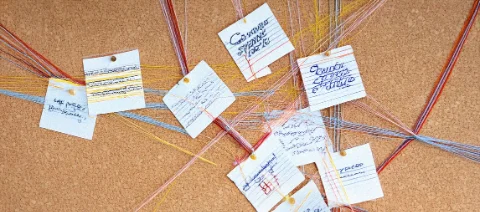
It also helps to track your subplots across the manuscript. Make a simple list of each subplot, the scenes it appears in, and what changes in each scene. If a subplot disappears for fifty pages and then reappears without explanation, readers will have forgotten it and will be momentarily confused. Subplots need enough presence throughout the story to stay in the reader's awareness.
Common Subplot Problems and How to Fix Them
The subplot has no connection to the main story. This is the most fundamental problem. If you cannot explain in one or two sentences how the subplot relates to the main plot or the main theme, it is not earning its place. Either find the connection and make it explicit in the text, or cut the subplot entirely.
The subplot takes over. Sometimes a subplot becomes more interesting to the writer than the main story, and it starts getting more page time and more energy. Readers can feel this shift and it confuses them about what they are actually reading. If your subplot is more compelling than your main plot, that is a signal worth taking seriously. Sometimes it means the subplot is actually the story you should be writing, and the current main plot should be repositioned.
The subplot drops and never returns. Readers invest attention in every storyline you introduce. If a subplot disappears midway through the novel without resolution, that investment goes unrewarded. Always follow through on the storylines you open. If you cannot find a satisfying resolution for a subplot, that is a sign it may not belong in the novel.
The subplot characters feel thin. Secondary characters who carry subplots need enough development to be believable and interesting, but they do not need the same depth as the protagonist. Give them a clear desire and a clear obstacle. Give them a voice that is distinct from the other characters. That is usually enough for a subplot character to feel real.
The subplot resolution is not earned. A subplot that gets resolved too easily or too conveniently disappoints readers the same way a main plot does. The resolution needs to feel like a natural outcome of the choices the characters made and the pressure the story put them under.
The Relationship Between Subplot and Theme
Theme is one of the places where subplots do their most important work, and it is often the least consciously managed.
When a novel has a strong central theme, the subplots should be in conversation with it. They do not need to argue the same point. In fact, the most interesting subplots often argue a complicating or opposing point, forcing the novel to hold more than one idea at once.
If your main plot argues that loyalty is worth any cost, a subplot that shows what loyalty destroys complicates that argument in a way that makes it more honest and more interesting. If your main plot argues that love requires vulnerability, a subplot that shows a character choosing self-protection and paying for it deepens the same point from the other direction.
Think of your subplots as part of a thematic conversation rather than a repetition of the main thematic statement. The more angles that conversation can hold, the more resonant the novel will feel.
Weaving Subplots Into the Main Story
The practical challenge of subplot writing is integration. A subplot that sits in its own separate sections, appearing in a cluster of scenes and then disappearing while the main plot continues, never fully merges with the story. It feels appended rather than woven in.
Strong subplot integration means that the subplot and main plot affect each other throughout the novel. A development in the subplot changes something for the main plot character. A crisis in the main plot sends ripples into the subplot. Characters from the subplot appear in main plot scenes and vice versa.
This kind of integration requires some planning. You need to know your subplot well enough to think about where it intersects with the main story and what those intersections change. That does not mean you have to outline everything before you start writing. But when you revise, paying attention to how the two storylines are interacting is one of the most useful things you can do.
The places where your subplot and main plot cross are often the most interesting moments in the novel. They are worth finding and developing deliberately.
Subplots in Series Fiction
For writers working on a series, subplots carry additional weight. A subplot that begins in book one might not resolve until book three. A secondary character introduced in a subplot might become a main character later. The choices you make about subplots in early books shape what is possible in later ones.
This does not mean every subplot in a series needs to span multiple books. Standalone subplots that open and close within a single book are fine, and they help readers feel a sense of completion even when the main series arc is ongoing.
What series writers need to be careful about is introducing subplots they do not have a plan for. In a standalone novel, an unresolved subplot is an oversight. In a series, an unresolved subplot can become a promise the writer made to the reader and eventually forgot to keep. Track your subplots across books the same way you would track them within a single manuscript, and be intentional about which ones you are carrying forward.
A Final Note on Subplot Purpose
Every subplot you write should be able to answer one question: what would be lost from this novel if this subplot were removed?
If the honest answer is nothing, the subplot does not belong in the book. If the answer is a specific thing, a thematic dimension, a character relationship, a piece of pacing that the main story cannot provide, then the subplot is doing real work.
Write subplots with that question in mind from the beginning. Not as an afterthought, not as a way to fill space, but as a deliberate structural choice made in service of a story that needs them.
The best subplots are invisible in the sense that readers do not experience them as separate from the main story. They experience them as part of what makes the novel feel complete. That is the goal worth working toward.