
Indie Books. Real Authors. Real Readers.

Discover books, follow authors, and join a community that reads.

Home Don Schofield
Don Schofield

Don Schofield

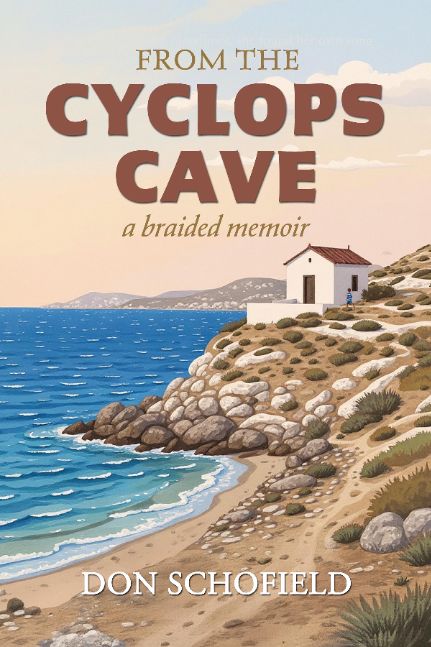
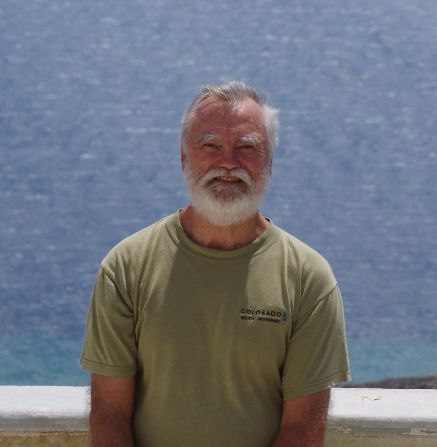
Born in Nevada and raised in California, Don Schofield is a graduate of CSU, Sacramento (MA, 1978) and University of Montana (MFA, 1980). A resident of Greece for over four decades, he has taught literature and creative writing at American, British and Greek universities, and traveled extensively throughout Europe, the Middle East and farther afield. Fluent in Greek, a citizen of both his homeland and his adopted country, he is the editor of the anthology Kindled Terraces: American Poets in Greece (Truman State University Press), and has published six books of poetry in the U.S., the first of which, Approximately Paradise (University Press of Florida), was a finalist for the Walt Whitman Award, and a more recent collection, In Lands Imagination Favors (Dos Madres Press), reached the final round for the Rubery Book Award (UK). His poems and translations have been nominated for a Pushcart Prize and shortlisted for the Greek National Translation Award. He is a recipient of, among other accolades, the Allen Ginsberg Award (US) and the John D. Criticos Prize (UK). His most recent books are A Different Heaven: New and Selected Poems (Dos Madres Press), Wherever the Sweet Breeze Blows (Kelsay Books), a translation of a recent work by the noted Greek poet Liana Sakelliou, and From the Cyclops Cave: A Braided Memoir (Open Books). He lives with his companion Aleka in both Athens and Thessaloniki.

https://weeklyhubris.com/the-minds-ear-belonging-the-voices-of-women/

The article explores how listening to the voices of women—from Homer’s Eidothea and Penelope to the biblical Hagar—has shaped my sense of belonging, identity, and home. It braids literary analysis with persona poems to show how these female figures help me as a writer to confront exile, paternal absence, and the fragility of selfhood.
Inside the Mind - Don Schofield

Don Schofield
  • From the Cyclops Cave uses a “braided” structure. What drew you to this way of putting your narrative together? How does it mirror the weaving together of past and present in your life?
    From the start I wanted to avoid a conventional linear structure. I felt the appropriate form for a memoir, at least my memoir, was one that allowed for moving back and forth between past and present, child and adult. Ever since I started writing poetry (in my mid-twenties) I’ve been reflecting back on my turbulent childhood and early adult years, wondering how I survived them, and what impact those years have had on my present way of doing things—both functional and dysfunctional. And as an expat I’ve been braiding cultures, American and Greek, ancient and modern, for over four decades now. So to me a braided structure just seemed natural.
  • The memoir juxtaposes a turbulent childhood in California with a contemplative adult life in Greece. How did these two landscapes shape you in different ways?
    One of the things that truly amazed me when I first came to Greece was how landscapes here, especially in central Greece, echoed the landscapes of my best childhood years, in California’s San Joaquin Valley. Touring Greece at 26, I was again riding buses between rows of towering eucalyptus trees, past orchards and vineyards, produce spilling out from roadside fruit and vegetable stands, whole families on tractors rumbling along the dirt shoulder. The warmth and raucousness of the Greeks reminded me of that Italian foster mother and Cherokee foster father I lived with for a few years in Fresno. In Greece I also found myself immersed in the landscapes I first encountered as a boy in Bible stories and Greek myths. “Real shepherds minding their flocks, real fishermen mending their nets,” as I write in the memoir.
  • View More