In the realm of high fantasy and folklore, the concept of fostering a child is stripped of any modern sentimentality. When a mortal family enters an agreement to raise a fae child, or when they surrender their own infant to the fair folk, they are not engaging in an act of community charity. They are entering into an ironclad legal relationship known as fae fosterage. Governed by ancient statutes and blood contracts, this practice carries significant risk, shifting the cosmic balances between the mortal realm and the supernatural courts.
The Logic of the Trade
Fae fosterage is never a random act of kidnapping, despite how it is often framed in human ghost stories. It is a highly structured transactional arrangement. In traditional folklore and worldbuilding lore, the courts initiate fosterage for two primary reasons: political insurance and cultural preservation.
For the Seelie or Unseelie nobility, placing a high-born fae child within a mortal home acts as a strange form of diplomatic security. Fae magic is inherently tied to the natural world, but it can become stagnant without fresh, mortal perspectives. By raising a fae child among humans, the fair folk inject an element of chaotic mortality into their lineage.
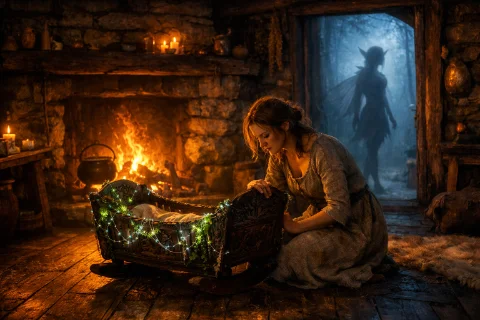
Conversely, when the fae take a human child into the courts, it is often to fulfill a debt. A desperate farmer might trade their unborn second child for a winter of supernatural warmth and abundant harvests. The moment the agreement is spoken aloud, the hearth becomes a legal boundary, and the child becomes property of the court.
The Currencies of the Contract
A fae fosterage contract does not rely on gold or printed currency. The fair folk deal exclusively in biological, emotional, and magical commodities.
The primary currency exchanged in these deals is the essence of growth. When a human family fosters a fae child, the child draws nourishment not just from bread and milk, but from the ambient warmth of the household's emotions. If a home is filled with genuine love and joy, the fae child thrives, growing beautiful and powerful. However, this domestic warmth acts as a literal fuel source. Over time, the human foster parents may find themselves growing listless, emotionally hollow, and physically exhausted, as the supernatural infant slowly siphons away the psychological vitality of the hearth.
For the human child raised in the fae courts, the currency is obedience and transformation. To survive the toxic beauty of the fae realm, the child must consume fae sustenance, which slowly rewrites their mortality. They exchange their human aging process for a prolonged, agonizingly slow youth, trading their true name for a titles of servitude within the court's hierarchy.
The Breaking of the Foster Bond
Every fosterage contract carries a definitive end date, usually specified by a hyper-literal trigger condition rather than a calendar date. A contract might end when the child sheds their first tear of genuine sorrow, or when the hearth fire naturally goes out on a midwinter night.
Returning a child after the fosterage period is the most volatile stage of the transaction. A human child returned to the mortal world after decades in the courts is fundamentally broken. They speak in riddles, can no longer digest human food, and spend their remaining days staring at the wood line, completely detached from human society.
Similarly, when the fae reclaim their own youth from a mortal home, they leave behind a permanently altered family. The foster parents are left with an empty nest that feels unnaturally cold, a lingering magical debt if they failed to follow the exact rules of rearing, and the haunting realization that the child they loved was merely an accountant balancing a cosmic ledger.