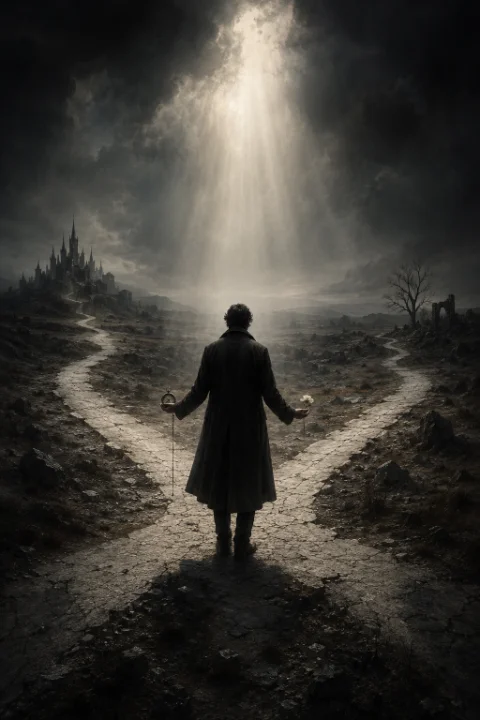
In stories of survival, apocalypse, war, or horror, characters are often pushed into situations where every option carries a terrible cost. These moments are sometimes called the survivor’s calculus. The character must weigh lives, values, relationships, and their own sense of self, knowing that whatever they choose will change them forever.
Writing these scenes well is one of the most powerful ways to create tension and reveal character. When done poorly, they can feel manipulative or overly dramatic. When done with care, they become the emotional and moral heart of the story.
Why Impossible Choices Matter
Easy choices rarely reveal much about a character. When a character must decide between two bad outcomes, readers see what they truly value. These moments expose priorities, fears, and hidden strengths or weaknesses that might otherwise stay hidden.
They also create lasting consequences. A choice made in a moment of crisis can ripple through the rest of the story, shaping relationships, self-perception, and future decisions. This gives the narrative weight and momentum.
In dystopian, post-apocalyptic, and horror stories especially, these choices often explore what it means to remain human when survival demands inhuman actions.
Techniques for Writing Powerful Impossible Choices
Make both options feel genuinely terrible.
If one choice is clearly better or less painful, the tension disappears. The best impossible choices force the character to sacrifice something meaningful either way. This could be a life, a relationship, a moral belief, or a part of their identity.
Show the internal calculation.
Let readers see the character thinking through the options. This does not need to be long internal monologue. It can happen through hesitation, physical reactions, or fragmented thoughts. The key is showing that the character understands the weight of what they are deciding.
Focus on the emotional cost.
The aftermath of the choice is often more powerful than the decision itself. Show how the character lives with what they did. Guilt, numbness, justification, or quiet grief can all be compelling reactions.
Tie the choice to the character’s core values.
The decision should feel personal. A character who values family might make a very different choice than one who values justice or self-preservation. These differences make the decision feel specific to that person rather than generic.
Avoid easy heroism or villainy.
The most interesting characters do not always make the “right” choice. They may act out of fear, love, exhaustion, or self-interest. Allowing moral complexity makes them feel more human.
Use the environment and stakes to raise pressure.
Time limits, the presence of other characters, and worsening conditions can force the decision without feeling artificial. The world itself becomes part of the calculus.
Examples That Handle These Moments Well
Many powerful stories in survival, dystopian, and horror genres are built around characters facing terrible choices. The best ones do not treat these decisions as simple plot points. Instead, they use them to explore what characters are willing to lose and what they become afterward.
These stories often stay with readers because the choices feel earned and the emotional consequences feel real.
Common Pitfalls
One frequent mistake is rushing through the decision. When a character makes a life-altering choice too quickly or without visible struggle, readers may not believe it or feel its impact.
Another risk is using impossible choices only for shock value. If the decision does not connect to the character’s deeper needs or the story’s themes, it can feel exploitative.
Be careful not to make every choice involve death or extreme violence. Sometimes the most devastating decisions are quieter, such as choosing between two people, between truth and safety, or between hope and realism.
Finally, avoid making characters completely change after one decision. Real people often live with complicated, mixed feelings for a long time.
Practical Exercises
Take a character in your current story and place them in a situation where they must choose between two people they care about. Write the internal process and the immediate aftermath.
Rewrite a scene in which a character makes a difficult choice. First, write it so the decision feels easy. Then rewrite it so both options carry real cost. Notice what changes.
Choose a past decision your character has already made in the story. Write a short scene showing how they are still living with the consequences of that choice.
Write two versions of the same impossible choice: one in which the character acts out of love, and one in which they act out of fear. Compare how each version affects the story.
The Weight of What Remains
Impossible choices are never truly over once they are made. They continue to shape the character and the story long after the moment passes. The survivor’s calculus is not just about what a character decides in a crisis. It is about what they carry forward and how they live with the result.
When writers handle these moments with honesty and emotional depth, they create stories that feel true even in the most extreme circumstances. Readers recognize the difficulty of choosing when every path leads to loss. They feel the quiet, lasting cost of survival.
These scenes remind us that in the darkest situations, character is often revealed not by what someone gains, but by what they are willing to give up.
What impossible choices in stories have stayed with you? Which ones felt the most believable or emotionally powerful? Share your thoughts in the comments. The Indie Reading Community enjoys exploring these morally complex moments in fiction.