When we imagine the end of the world, we imagine noise. The asteroid, the mushroom cloud, the tidal wave swallowing the skyline. Apocalypse, in our heads, is loud, sudden, and cinematic, a single catastrophic moment that divides the world into before and after.
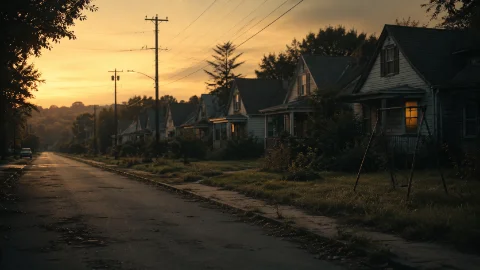
But there is another kind of ending, and it may be closer to the truth. The quiet apocalypse. The world that ends not in a single blast but in a long, slow fade, so gradual that no one can point to the day it happened. No dramatic turning point, no last stand, just a steady dimming, a series of small losses, until one day someone looks around and realizes that the world they knew is simply gone, and no one ever sounded an alarm. This is a subtler, sadder, and in many ways more disturbing story to tell. Here is how to write it.
Why a Quiet Ending Unsettles Us More
There is a strange power in the quiet apocalypse that the loud one cannot match. A sudden catastrophe, for all its horror, offers a kind of clarity. There is a clear enemy or event, a clear before and after, a clear moment to react to. It is terrible, but it is legible. We know what happened and when.
The quiet apocalypse denies us all of that. There is no single moment to point to, no clear villain, no alarm loud enough to make everyone act. The end arrives in increments too small to trigger a response, each one individually survivable, dismissable, easy to explain away. By the time the scale of the loss becomes undeniable, it is far too late to do anything about it. This mirrors something we recognize uneasily from real life, the way genuinely enormous changes often creep in beneath our notice, one acceptable step at a time.
There is also a deep melancholy to it that the loud apocalypse lacks. A sudden end is a tragedy. A slow one is a grief, drawn out over years, a long goodbye to a world that keeps almost seeming normal right up until it is not. That lingering, ungraspable sorrow, the sense of something precious slipping away too slowly to catch, is what gives the quiet apocalypse its particular haunting power.
The Mechanics of a Slow, Invisible End
Writing a quiet apocalypse requires a very different toolkit from the loud one. You are not building toward a dramatic climax. You are orchestrating a gradual, cumulative loss, and that demands patience and precision.
Make the decline gradual and deniable
The heart of the technique is that each stage of the ending is small enough to survive and to rationalize away. A resource grows a little scarcer. A species quietly vanishes. Something that used to happen every year simply stops, and people invent reasons why. Nobody panics, because at no single point is there enough cause for panic. The reader watches the characters accept each new diminishment as the new normal, and feels the dread precisely because the characters do not. The horror lives in the gap between what the reader can see accumulating and what the characters keep explaining away.
Track the loss through small, concrete details
Because there is no big event to depict, the quiet apocalypse lives entirely in details. The specific, ordinary things that disappear. A fruit that is no longer available. A birdsong no longer heard in the morning. A word that falls out of use because the thing it named no longer exists. These small, tangible losses are far more affecting than any abstract statement of decline. Choose them with care, and let their accumulation do the emotional work. A single vanished detail is a footnote. A hundred of them is the end of a world.
Use the long view of time
The quiet apocalypse unfolds over spans of time longer than a single dramatic scene. Use this. Show the same place across years. Let a character remember how things used to be and measure the present against that memory. Employ generational contrast, the young who never knew the old world and cannot understand what was lost, the old who remember and cannot make the young understand. This long view is essential, because the slowness of the ending is the whole point. The reader must feel time passing and the world quietly thinning with it.
Let normalcy persist to the very end
One of the most unnerving features of a quiet apocalypse is that ordinary life continues almost all the way through. People still fall in love, argue, work, and worry about small things, even as the larger world winds down around them. This stubborn persistence of the everyday is not a flaw. It is the truth of how humans behave, and it makes the ending far more chilling. Let your characters plan for futures that may not come, tend gardens in a dying world, and cling to routine. The contrast between their small ongoing lives and the vast quiet ending is where the story breaks the reader's heart.
Finding the Story in a Slow Ending
A quiet apocalypse poses a real narrative challenge. Without a dramatic event to drive the plot, where is the story? The answer is that the story turns inward, toward the human experience of living through a slow ending.
The drama comes from how people respond to a decline they can neither stop nor fully name. Denial, in those who refuse to see it. Grief, in those who do. Desperate meaning-making, in those who need the loss to signify something. Quiet resilience, in those who simply keep living. The tension is not will they survive the disaster, but how will they carry the knowledge of what is happening, and what will they choose to do with the time that remains. This is intimate, character-driven storytelling, and it can be deeply moving.
There is also a profound question at the center of these stories. What matters when the future is being quietly cancelled? A character who plants a tree they will never see grow, who finishes a work no one may read, who loves fully in a world that is ending, is making a statement about human meaning in the face of oblivion. The quiet apocalypse, for all its sorrow, offers rich soil for exploring what makes a life worthwhile even when the world will not last.
Balancing Melancholy With Life
The obvious danger in this kind of story is that it becomes a slow, unrelenting dirge, so steeped in melancholy that the reader sinks under the weight of it. A quiet apocalypse must be sad, but it cannot be only sad, or it loses the reader long before the world ends.
The key is to let life shine brightly against the fading. Because the everyday persists, you have room for genuine joy, humor, love, and beauty right up to the end. These are not intrusions on the melancholy. They are what give the melancholy meaning. The reader mourns the dying world precisely because you have shown them how lovely it still is, how worth keeping. A single moment of real happiness in a fading world does more to convey the tragedy than pages of gloom ever could. Let your characters laugh. Let the light be golden. The brighter the life, the deeper the loss.
A Simple Exercise to Try Today
Choose one small, specific thing in your story's world, something ordinary and easily overlooked, a particular flower, a seasonal ritual, a common sound. Now write three short passages set years apart, showing that one thing becoming rarer, then strange, then gone, while the characters barely remark on it. Do not dramatize its disappearance. Let it simply fade. Read the three passages together and feel the quiet grief that accumulates across them. That slow, almost unnoticed vanishing is the quiet apocalypse in miniature, and an entire novel can be built from the patient repetition of exactly that feeling.
We brace ourselves for the loud apocalypse, the one that announces itself and gives us something to fight. But the ending that may truly haunt us is the quiet one, the world that slips away so gently that no alarm ever sounds, that keeps looking almost normal until the moment we realize it is gone. There is no dramatic battle to lose, only a long, tender fade to mourn.
Write the quiet apocalypse. Make the decline gradual and deniable, track it through small vanishing details, take the long view of time, and let ordinary life persist in all its brightness right to the end. Do that, and you will give your reader something a thousand explosions never could. Not the thrill of catastrophe, but the aching, intimate sorrow of watching a beloved world dim so slowly that no one thought to say goodbye.