The werewolf pack is often misunderstood as a simple group of beasts driven by raw aggression. In reality, mythological and modern fantasy depictions reveal a highly structured, deeply psychological hierarchy. This society is governed by primal laws, instinctual bonds, and a brutal meritocracy. Unlike the elegant, stagnant courts of vampires, a werewolf pack is a living, breathing entity where status is constantly earned, tested, and defended.
The True Burden of the Alpha
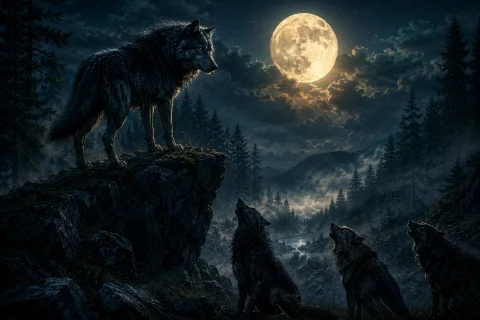
At the absolute apex of the pack stands the Alpha. While pop culture often portrays the Alpha as a tyrannical bully who rules through fear, the lore paints a far more complex picture. The Alpha is the spiritual, tactical, and physical anchor of the entire pack.
An Alpha's power is not just about winning physical fights; it is about absolute mental dominance and responsibility. The Alpha sets the territory boundaries, dictates when the pack hunts, and resolves internal disputes. In many fantasy universes, the Alpha possesses a supernatural aura that can force lower-ranking wolves to submit by mere eye contact or vocal command. However, this power comes with a heavy price. If a leader shows any sign of physical weakness, illness, or poor judgment, their position will immediately be challenged by ambitious subordinates.
The Inner Circle: Betas and Omegas
Beneath the Alpha sits a finely tuned social structure where every member has a distinct, vital role to play for the survival of the collective.
The Beta (The Enforcer): The Beta is the second-in-command and the Alpha’s most trusted ally. They act as the enforcer of the Alpha's will, managing day-to-day pack dynamics and leading hunts or border patrols. A good Beta balances the Alpha's intensity, but a disgruntled Beta is the most dangerous threat to an Alpha's reign, constantly waiting for the right moment to strike for the crown.
The Subordinates (The Pack Core): The majority of the pack consists of standard members who hunt, protect the territory, and raise the young. Their loyalty to the collective mind of the pack is absolute, driven by a shared supernatural bond that connects their thoughts and emotions during a full moon.
The Omega (The Outcast): At the bottom of the hierarchy is the Omega. Often depicted as a lone wolf or a scapegoat, the Omega holds a tragic but necessary position. They absorb the pack's excess aggression and tension, acting as a social pressure valve. Without an Omega to bear the brunt of internal frustrations, a pack risks tearing itself apart from within through infighting.
The Call of the Blood Bond
What separates a werewolf pack from human military structures is the biological and magical connection known as the pack bond. This bond is a shared consciousness that amplifies their power when they are together.
When transformed, individual thoughts blur into a collective instinct. A pack hunts as a single organism, capable of telepathic coordination and shared sensory input. This intense closeness creates an unbreakable loyalty, making the banishment of a pack member—turning them into a rogue or "lone wolf"—a punishment often considered worse than death. Cut off from the pack bond, a lone wolf frequently loses their mind, succumbing entirely to the feral beast within.