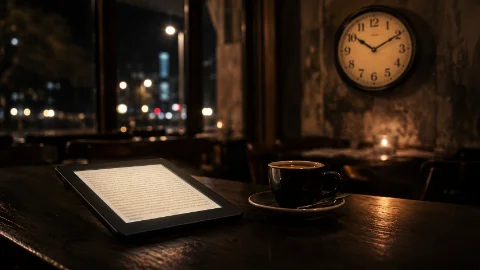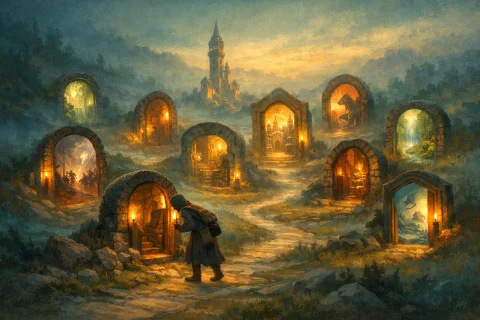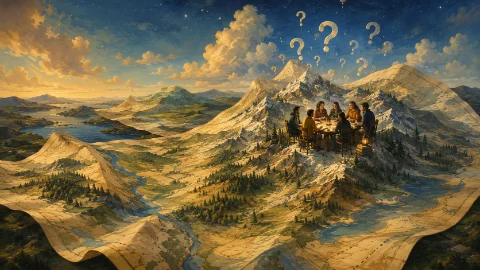
Some of the most useful pages in an indie ebook are the ones nobody mentions in the blurb. At the front, before the story begins, you may find a map: a coastline, a mountain range, a city with a name you cannot pronounce yet but will know intimately by the end. At the back, after the final chapter, you may find a set of discussion questions, written by the author for the reading groups they hope will argue about their book over coffee. Neither is an accident, and neither is filler. Maps and discussion guides are two of independent publishing's most deliberate gifts to readers, and they reveal a great deal about how indie authors think about the people on the other side of the page.
The Map Renaissance Is Happening in Indie Fantasy
Fantasy readers have loved maps since Tolkien drew Middle-earth by hand, but for decades a proper map was something of a publishing luxury, commissioned by a house's art department for its lead titles. Independent publishing quietly democratised the whole tradition. Purpose-built cartography tools such as Wonderdraft and Inkarnate put professional-looking mapmaking within reach of any author with patience, and a thriving cottage industry of freelance fantasy cartographers now works directly with indie writers, turning sketches of imaginary continents into artwork worthy of a hardback endpaper.
The result is that indie epic fantasy is now one of the most reliably mapped corners of all publishing. Authors include maps not just as ornament but as a promise to the reader: this world has been built carefully enough to survey. And because independent authors control their own files, the maps keep improving. Many now host high-resolution, zoomable versions on their websites, precisely because e-ink screens flatten fine detail, so the ebook's map is only the doorway to a much richer one online. Some go further still, adding regional maps as a series grows, so that longtime readers watch the known world literally expand from book to book.
Discussion Guides, or How Indie Authors Court the Book Club
The reading group is one of the most powerful engines in publishing. A single book club adopting a novel means eight or twelve sales, weeks of conversation, and a room full of people who will each recommend the book onward. Traditional publishers learned long ago to woo clubs with official reading guides, and independent authors, characteristically, took the idea and made it personal. Many indie ebooks now close with discussion questions written by the author themselves, warmer and more candid than a marketing department's version, sometimes accompanied by an offer that no traditional house can easily match: contact me, and I will video-call into your book club meeting.
The strategy has deep roots in indie history. When neuroscientist Lisa Genova could not find a publisher for Still Alice, her novel about early-onset Alzheimer's, she famously built its audience one book club at a time, and the book's journey from self-published passion project to bestseller and Oscar-winning film remains the definitive proof of what reading groups can do for an independent author. Discussion guides are simply that strategy, folded into the book itself: an open invitation for readers to gather around the story and keep talking after it ends.
Why These Extras Mean More in an Ebook
It is worth noticing that both of these traditions found their fullest expression in digital books, and for practical reasons. Ebook pages cost nothing, so an indie author never has to choose between a map and their printing budget. Files can be updated at any time, so a guide can be refreshed or a new map added years after publication, quietly improving the book for every future reader. Even the Kindle platform itself has leaned in the same direction, with features like X-Ray acting as a kind of built-in companion guide, letting readers look up characters and terms without leaving the page. The ebook, it turns out, is the natural home of the generous edition, and independent authors noticed before almost anyone else.
How to Make the Most of Them
A few small habits unlock these extras fully. Check the front matter of any indie fantasy before you begin, and visit the author's website if the map deserves better than an e-ink screen, because a larger version is very often waiting there. If a book moves your reading group, look for the author's discussion guide before writing your own questions, and do not be shy about reaching out; independent authors say yes to book club visits far more often than readers expect. And when you find an indie book whose map or guide shows real care, mention it in your review. Those pages took the author weeks, and almost nobody thanks them for it.
Better still, bring what you find back to a community that will appreciate it. Indie Reading Community is built around exactly this kind of reader: the one who studies the map, asks the discussion questions, and wants more people to talk to about all of it. Browse our book listings for independent fantasy, book-club fiction, and everything between, read author interviews about how these worlds get built, and join a community forum where reading groups and map obsessives are already comparing notes.