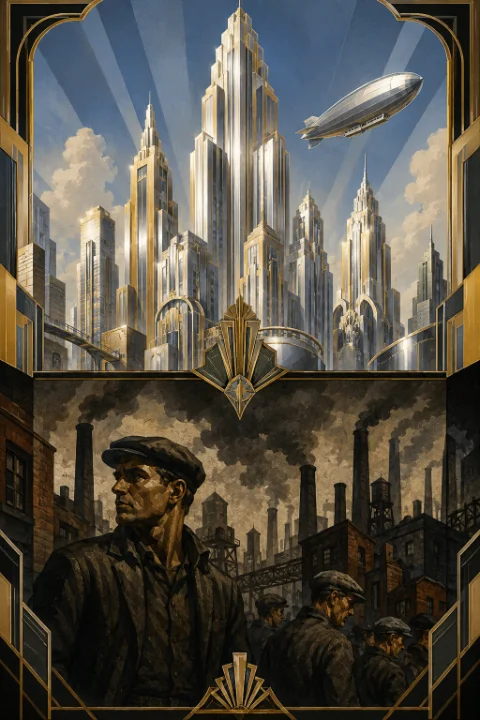
Decopunk occupies a specific historical sweet spot, taking inspiration from the decades between the World Wars. It is a world of art deco skyscrapers, streamlined locomotives, and towering rayguns, all wrapped in a shiny coat of roaring twenties optimism. Yet, this era was also defined by the Great Depression, rising totalitarianism, and intense labor disputes. For a writer, the true strength of decopunk lies in the tension between this gorgeous, high-tech aesthetic and the grim social struggles happening on the streets below.
To strike this delicate balance, you must use your setting as a direct reflection of class division. Let the wealthy elites live in sparkling chrome towers, high above the smog, traveling in luxury airships. Meanwhile, the working class populates the dark, soot-stained factories that power those very machines. By highlighting who builds the technology versus who actually benefits from it, your world-building automatically generates organic social critique and narrative conflict.
This contrast gives your characters meaningful stakes to fight for. A story about a glamorous flapper spy or a daring pilot becomes much richer when their adventures intersect with breadlines, corporate monopolies, or underground labor unions. Do not let the shiny retro-futuristic gadgets overshadow the human element. By grounding your sleek, stylized machinery in the raw social realities of the interwar period, you create a compelling alternate world that feels both breathtakingly beautiful and devastatingly real.