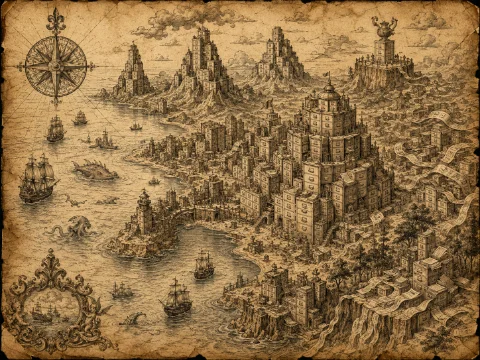
The voyage imaginaire, or imaginary voyage, is one of the oldest forms of speculative literature. Long before modern science fiction, authors used fictional islands and undiscovered continents to explore complex philosophical ideas. The true power of this genre does not lie in mere escapism. Instead, the uncharted setting acts as a clean slate, allowing the writer to isolate and exaggerate specific flaws in human nature and social systems.
To write effective contemporary satire using this framework, you must map your fictional landscape directly to real-world issues. If you want to critique modern corporate greed, you might design an island where citizens are legally classified as consumer products. If your target is political polarization, create a continent divided by an arbitrary boundary where communities fight over minor grammatical differences. The geographical isolation of the setting allows you to strip away the distractions of everyday news and focus purely on the core systemic absurdity.
The success of this approach depends entirely on maintaining a tone of straight-faced irony. Your characters should treat the bizarre customs of these new worlds with absolute seriousness. When an explorer observes a ridiculous alien bureaucracy as if it were perfectly normal, the satirical critique becomes much sharper for the reader. By guiding your audience through an impossible geography, you give them the critical distance needed to see the flaws of their own world in a completely new light.