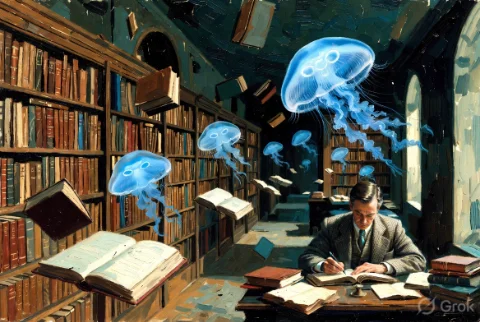
Language has two modes. The first is literal: words meaning exactly what they say. The second is figurative: words doing something beyond their face value, reaching toward meaning that literal language cannot fully capture. Fiction lives in both modes, but the best fiction uses figurative language with enough skill and intention that readers barely notice the technique. They just feel something shift in their understanding.
Metaphor, simile, and the broader family of figurative devices are not ornaments added to prose after the real work is done. They are tools for doing things that plain language cannot do: compressing complex meaning into a single image, making the abstract feel concrete, creating emotional resonance that outlasts the sentence, and revealing how a character perceives the world in a way that tells the reader who that character is.
This guide covers the main figurative devices available to fiction writers, how each works, what each does well, and how to use them with craft and restraint rather than as decoration.
What Figurative Language Is and What It Does
Figurative language is any use of words that goes beyond their literal meaning to create effect through comparison, association, substitution, or exaggeration. It is a broad category that includes metaphor, simile, personification, synecdoche, metonymy, hyperbole, and several other devices.
What all of these have in common is that they ask the reader to hold two things in mind simultaneously. A simile asks the reader to see one thing in terms of another. A metaphor asks the reader to understand that one thing is another, at least within the logic of the sentence. A personification asks the reader to experience an object or abstraction as if it had human qualities. The meaning that emerges is produced by the relationship between the two things, not by either one alone.
This is why figurative language is capable of conveying meaning that literal language struggles to reach. Some experiences, emotions, and ideas do not have direct names. They can only be approached obliquely, through comparison to something that does have a name. Figurative language is the tool for that approach.
Metaphor
A metaphor asserts that one thing is another. Not like another, not similar to another, but actually another, within the imaginative world of the sentence. "The city was a mouth that swallowed everyone who came to it." The city is not being compared to a mouth. It is being called a mouth, and the reader understands that this is a way of seeing the city that is more revealing than a literal description would be.
Metaphor works by transferring the qualities of the second thing onto the first. When we call the city a mouth, we transfer everything we know about mouths: appetite, consumption, the disappearance of what enters, the indifference of the mouth to what it takes in. The city does not acquire literally all of those qualities. It acquires the ones that resonate with what the writer is trying to say, and the reader's imagination does the work of selecting which ones apply.
This is what makes metaphor more compressed and more powerful than literal description. A single metaphor can transfer a complex set of associations in a few words. A literal description of those same associations would require several sentences and would still not produce the same emotional effect, because the figurative leap is part of what creates the resonance.
Extended metaphor is when a writer develops a single metaphor across multiple sentences, a paragraph, or even an entire work. Extended metaphors can be very effective when the vehicle, the thing being compared to, is rich enough to sustain development. They become a problem when the writer loses track of the vehicle and starts mixing it with other metaphors, or when the comparison is stretched further than it can naturally go.
Dead metaphors are metaphors that have been used so often they no longer register as figurative language. "The leg of the table," "the foot of the mountain," "the eye of a needle." These were once vivid comparisons. They have become so embedded in the language that readers process them as literal. Dead metaphors are not necessarily a problem in prose. Writers use them constantly without realizing it. The problem is when a writer uses a dead metaphor thinking it is fresh, or when they mix dead metaphors in a way that creates unintentional comic effect. "He grabbed the bull by the horns and ran with it" activates both metaphors simultaneously in a way neither was designed to handle.
Simile
A simile is a comparison that uses "like" or "as" to make the relationship between the two things explicit. "The city was like a mouth that swallowed everyone who came to it." The meaning is similar to the metaphor version, but the effect is slightly different.
Simile is more modest than metaphor. It acknowledges the comparison as a comparison rather than asserting an identity. This creates a different relationship between the reader and the image. Metaphor asks the reader to accept a transformation. Simile asks them to consider a resemblance.
In practice, neither is inherently superior. Metaphor tends to be more intense and more immediate. Simile tends to be more expansive, because the "like" or "as" invites the reader to examine the comparison rather than simply receive it. Some moments in fiction call for the intensity of metaphor. Others benefit from the more considered feeling of simile.
The most common problem with simile is the cliche. "Her eyes were like stars." "He ran like the wind." "She was as cold as ice." These comparisons have been used so many times that they carry no specific meaning. They tell the reader nothing they did not already know and create no image that has not already been created a thousand times.
The cure for cliched simile is specificity. Not "like stars" but like what specific thing, observed specifically, that produces the same effect as stars but has never been used that way before. The search for that specific comparison is where the real work of figurative writing happens.
Finding the Right Comparison
The quality of a metaphor or simile depends almost entirely on the quality of the comparison. A weak comparison produces a weak figure of speech regardless of how well it is constructed grammatically. A precise, unexpected, and true comparison produces something that stays with the reader.
Finding the right comparison is not primarily a matter of cleverness. It is a matter of honest observation. The best figurative language comes from writers who look at the thing they are describing, resist the first comparison that comes to mind because it is almost certainly a cliche, and keep looking until they find something that is both accurate and surprising.
The comparison should be accurate in the sense that the resemblance it claims is real and specific to this thing. It should be surprising in the sense that the reader would not have thought of it, but recognizes it immediately as true once they encounter it. That combination of surprise and recognition is the signature of effective figurative language.
Vehicle and tenor are the technical terms for the two parts of a metaphor or simile. The tenor is the thing being described. The vehicle is the thing it is being compared to. The relationship between the two should be clear enough that the reader can follow it, but not so obvious that the comparison feels inevitable and therefore flat.
The vehicle should also belong to the world of the character making the comparison, or to the world of the narrator. A simile that uses a reference the character would never make breaks the point of view and pulls the reader out of the fiction. A working-class character in an industrial city does not naturally compare things to celestial navigation. A scientist might. The vehicle should feel like it comes from the same consciousness as everything else in the scene.
Personification
Personification is the attribution of human qualities to non-human things. The wind mourns, the city sleeps, the house remembers, the light apologizes. These formulations take natural or inanimate phenomena and give them interiority, agency, and emotional life.
Personification works well in fiction because it creates intimacy between the character and their environment. A world that mourns or broods or waits is a world that feels responsive to the characters who inhabit it, which deepens the sense that the story's environment is not just a backdrop but a participant.
The risk with personification is that it becomes reflexive. Writers who personify everything produce a prose texture that feels relentlessly metaphorical and therefore exhausting. Personification has the most power when it is used selectively, in moments where the relationship between a character and their environment is part of what the scene is about.
Personification also has a specific relationship to the pathetic fallacy, the attribution of human emotion to natural phenomena in a way that reflects the emotional state of the character. When everything in the natural world mirrors the character's inner state, the technique becomes sentimental rather than meaningful. The best personification creates resonance between character and world without insisting that the world exists only to reflect the character's feelings.
Synecdoche and Metonymy
These two devices are related and often confused, but both are worth understanding because they appear constantly in good prose.
Synecdoche is when a part stands in for the whole. "All hands on deck" uses hands to mean the sailors who have them. "She counted heads" uses heads to mean people. In fiction, synecdoche creates specificity and compression. Instead of describing a person in general, the writer focuses on a particular feature that stands in for the whole. "The gray suit at the end of the bar ordered another drink." The gray suit is a synecdoche that tells us something about how the point-of-view character is perceiving this person: as a type, an instance of a category, not yet an individual.
Metonymy is when something closely associated with a thing stands in for the thing itself. "The White House announced" means the executive branch of the American government announced. "Hollywood has lost its nerve" means the American film industry. In fiction, metonymy creates atmosphere and efficiency. It also reveals how characters categorize the world. The associations a character uses to describe things tell the reader how that character thinks.
Both synecdoche and metonymy are figures of speech that writers use constantly without naming them. Developing awareness of them helps writers use them more deliberately and catch instances where they are creating unintended effects.
Hyperbole
Hyperbole is deliberate exaggeration for effect. "I have told you a thousand times." "This bag weighs a million pounds." "She waited for an eternity." None of these are literal claims. They are exaggerations that convey the emotional reality of an experience rather than its factual dimensions.
In fiction, hyperbole works best when it is tied to character voice. A narrator or point-of-view character who naturally thinks in hyperbole uses it to tell the reader about themselves as much as about what they are describing. The exaggeration is a window into how they experience the world, and that is often more interesting than the literal facts of the situation.
Hyperbole in narration requires some care. In a close first-person or close third-person narrative, hyperbole that belongs to the character's voice is effective. Hyperbole in an omniscient narration can tip into tonal instability if the narrator is otherwise serious and controlled. The device needs to be consistent with the overall register of the prose.
Comic fiction uses hyperbole extensively, and in that context it is a major source of pleasure. The escalating impossibility of the exaggeration becomes the joke. P.G. Wodehouse built entire novels on hyperbole deployed with perfect timing. In more serious fiction, hyperbole is more selective and tends to appear at moments of high emotion where the character's perception of scale has been distorted by feeling.
The Problem of Mixed Metaphors
A mixed metaphor is one that combines two or more incompatible images in the same sentence or passage. "We need to grab the bull by the horns and hit the ground running before the ship sails." Each of these figures of speech is coherent on its own. Together they create an image that is visual nonsense: a bull being grabbed by the horns while someone runs and a ship departs simultaneously.
Mixed metaphors tend to occur when a writer uses figurative language habitually rather than consciously. When metaphors have become so routine that the writer is no longer actually seeing the images they are creating, the images start to contradict each other.
The solution is to read figurative language visually. When you write a metaphor, see it. When you write a simile, hold the image in mind and then read what follows to check that the next figure of speech does not shatter it. This is especially important in extended metaphors, where the vehicle needs to stay coherent across multiple sentences.
Mixed metaphors in fiction occasionally appear as a deliberate comic device. A character who consistently mangles figurative language is a recognizable type and a source of controlled comedy. But this requires the writer to be more skilled at figures of speech than the character they are writing, so that the mixing is intentional and legible as such rather than accidental and confusing.
Figurative Language and Voice
One of the most important functions of figurative language in fiction is the revelation of voice. The comparisons a narrator or character reaches for are not neutral stylistic choices. They reflect the way that consciousness categorizes the world, what it has been exposed to, what it finds interesting, what it values.
A character who compares everything to music hears the world differently from one who compares everything to sports. A narrator who reaches for natural imagery as a vehicle has a different relationship to the non-human world from one who reaches for mechanical or industrial imagery. These patterns accumulate across a novel and contribute substantially to the sense of a distinctive voice.
This means that choosing figurative language for a character-driven narrative is not just about finding the most accurate comparison. It is about finding the comparison that belongs to this character, that emerges from who they are and how they see the world. A comparison that is more accurate but belongs to the wrong consciousness is weaker than a comparison that is less precise but entirely true to the voice.
Writers developing a character's voice early in a project sometimes find it useful to ask: what are the sources of imagery this character naturally draws on? What world or domain do their comparisons come from? Answering those questions creates a figurative vocabulary for the character that makes their voice consistent and distinctive.
Cliche and How to Avoid It
The enemy of effective figurative language is the cliche: a comparison that has been used so many times that it has lost its power to create any specific image or feeling. Cliches exist because they were once good figures of speech. They became cliches because they were so good that everyone used them, until they wore smooth.
The problem with cliched figurative language is not just that it is unoriginal. It is that it fails to do what figurative language is supposed to do. A cliche creates no image in the reader's mind because the reader's mind skips over it the way a speed reader skips over expected words. The comparison that was once vivid has become invisible.
Detecting cliches in your own prose is harder than it sounds because the same familiarity that makes them cliches also makes them feel natural. They are the comparisons that come easily, that appear without effort in a first draft. That ease should itself be a warning. If a figure of speech arrived without any searching, it has almost certainly been used by someone else, many times, before.
The practice of finding better comparisons is fundamentally a practice of attention. Look at the thing you are describing. Really look at it, or really remember what it feels like, sounds like, smells like. Then find the comparison that is true to that specific observation rather than to the general category of thing. That specificity is where original figurative language lives.
When to Use Figurative Language and When Not To
Figurative language is not always appropriate. There are moments in fiction where plain language is the right choice, and forcing figurative language into those moments weakens the prose rather than strengthening it.
Action sequences often benefit from plain, fast, concrete language. A scene of physical danger or rapid movement is slowed and complicated by elaborate figurative language. The reader needs to follow what is happening quickly and clearly, and a well-placed metaphor in the middle of a chase sequence can break the momentum entirely.
Dialogue rarely benefits from figurative language unless it is part of the character's established speech pattern. People in conversation usually speak plainly, especially in situations of tension or urgency. A character who speaks in elaborate metaphors in every scene quickly becomes unbelievable.
Moments of climax and revelation are often best handled with restraint. The emotional weight of a pivotal scene does not usually need figurative amplification. The events themselves, described with precision and without ornament, tend to hit harder than the same events wrapped in imagery.
Figurative language earns its place in the spaces where literal language would be insufficient: in descriptions of complex emotional states, in the establishment of atmosphere, in passages of interiority where the character's subjective experience of the world is the point, and in moments where a single image can compress a meaning that would otherwise take many sentences to convey.
Figurative Language in Revision
Most writers are better served by adding figurative language in revision than by trying to produce it in the first draft. The first draft needs to get the story down. The revision is where the prose gets refined, and that is where the search for better comparisons, fresher images, and more precise figures of speech belongs.
In revision, it helps to read the prose aloud and listen for two things: cliches that should be replaced and plain passages that would benefit from a figure of speech. The ear catches both more reliably than the eye.
When you find a cliche, do not simply replace it with another common comparison. Stop and look at what you were trying to describe. Find the specific, accurate, and unexpected comparison that belongs to this scene and this character. That search is sometimes slow. It is also where some of the best writing in any manuscript gets made.
When you find a plain passage that feels flat, ask whether the flatness is a problem or whether it is the right register for this moment. Not every flat passage needs a figure of speech. Some flat passages are flat because they are conveying information that needs to be clear rather than evocative. Add figurative language to passages where the emotional or sensory dimension of the experience is the point, and leave the purely functional passages alone.
Figurative Language as a Path to Meaning
At its deepest level, figurative language is not a stylistic technique. It is a way of making meaning that literal language cannot make. Some truths about human experience can only be approached through comparison, through the juxtaposition of two things that are not literally the same but that illuminate each other in ways that change how both are understood.
The best figures of speech in fiction do not just describe. They reveal. They show the reader something about the character, the world, or the theme that could not have been said any other way. They make the reader feel the truth of what they are conveying rather than simply understand it.
That is the standard worth holding figurative language to. Not whether it sounds beautiful, not whether it is clever, not whether it demonstrates the writer's vocabulary or range of reference. Whether it reveals something true in a way that earns the figurative leap it asks the reader to make.
When it does that, figurative language is not decoration. It is the most essential thing the sentence contains.