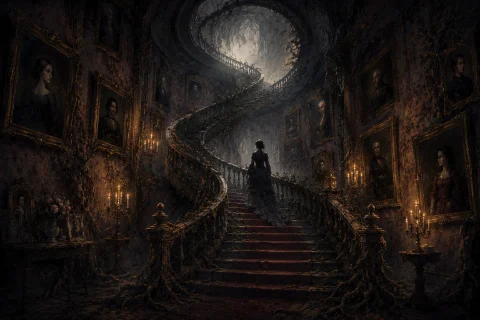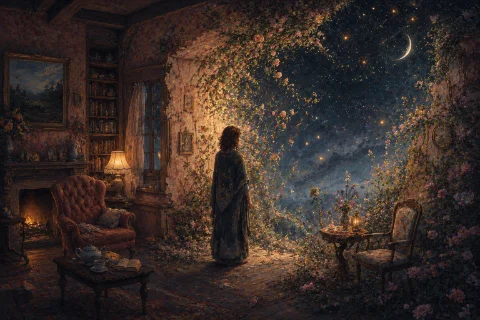
Magical realism is a strange, patient genre. It does not announce its magic with a prophecy or a chosen one. It slips a ghost into a kitchen, a levitating woman into a load of laundry, a curse into a family recipe, and then goes on describing the rest of the afternoon as though nothing unusual has happened. That quiet confidence is what separates magical realism from fantasy, and it is also what makes the genre so difficult to write well. There is nowhere to hide behind spectacle. Every sentence has to earn its place.
That difficulty is part of why magical realism has never been an especially crowded corner of independent publishing. It rewards patience over pace, and literary ambition over series momentum, which makes it a harder genre to build a fast-moving indie career around. But the authors who do commit to it, alongside the classic and contemporary writers who defined the genre in the first place, produce some of the most literary work you will find anywhere on a bookshelf. Here are ten magical realism books, independent and traditionally published alike, that read like the classics this genre was built on.
Benevolent by Devon Trevarrow Flaherty
Independently published through the author's own imprint, Owl and Zebra Press, Benevolent follows Gaby LeFevre, a Midwestern teenager determined to save the world one act of charity at a time, as her story becomes woven together with the Northwyth legends, tales of a Queen, an Angel, and a Sage that may or may not be more than stories. Flaherty earned Indie Reader Approved status and a Reader's Favorite Five Star Review for the book, and its blend of coming-of-age realism with folkloric myth is a genuine, homegrown example of magical realism built entirely outside the traditional publishing system.
The Night of One Hundred Thieves by Devon Trevarrow Flaherty
A second entry for Flaherty is well earned, since this self-published novella-turned-novel expands one of the legends first introduced in Benevolent into its own experimental, lyrical story. Shortlisted for the Manly Wade Wellman Award for speculative fiction, it leans further into myth and fable than its predecessor, and its forty-character cast and folkloric structure show an indie author willing to take the kind of formal risks that magical realism, at its best, demands.
One Hundred Years of Solitude by Gabriel García Márquez
No conversation about magical realism can avoid its defining text. García Márquez's chronicle of the Buendía family across seven generations in the fictional town of Macondo established the genre's essential move: treating the miraculous and the mundane with exactly the same narrative tone. A character ascends bodily into heaven while folding laundry, and the novel does not pause to marvel at it. That deadpan confidence, more than any single magical event, is what every writer working in this genre since has been reaching for.
The House of the Spirits by Isabel Allende
Written as a letter to her dying grandfather that grew into a novel, Isabel Allende's debut follows the Trueba family across four generations in an unnamed country that closely mirrors Chile. At its centre is Clara, a clairvoyant matriarch whose visions cannot ultimately protect her family from the violence of history. Allende's ability to hold intimate domestic detail and sweeping political upheaval in the same breath has made this one of the most enduring entry points into the genre for new readers.
Like Water for Chocolate by Laura Esquivel
Few novels use magical realism with as much sensory precision as Laura Esquivel's story of Tita, a young woman in early twentieth-century Mexico whose emotions pour, quite literally, into the food she cooks. Structured around monthly recipes, the novel turns the kitchen into the site of every major event in Tita's life, and its blend of culinary detail and heartbreak has made it one of the genre's most beloved and frequently reread classics.
Beloved by Toni Morrison
Toni Morrison's novel about Sethe, a formerly enslaved woman haunted by the ghost of the daughter she lost, uses magical realism not as decoration but as the only adequate language for trauma too large for straightforward narration. The result is a masterwork that transforms history into something as visceral as it is spectral, and it remains one of the clearest demonstrations of what magical realism can do that realism alone cannot.
The Snow Child by Eowyn Ivey
A Pulitzer Prize finalist, The Snow Child transposes a Russian folktale onto the Alaskan wilderness, following an ageing, childless couple who shape a girl out of snow one winter night, only to find a real, feral child living in the woods the next morning. Ivey's prose has the crystalline restraint the genre calls for, letting the reader sit in the uncertainty of what Faina actually is for as long as possible.
The Ocean at the End of the Lane by Neil Gaiman
Neil Gaiman is best known for full-blown fantasy, but this slim, devastating novel is his clearest work of magical realism: an adult narrator returning to his childhood home and slowly recovering memories of a strange, ancient power that lived down the lane when he was seven. Its hazy, half-remembered quality is exactly the register magical realism thrives in, where the reader is never entirely sure how much to trust what they are being told.
Pedro Páramo by Juan Rulfo
A slim, hallucinatory novel that predates and directly influenced García Márquez, Pedro Páramo follows Juan Preciado into the ghost town of Comala in search of his father, only to find the town's living and dead speaking in the same fragmented chorus. Its brevity is deceptive. Few novels have done more with fewer pages to establish the genre's central idea that the past never fully leaves.
The Immortalists by Chloe Benjamin
Set decades after four siblings visit a psychic who tells each of them the date they will die, The Immortalists asks how much of a life is shaped by prophecy and how much by the choices made in its shadow. Published in 2018, it is proof that magical realism's central questions, fate, inheritance, and the thin membrane between what we know and what we believe, are as alive in contemporary fiction as they were in the genre's earliest classics.
Where Magical Realism Still Lives
What ties all ten of these books together, independent and traditionally published alike, is a shared refusal to explain the magic away. None of them stop to justify what is happening. They simply let it sit beside the ordinary and trust the reader to feel the weight of both at once. That is a harder trick than it looks, and it is why magical realism remains one of literature's most demanding genres to write well, whether the author is working with the backing of a major publisher or entirely on their own.
If you are looking for more independent authors working in literary and genre-blending fiction, Indie Reading Community is built for exactly that kind of discovery. Browse our book listings for indie fiction that takes real literary risks, read author interviews from the writers building these worlds book by book, and join a community forum where readers are always trading recommendations the algorithms miss.