The moment I knew my TBR had become a monster was when I sat down to finally read and spent forty-five minutes just trying to choose a book. I flicked between Kindle folders, scrolled Goodreads shelves, opened a Notion database, closed it, picked up a paperback, put it down, and ended up rewatching a comfort show instead. I had hundreds of indie books I was genuinely excited about, and yet I couldn’t pick a single one.
That’s the indie reader problem nobody warns you about. The indie book world is a firehose of incredible, under-the-radar recommendations. Every day, a new hidden gem surfaces on BookTok, a friend insists you’ll adore a self-published series, a newsletter drops a deal you can’t refuse. Before you know it, your TBR isn’t a list, it’s a sprawling, chaotic archive of good intentions that leaves you paralyzed.
I needed to organize my TBR without turning reading into a second job. I wanted reading list management that felt kind, not punishing. What I landed on is a blend of digital tools, physical joy, and a mindset shift that made my TBR feel like a curated menu rather than a guilt-inducing obligation. Here’s exactly what I doa .
First, Forgive Yourself. The TBR Is a Garden, Not a Contract.
Before any system can work, I had to release the idea that I was somehow failing by not reading everything. A TBR pile isn’t a to-do list. It’s a garden of possibilities. Some seeds you plant, some you pass along, and some simply stop appealing to you after a season. That’s fine.
Indie books multiply fast because there are so many brilliant stories that find you through word of mouth. Your TBR reflects your curiosity, not your failure to keep up. Once I accepted that, I could approach reading list management as a joyful practice rather than damage control.
How I Organize My TBR Using Digital Tools (Without Losing My Mind)
1. StoryGraph – My Primary TBR Headquarters
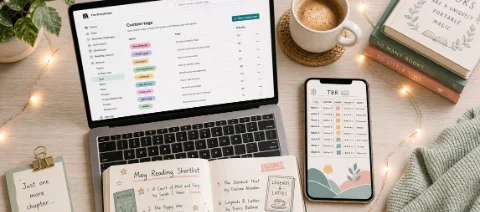
I moved my entire TBR to StoryGraph two years ago and never looked back. The custom tags are the killer feature. I use tags like:
priority-read-next (for books I want to get to within the month)
mood-cozy or mood-tense (so I can grab something based on how I feel)
owned-kindle, owned-paperback, owned-audio (to separate what I actually possess from what I merely covet)
indie-community-rec (for books recommended by our Indie Reading Community, which always jump the queue)
The filtering power means that when I sit down on a rainy Sunday, I can ask StoryGraph to show me “a short, cosy fantasy, owned, tagged priority-read-next.” It usually spits out three perfect options. That’s the antidote to forty-five minutes of paralysis.
2. Goodreads – The “Maybe Someday” Shelf
I still use Goodreads, but I’ve changed my relationship with it. My default “Want to Read” shelf is now called “Maybe Someday.” It’s a gentler name, and it signals that these books aren’t promises. I also have an exclusive shelf called “On My Radar” for indie books I’m curious about but not yet committed to. Once a quarter, I browse it and move a few into my active StoryGraph TBR. The rest can rest there, no guilt attached.
3. A Simple Spreadsheet for Series Tracking
Indie authors are prolific. They write series faster than I can read them, and I’d lose track of whether I was on book two or book four. I built a very simple Google Sheet with columns for:
Author
Series Name
Book Number
Read? (Yes/No)
Next Book Title
It takes five minutes to update and saves me from the “wait, is there a sequel?” panic. This is one of my most valuable reading list management hacks, especially if you read across multiple series simultaneously.
4. The “TBR Jar” Digital Version
When I’m feeling adventurous, I use a random number generator paired with my StoryGraph TBR export. I scroll to the randomly selected book and commit to reading at least the first 20 pages. If it hooks me, I keep going. If not, I gently remove it from the priority list without drama. This method has rescued me from ruts more times than I can count.
Physical TBR Organization That Sparks Joy
Digital tools are powerful, but there’s something deeply satisfying about a physical system. I keep a tiny TBR cart a small, rolling three-tier shelf next to my reading chair. Only books I physically own and genuinely plan to read in the next three months live there. It holds about fifteen books max. Everything else lives on my main bookshelf, spine out. The visual limit helps me feel in control.
I also maintain a reading journal where I hand-write a monthly “shortlist” of five titles I’m most excited about. No more than five. They can come from any genre, and I don’t force myself to read them all. But seeing them in my own handwriting makes them feel intentional. At the end of the month, any unread titles migrate back to the digital TBR, with zero shame.
The Sacred Art of Removing Books from Your TBR
Learning to organize your TBR also means learning to let go. This was the hardest part for me. I’d keep books on my list for years, even when my taste had completely shifted. Now I do a “TBR prune” every season. I ask myself three questions:
Does this still spark genuine curiosity? If it feels like homework, it goes.
Am I keeping this because someone else loved it? A book can be wonderful and still not be for me.
If I only had one month left to read, would I reach for this? Dramatic, but it clarifies priorities fast.
When I remove a book from my active TBR, I don’t delete it from existence. I move it to a “Retired Vibes” list. If I ever get a sudden craving for it, I can retrieve it. I almost never do, but the safety net makes pruning feel safer.
Building a Community That Respects Your TBR Boundaries
One of the sneakiest indie reader problems is social pressure. Enthusiastic friends mean well, but a dozen new recommendations every week can overwhelm even the best reading list management. In our Indie Reading Community, we’ve built a culture that normalises saying, “That sounds amazing, but I’m full right now.” We celebrate TBR prunes. We share our “next five” lists without expectation. We know that every book finds its reader at the right time, and that time doesn’t have to be right now.
If you’ve ever felt guilty about the books you haven’t read yet, you’ll find your people here. We’re all in the same beautifully chaotic boat.
Your TBR Is a Reflection of Your Love for Stories
An overflowing TBR isn’t a flaw. It’s evidence that you live with open hands for new voices, especially the indie ones that don’t get a million marketing pounds behind them. Learning to organize your TBR doesn’t mean shrinking it to a manageable number. It means building a system that lets you find the right book for the right moment without the static.
So start small. Pick one tool from this list. Create one tag. Make one shortlist. Give yourself permission to remove the books that no longer speak to you. And remember: the goal isn’t an empty TBR. The goal is a TBR that makes you excited to sit down and read.
Now I want to hear from you: What’s the most unhinged thing you’ve done to manage your indie TBR, and what’s your current “priority read next”? Drop both in the comments. Let’s share our chaotic systems and our most anticipated gems because the best indie reading list management tips always come from other readers deep in the trenches.