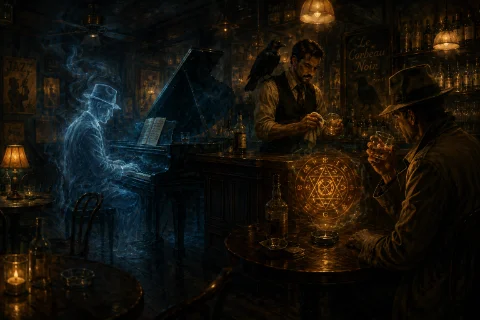
Noir gave us the tired detective, the femme fatale, the corrupt city and the case that costs the hero their soul. Historical fantasy noir takes that whole moody kit and drops it into a past era where magic is real. Suddenly the missing person case involves a demon contract. The murder weapon is a cursed relic. The witness is a ghost who will not stop lying. The genre marries the mood of classic crime fiction with the imaginative reach of fantasy, all anchored in a specific historical setting that is rendered with real texture.
What Makes Historical Fantasy Noir Different
The genre sits at a crowded crossroads. It borrows the fatalism, first-person voice and urban grit of Raymond Chandler and Dashiell Hammett. It takes the supernatural elements of gothic and occult fiction. And it grounds everything in a chosen historical period: Prohibition-era America, Weimar Berlin, Victorian London, 1940s Shanghai, medieval Constantinople. Books like Tim Powers' Last Call and Declare, P. Djèlí Clark's Dead Djinn Universe set in an alternate steampunk Cairo, and Lavie Tidhar's noir-inflected novels all sit somewhere in this territory.
Three markers define the genre. First, a real historical setting used as more than backdrop, with period detail woven into voice and worldview. Second, a noir sensibility: moral ambiguity, weary protagonists, corrupt institutions, cases that reveal rot at every level. Third, a magic system or supernatural element treated with the same matter-of-factness as a revolver or a telephone. In these books, the impossible is just another tool the guilty use to hide.
Why Readers Love It
Historical fantasy noir offers the pleasures of three genres in one glass. You get the immersive research and atmosphere of historical fiction, the imaginative freedom of fantasy, and the tight plotting and voice of noir crime. Few genres pack that much sensory and intellectual reward into a single book.
There is also the moral texture. Noir has always been about compromise, and adding magic sharpens the knife. When your detective can raise the dead but chooses not to, or can see souls but wishes they could not, every choice becomes heavier. Readers who love characters carrying real weight find plenty of it here.
Where to Start
P. Djèlí Clark's A Master of Djinn is a wonderful modern entry point, blending Cairo, magic and mystery with irresistible style. Tim Powers offers denser, stranger pleasures for readers ready to go deeper. From there, dive into indie territory, where historical fantasy noir thrives outside the reach of tidy genre categories. Independent authors are writing occult detective novels set everywhere from Prohibition Chicago to Edo Japan, often with a boldness the mainstream shies away from.