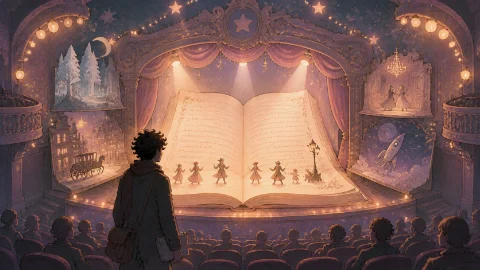
Few ideas are as seductive to a writer as the multiple world. The road not taken, the timeline that branched, the reality next door where everything went differently. Parallel worlds, alternate histories, and forking futures let us explore the tantalizing question that haunts every human life. What if things had gone another way. It is rich, resonant material, and readers love it.
It is also a structural minefield. For every story that handles multiple worlds with grace, there are many that collapse into confusion, where the reader loses track of which reality they are in, stops caring which version of a character is speaking, and finally gives up entirely. The difference between a dazzling multi-world story and an incoherent mess is not the quality of the ideas. It is the discipline of the craft. Here is how to layer fractured futures without letting your story fracture along with them.
The Central Challenge of Multiple Worlds
Before the techniques, it helps to name the specific problem clearly. When you write a single world, the reader builds one mental model and everything they read slots into it. When you write multiple worlds, you ask the reader to hold several models at once and to keep straight which details belong to which. This is a significant cognitive burden, and if you do not actively manage it, the reader's model collapses into a blur.
Worse, multiple worlds threaten emotional investment. Stakes depend on consequences, and consequences depend on permanence. If a character dies in one world but lives in another, the reader may unconsciously conclude that nothing really matters, that every loss has a backup and every choice an undo button. This dilution of stakes is the silent killer of multi-world stories. The reader stops feeling anything, because they sense that no outcome is final.
So you are fighting on two fronts at once. You must keep the worlds clear enough that the reader never gets lost, and you must keep the stakes real enough that the reader never stops caring. Every technique that follows serves one or both of these goals.
Keeping the Worlds Clear
The first front is comprehension. The reader must always know, without effort, which world they are currently in. Confusion here is fatal, so you should be almost aggressive about clarity.
Give each world a distinct signature
The most powerful tool is sensory and tonal differentiation. Each world should have its own unmistakable texture, a signature the reader recognizes instantly. It might be a dominant color, a quality of light, a recurring sound, a mood, a weather. When the reader enters a world, one or two signature details should immediately orient them, the way a key change signals a new section in music. These signatures do the work of a label without the clumsiness of one, letting the reader feel which world they are in before they consciously think about it.
Use consistent structural markers
Beyond atmosphere, give the reader reliable structural cues. Perhaps each world gets its own chapters, or its own consistent formatting, or a clear scene break with an orienting first line. Whatever system you choose, apply it consistently, so the reader learns the pattern and can trust it. Consistency is everything here. The moment your markers become unreliable, the reader can no longer use them to navigate, and they are lost. A predictable structure is not a limitation. It is the scaffolding that lets you build complexity on top.
Anchor everything to a stable point of reference
Even with multiple worlds, the reader needs one fixed star to navigate by. Usually this is a single central character or consciousness whose perspective threads through the worlds and gives the reader a consistent vantage. Everything else can shift, but if the reader always knows whose eyes they are seeing through, they will not drown. This anchor is your reader's home base, the stable point from which all the branching complexity radiates and to which it always returns.
Keeping the Stakes Real
The second front is emotional. Even a perfectly clear multi-world story fails if the reader stops caring, and multiple worlds constantly threaten to drain the stakes. You must actively defend them.
Make the worlds matter to each other
The most important principle is that the worlds cannot be independent. If what happens in one world has no bearing on the others, then you do not have one story, you have several disconnected ones, and none of them carries weight. The worlds must be entangled, so that events in one ripple into the others, so that a choice here has consequences there. When the worlds are interdependent, every action matters across the whole structure, and stakes are restored. The connection between worlds is the true subject of your story, not the worlds themselves.
Preserve consequence and cost
Guard against the undo button problem. Even if a character exists in multiple worlds, each version must be a distinct individual whose fate genuinely matters, not an interchangeable backup. A loss in one world should be a real, permanent loss, mourned as such, even if a similar character lives elsewhere. Better still, let choices carry costs that cannot be escaped by jumping worlds. When the reader feels that consequences are permanent within each reality, and that no world offers a clean escape from the others, the stakes stay sharp.
Give the multiplicity a thematic purpose
Multiple worlds should never be a mere gimmick. They should exist because your story is about something that only multiple worlds can express, the weight of choices, the roads not taken, the search for identity across possibilities, the grief of what might have been. When the structure serves a genuine theme, every world earns its place and the whole architecture feels meaningful rather than clever. The reader senses that the fracturing of the futures is saying something, and that meaning is what makes them care about navigating it.
Balancing Complexity With Readability
There is a constant temptation in multi-world fiction to add more, more worlds, more branches, more layers, until the structure becomes a puzzle so intricate that only the author can follow it. Restraint is a virtue here. The number of worlds you can juggle is limited by the number your reader can hold, not the number you can invent.
Be ruthless about necessity. Every world should earn its existence by doing something no other world does. If two realities serve the same function, collapse them into one. Prefer a smaller number of vivid, distinct, deeply developed worlds over a sprawling multitude of thin ones. A story with three worlds the reader knows intimately is infinitely more powerful than one with ten they can barely tell apart. Complexity should always be in service of clarity and feeling, never a substitute for them. The goal is not to impress the reader with how many worlds you can spin, but to move them with the ones you choose to show.
A Simple Exercise to Try Today
Take a single pivotal moment from your story, one important choice a character makes, and write two short versions of the immediate aftermath, one for each way the choice could have gone. Give each version its own distinct atmosphere and sensory signature so they feel unmistakably different. Then find one thread, an object, a feeling, a consequence, that carries across both and ties them together. That exercise contains the whole craft in miniature, distinct worlds made clearly separate through signature, then bound together through connection. Master that at the scale of two versions of one moment, and you can build it out to an entire novel.
The multiple world is one of the most powerful ideas in all of speculative fiction, a way to explore the haunting truth that every life is shadowed by the lives it might have been. But that power comes with real danger, because the same fracturing that makes these stories profound can also make them collapse into confusion and drain away all the stakes. The writers who succeed are not the ones with the most worlds. They are the ones with the most discipline.
Layer your fractured futures with care. Give each world a signature the reader knows on sight, anchor everything to a stable point of view, entangle the worlds so their fates matter to each other, and guard your stakes against the undo button. Above all, let the multiplicity mean something. Do that, and you will give your reader the rare pleasure of holding many worlds in their mind at once, never lost, always caring, and moved by the vast, branching question at the heart of it all. What if things had gone another way.