Some scenes feel technically correct but strangely flat.
The dialogue works.
The setting is clear.
The characters are doing something important.
Yet the scene still feels predictable.
One of the easiest ways to give a scene more life is to introduce contrast.
Contrast creates friction between two things that do not naturally belong together.
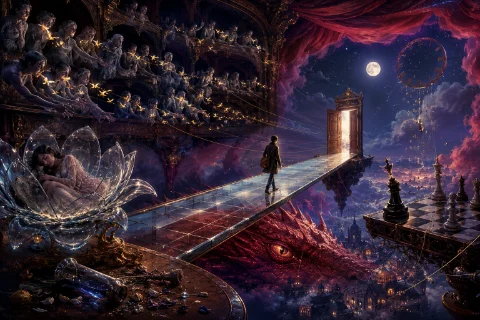
Beauty beside terror.
Humor inside grief.
Tenderness inside violence.
Silence before chaos.
Something ordinary placed beside something deeply strange.
Readers notice contrast because the human mind is drawn to difference. When two opposing emotional, visual, or narrative elements occupy the same scene, each one can make the other feel stronger.
A beautiful garden feels more beautiful when something frightening is hiding inside it.
A joke can feel funnier when everyone else in the room is deadly serious.
A quiet sentence can feel enormous after several pages of chaos.
Contrast creates energy.
Beauty Mixed With Terror
One of the strongest forms of contrast places something beautiful beside something disturbing.
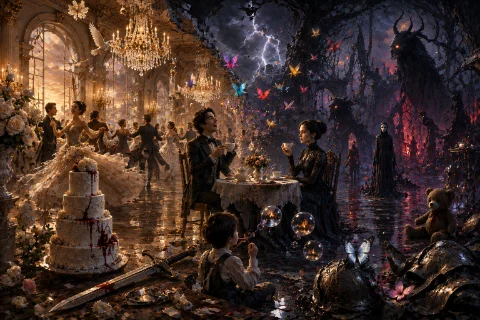
Imagine a wedding reception held beneath hundreds of glowing lanterns.
Music plays.
Flowers cover every table.
Children chase each other through the garden.
Then someone notices blood slowly dripping from the ceiling.
The beautiful setting does not weaken the horror.
It strengthens it.
The reader has already been placed inside warmth, celebration, color, and safety. The unexpected intrusion feels more disturbing because it violates the emotional environment.
This technique appears frequently in horror, fantasy, thrillers, and literary fiction because beauty and danger create a particularly powerful combination.
A monster in a dark cave is frightening.
A monster standing quietly among blooming cherry trees can be unforgettable.
Seriousness Mixed With Humor
Humor does not always destroy tension.
Sometimes it sharpens it.
Imagine two characters hiding beneath a table while armed intruders search the room.
One character whispers:
“You still owe me twenty dollars.”
The line may make the reader laugh, but the danger has not disappeared.
In fact, the humor can make the characters feel more human.
People sometimes joke when they are frightened. Humor can become a defense mechanism, a way of controlling panic, or simply a reflection of personality.
This is why serious scenes do not always need to remain emotionally uniform.
A small joke inside grief can make the grief feel more real.
A ridiculous misunderstanding during an important ceremony can make the scene more memorable.
The important thing is tone.
Humor should emerge naturally from character and circumstance rather than feeling pasted onto the scene.
Tenderness Inside Violence
Contrast can also work emotionally.
Imagine a soldier cleaning blood from another person's face with extraordinary gentleness.
Or a dangerous criminal carefully feeding a stray cat.
Or two enemies quietly sharing an umbrella during a storm.
These moments create complexity because the reader receives conflicting information.
This person is dangerous.
This person is also capable of tenderness.
The contradiction makes us curious.
Humans are rarely emotionally consistent, and fictional characters become more interesting when different sides of their personality collide.
Contrast can reveal character without explanation.
Put the Unexpected Inside the Familiar
Readers understand familiar situations quickly.
A birthday party.
A funeral.
A job interview.
A school classroom.
A first date.
A family dinner.
Because the situation is recognizable, the reader begins making predictions.
Then the writer can break one.
Imagine a funeral where the deceased suddenly receives a text message.
A restaurant where every customer is silently staring at the same empty chair.
A job interview where the interviewer asks:
“Do you remember me?”
A child's birthday party where nobody knows who invited the magician.
The scene becomes interesting because something violates the expected pattern.
Surprise often begins with expectation.
Without expectation, there is nothing to disrupt.
Contrast Between Setting and Emotion
Characters do not have to feel the way their surroundings suggest they should.
A breakup might happen during a beautiful summer festival.
A marriage proposal might occur in a hospital corridor.
Someone may receive terrible news while standing inside a cheerful supermarket filled with bright music and colorful advertisements.
This creates emotional tension.
The world continues behaving normally while the character's private reality changes completely.
That difference can make emotion feel sharper.
Instead of placing sadness inside a dark rainy night every time, try placing it somewhere painfully cheerful.
The contrast can make the sadness more intimate.
Contrast Between Dialogue and Reality
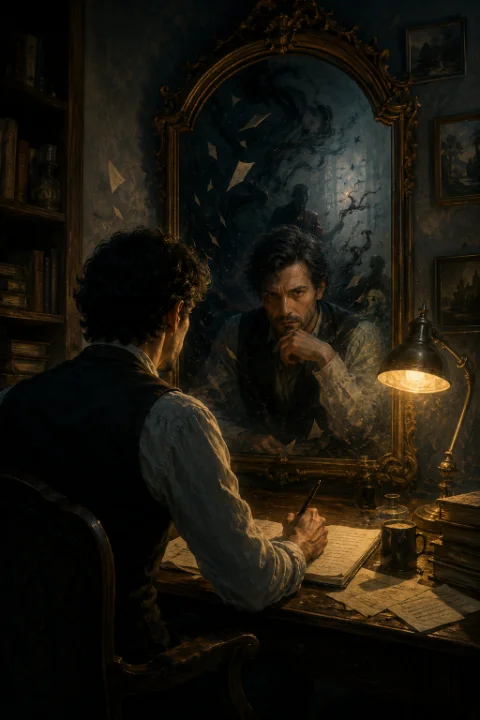
Characters can say one thing while the scene reveals another.
“This is going perfectly.”
Behind them, the kitchen catches fire.
“I don't care about him anymore.”
She has memorized his new phone number.
“Everything is under control.”
Nobody in the room believes it.
This form of contrast creates irony.
The reader sees the gap between what is being said and what is actually happening.
That gap can create humor, tension, sadness, or even dread.
Contrast in Character Pairings
Some scenes become stronger because the characters themselves are opposites.
One talks constantly.
The other barely speaks.
One believes in rules.
The other improvises.
One treats danger seriously.
The other jokes about everything.
One wants revenge.
The other wants forgiveness.
Put these characters in the same situation and the contrast automatically produces friction.
Even a simple task like driving across town can become interesting when two characters experience the journey completely differently.
Contrast turns personality into conflict.
Contrast in Rhythm
Scenes also have rhythm.
If every sentence is long, lyrical, and reflective, the prose may begin to feel smooth but predictable.
Then suddenly:
The door opened.
That short sentence can feel powerful because the rhythm changed.
The same principle works structurally.
A long quiet scene followed by sudden violence can create impact.
A frantic chase followed by complete silence can make the reader feel the absence of movement.
Contrast is not only about ideas.
It can exist in sentence length, pacing, sound, dialogue, and paragraph structure.
Give the Scene One Element That Does Not Belong
A useful writing exercise is simple.
Take an ordinary scene.
Then add one element that feels slightly wrong.
A romantic dinner.
Add a police helicopter circling overhead.
A quiet library.
Add someone laughing uncontrollably in the corner.
A family photograph.
Add one person nobody remembers.
A peaceful beach.
Add hundreds of shoes washing onto the shore.
You do not always need something supernatural or dramatic.
Sometimes the most effective contrast is subtle.
The reader simply feels:
Something is off.
That feeling creates attention.
Contrast Can Reveal Theme
Contrast can do more than make a scene exciting.
It can also deepen meaning.
A luxurious mansion surrounded by extreme poverty creates a visual argument about inequality.
A child playing beside the ruins of a war zone can emphasize innocence and destruction.
A celebration occurring immediately after betrayal can expose the difference between public appearance and private truth.
When contrasting elements reflect the story's deeper ideas, the technique becomes more than decoration.
It becomes thematic.
Avoid Randomness for Its Own Sake
Surprise is useful.
Randomness is not always useful.
If a clown walks into a courtroom for no reason, the scene may be unexpected, but that does not automatically make it interesting.
Contrast works best when the surprising element eventually feels connected to character, plot, setting, or theme.
The reader should ideally move from:
“That is strange.”
to:
“Of course. Now it makes sense.”
Unexpected does not need to mean meaningless.
Use Contrast to Make Familiar Scenes Feel New
Writers often worry that a scene has been written before.
It probably has.
People have written millions of arguments, kisses, murders, breakfasts, departures, weddings, funerals, and reunions.
Originality does not always come from inventing an event nobody has ever imagined.
Sometimes it comes from combining familiar things in an unfamiliar way.
A confession during a comedy show.
A murder investigation inside a flower festival.
A terrifying conversation spoken with perfect politeness.
A romantic moment surrounded by mechanical noise.
A villain doing something unexpectedly kind.
The familiar scene changes because the emotional ingredients have changed.
Ask: What Is the Opposite of This Scene?
When a scene feels flat, identify its dominant quality.
Is it sad?
Dark?
Romantic?
Violent?
Quiet?
Funny?
Beautiful?
Then ask:
What is the opposite of that?
You do not need to transform the entire scene.
Add a small amount of the opposite quality.
If the scene is very serious, add one absurd detail.
If it is beautiful, introduce something threatening.
If it is frightening, include a moment of tenderness.
If it is chaotic, insert sudden stillness.
If everyone expects failure, let one small thing go unexpectedly right.
The contrast often makes both sides stronger.
Scenes Pop When They Contain More Than One Feeling
Flat scenes often have only one emotional color.
Everything is sad.
Everything is scary.
Everything is romantic.
Everything is funny.
Real experiences are rarely that simple.
People laugh at funerals.
They become irritated during romantic moments.
They notice beautiful things during terrible days.
They feel fear and excitement simultaneously.
Great scenes often contain more than one emotional truth at the same time.
That complexity creates texture.
And texture creates memorability.
The Power of the Thing That Should Not Be There
Contrast is one of the most flexible tools in creative writing because it can be added almost anywhere.
To character.
Dialogue.
Setting.
Pacing.
Emotion.
Imagery.
Plot.
You do not always need a bigger explosion, a longer argument, or another twist.
Sometimes you only need one element that challenges the dominant mood.
Beauty beside terror.
Humor beside seriousness.
Tenderness beside cruelty.
Stillness beside chaos.
The expected beside the impossible.
When two different energies collide inside the same scene, the reader pays attention.
And sometimes that collision is exactly what makes an ordinary scene pop.