When writers want to create a highly emotional or beautiful scene, they often reach for the same set of well-worn phrases. These expressions might have been unique centuries ago, but today they just sound like tired, purple prose.
Using them makes your narrative feel lazy because it relies on recycled descriptions instead of fresh observation.
Overused Anatomy Descriptions
Writers often fallback on historical romance tropes when describing how characters look or react to distress.
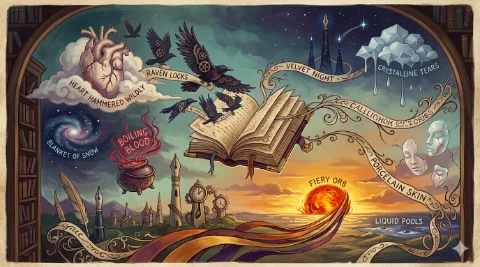
Porcelain skin: Used constantly to describe a pale, smooth, or perfect complexion.
Crystalline tears: A dramatic way to describe crying that feels fake and mechanical.
Raven locks: An overly poetic substitute for simply stating someone has black hair.
Liquid pools: Describing eyes this way usually slows down an intimate moment.
Melodramatic Emotional Cliches
When stakes get high, avoid letting your text turn into a theatrical stage play.
Heaved a sigh: Characters rarely just breathe out; they always heave a heavy sigh.
Heart hammered wildly: A default phrase for fear or excitement that loses all impact.
A single tear slipped: This specific movement is overused in quiet, sad scenes.
Boiling blood: A cliché shortcut to show anger without describing the actual behavior.
Setting and Nature Fluff
Weather and scenery are the biggest magnets for unnecessary decoration.
Fiery orb: A loud, roundabout way to say the sun is shining.
Velvet night: Using fabric textures for the sky makes the setting feel crowded.
Blanket of snow: A phrase so common that readers skip right over it.
Instead of relying on these pre-made building blocks, try to find specific details that belong uniquely to your character or world. Your writing will immediately feel more authentic.