The Hollow Echo of Pure Action
In commercial fiction, there is a heavy push to keep the plot moving at breakneck speed. Characters run from one explosive event to the next, solving puzzles and defeating enemies in rapid succession. However, for indie book lovers seeking stories that do not fit the mainstream mold, non-stop action quickly becomes exhausting.
If a scene only exists to move a character from point A to point B, it lacks a fundamental soul. Physical movement is important, but it is not a substitute for emotional progression.
What is a Chapter Theme?
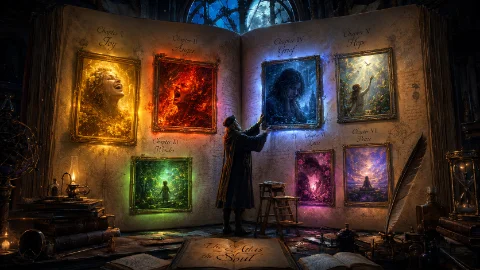
A theme is the invisible gravity holding your scene together. It is the specific emotional question or abstract concept that your characters are wrestling with while the external action unfolds.
Imagine a chapter featuring a high-stakes argument between two characters hiding in a basement. The external action is simply a whispered fight. The theme, however, might be the suffocating nature of pride or the painful realization of lost innocence.
When you apply this layer of underlying meaning, you are practicing the intentional curation of your narrative. Every piece of dialogue, every atmospheric detail, and every physical movement should secretly tie back to that central emotional core. This is how you explore the fascinating grey areas of human psychology.
Curating for Your Community
When you share a polished draft with a community of creative writers, artists, and designers, they will instantly feel the difference between a random sequence of events and a curated chapter.
A themed chapter feels like a complete, satisfying miniature story within the larger novel. It gives your prose that highly coveted quality of feeling ancient and important, like a fable passed down rather than merely typed out on a laptop. Readers who flock to discovery platforms that focus on intentional curation over algorithmic recommendations are specifically hunting for this exact level of artistic depth.
The Curation Checklist
Before you begin writing your next chapter, use this simple framework to establish your theme.
| Narrative Element | The Question to Ask Yourself | Example Application |
|---|---|---|
| External Action | What is physically happening in this scene? | A character is repairing a broken clock. |
| Internal Theme | What abstract concept does this represent? | The futile attempt to reverse past mistakes. |
| Sensory Focus | Which details support this theme? | The sound of grinding gears, the smell of old dust. |
| Dialogue Subtext | What are they avoiding saying aloud? | An apology they cannot bring themselves to make. |
By weaving a distinct theme into the architecture of every chapter, your writing will transcend simple entertainment. You will construct a deeply immersive experience that honors the intelligence of your reader and leaves a profound, lasting impact.