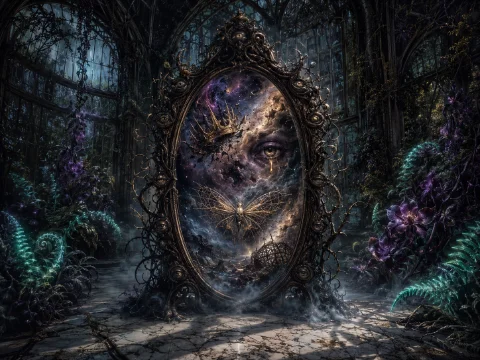
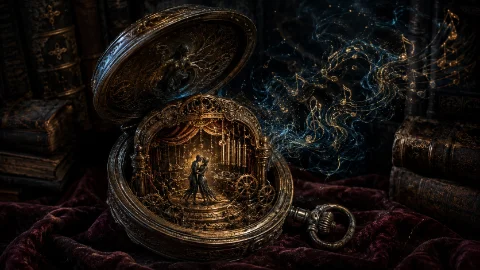
Genres become popular partly because readers know what emotional experience they are going to get.
Cozy fantasy promises warmth.
Dark academia promises obsession.
One gives us glowing cafés, found family, magical bookshops, quiet villages, tea, friendship, and low-stakes wonder.
The other gives us old libraries, elite institutions, intellectual rivalry, secrets, ambition, beauty, decay, and the dangerous attraction of knowledge.
These patterns are not weaknesses.
They are part of the pleasure.
But once readers become deeply familiar with a genre, simply reproducing the expected ingredients may not be enough.
That is where subversion becomes useful.
Subverting a trope does not mean destroying everything readers love about it.
It means understanding the promise, then changing one important assumption.
First Understand the Promise
Before subverting a genre, identify what readers actually come for.
Cozy fantasy is not just cottages and tea.
Its deeper promise is often:
Safety.
Belonging.
Recovery.
Community.
Gentle wonder.
Dark academia is not just tweed jackets and candlelit libraries.
Its deeper promise often involves:
Intellectual hunger.
Exclusivity.
Beauty mixed with corruption.
Ambition.
Identity.
Secrets.
Knowledge with consequences.
The aesthetic is only the surface.
If you remove the emotional core, you may not be subverting the genre.
You may simply be leaving it.
What Does Subversion Mean?
A trope creates expectation.
Subversion changes the expected outcome, meaning, perspective, or emotional effect.
Imagine the familiar cozy fantasy premise:
A tired adventurer leaves a dangerous life behind and opens a bakery.
The expected direction is healing, friendship, and community.
Now change one assumption.
What if the peaceful town is so emotionally healthy that the former adventurer finds it unbearable?
They know how to survive dragons.
They do not know how to survive kindness.
The story can remain cozy while exploring something less expected.
The subversion works because the original promise is still visible.
Cozy Fantasy Can Contain Unease
Cozy fantasy does not require the complete absence of darkness.
In fact, carefully placed discomfort can make warmth feel stronger.
Imagine a magical village where everybody knows one another.
Comforting.
Now ask:
What happens when somebody wants privacy?
A close community can become supportive.
It can also become intrusive.
Everyone knows when you are sick.
Everyone also knows who visited your house last night.
That does not automatically turn the story into horror.
It simply examines the other side of belonging.
Subvert the Found Family
Found family is one of the most beloved cozy fantasy patterns.
A lonely character arrives somewhere unfamiliar.
Slowly, they become part of a group.
Beautiful.
But what happens after belonging?
Maybe the group becomes too dependent on one another.
Maybe one member wants to leave.
Maybe the protagonist realizes that being loved does not mean being understood.
Maybe two members genuinely dislike each other but remain loyal anyway.
That can make the found family feel more real.
A family does not become meaningful because everyone agrees.
It becomes meaningful because the relationships survive complexity.
Make the Cozy Place Imperfect
The magical café, inn, bookshop, apothecary, or village often functions as a sanctuary.
Try giving that sanctuary a contradiction.
The enchanted bookshop remembers every book ever sold but forgets every customer.
The peaceful inn allows nobody to stay longer than seven days.
The village has no crime because everyone magically experiences each other's guilt.
The bakery produces food that recreates a person's happiest memory, but customers begin preferring the past to the present.
The setting remains whimsical.
But the magic now creates a question.
That question gives the cozy world depth.
Comfort Can Have a Cost
One powerful way to subvert cozy fantasy is to ask what must be sacrificed to preserve comfort.
Suppose a town has experienced perfect peace for two hundred years.
Wonderful.
Why?
Perhaps an ancient spell removes anger from everyone.
Now the problem becomes interesting.
Without anger, people also struggle to recognize injustice.
The town is peaceful.
But is it healthy?
This type of subversion does not reject coziness.
It asks what genuine comfort requires.
Dark Academia Has Its Own Familiar Patterns
Dark academia tends to announce itself visually.
Ancient university.
Rain.
Stone corridors.
Classical music.
Old books.
Candlelight.
Brilliant students.
A mysterious professor.
Someone is probably keeping a terrible secret.
These ingredients remain enjoyable.
But because readers recognize them instantly, writers can play with expectation.
The trick is not simply making the secret stranger.
It is reconsidering who holds power and why.
Subvert the Brilliant Outsider
A common dark academia protagonist enters an elite institution and becomes fascinated by a charismatic intellectual group.
The outsider wants access.
Knowledge.
Friendship.
Recognition.
What if the group wants access to the outsider instead?
Perhaps the apparently ordinary protagonist possesses a kind of knowledge the elite students cannot acquire through books.
Suddenly the hierarchy reverses.
The outsider is not begging to enter the circle.
The circle is quietly trying to consume them.
Make the Professor Innocent
The mysterious professor is almost too easy to suspect.
They speak cryptically.
They know obscure languages.
They disappear into locked rooms.
Naturally, something is wrong.
So what if they are genuinely trying to protect the students?
Perhaps the brilliant, ambitious students are the real danger.
Now the familiar authority structure changes.
The professor's secrecy may not conceal guilt.
It may conceal fear.
What If Knowledge Is Not the Dangerous Thing?
Dark academia often connects knowledge with obsession or corruption.
Someone learns too much.
Reads the wrong manuscript.
Discovers forbidden philosophy.
Unlocks ancient knowledge.
But knowledge itself does not have to be the danger.
What if the real danger is status?
Students may pretend to care about knowledge while actually competing for prestige.
The rare book is not powerful because of what it contains.
It is powerful because possessing it grants social authority.
Now the story becomes less about forbidden knowledge and more about the performance of intelligence.
That can feel sharply contemporary.
Beauty Can Hide Banality
Dark academia often makes corruption beautiful.
That is part of its appeal.
Marble halls.
Latin quotations.
Velvet coats.
Snow falling across Gothic towers.
Murder, but aesthetically.
A useful subversion is to reveal something painfully ordinary beneath the beauty.
The supposedly ancient secret society is mostly concerned with networking.
The terrifying ritual began as a drunken student prank eighty years ago.
The legendary forbidden manuscript contains mediocre poetry.
The glamorous intellectual rivalry is ultimately fueled by petty jealousy.
The contrast can create humor without destroying the atmosphere.
Sometimes grand darkness becomes more interesting when the motive underneath it is embarrassingly human.
Reverse the Aesthetic
You can also subvert genre visually.
Cozy fantasy usually favors warm spaces.
Dark academia favors shadow.
Try reversing them.
Set a dark academia story in a bright, modern university made of glass.
No candlelight.
No Gothic arches.
Everything is clean, transparent, and exposed.
Yet the institution is deeply secretive.
Or place cozy fantasy inside a gloomy haunted castle.
Rain forever.
Ghosts everywhere.
But the ghosts are friendly, the cursed library is excellent, and nobody has had a serious problem in centuries.
The emotional genre remains.
The visual language changes.
That can make familiar material feel fresh.
Combine Cozy Fantasy and Dark Academia
The two genres may seem opposite.
That is exactly why they can work beautifully together.
Imagine a magical university where students study dangerous subjects.
But instead of competition, the story focuses on a small group trying to create a safe intellectual community.
Or imagine a cozy bookshop located directly beside an elite magical academy.
Students come there after difficult exams.
Professors secretly attend poetry nights.
Then the owner discovers the shop itself is connected to one of the institution's oldest secrets.
Now warmth and darkness begin affecting each other.
The cozy elements give the dark world somewhere to breathe.
The dark elements give the cozy world something to resist.
Subvert Tone, Not Just Plot
Writers often think subversion must involve a giant twist.
It does not.
You can subvert tone.
A dark academia murder mystery might contain dry workplace comedy.
A cozy fantasy novel might include moments of philosophical melancholy.
A beautiful university ritual might be interrupted by someone with terrible allergies.
A terrifying magical creature might be deeply concerned about etiquette.
Unexpected tonal combinations can refresh familiar genres without changing their core structure.
Let Characters Reject the Trope
Another interesting technique is allowing characters to notice the role they are expected to play.
The retired warrior opening a tavern may discover they hate cooking.
The brilliant scholarship student may have no interest in joining the secret society.
The mysterious professor may desperately wish students would stop assuming every locked cabinet contains forbidden knowledge.
The chosen group of intellectual outsiders may simply want to graduate.
Characters become interesting when their personal desires clash with the genre's expected direction.
Ask What Usually Goes Unquestioned
The easiest place to find a subversion is often inside an assumption nobody usually examines.
In cozy fantasy:
Why does everyone want community?
Why is small-town life automatically peaceful?
Who performs the invisible labor that keeps the charming inn running?
Can comfort become avoidance?
In dark academia:
Why is elitism attractive?
Why do characters associate difficulty with intellectual value?
Who gets excluded from the institution?
Is obsession being confused with seriousness?
Does secrecy make knowledge meaningful, or merely desirable?
Questions like these can produce fresh stories without abandoning the genre.
Do Not Subvert Everything
If every expected element is reversed, readers lose the reference point.
Imagine a cozy fantasy with no warmth, no community, no comfort, and no wonder.
That is probably not cozy fantasy anymore.
Imagine dark academia without scholarship, ambition, atmosphere, secrecy, intellectual identity, or institutions.
Again, the genre may disappear.
Subversion needs something stable to push against.
Keep some promises.
Break others.
The contrast creates surprise.
Give Readers What They Want, Then Give It a New Meaning
Suppose readers want the magical café.
Give them the café.
But perhaps its enchanted drinks reveal memories people have deliberately forgotten.
Readers want the elite library.
Give them the library.
But perhaps the supposedly forbidden section is not locked to keep students out.
It is locked because the books are trying to escape.
Readers want the secret society.
Give them one.
But perhaps its greatest secret is that nobody has understood the ritual correctly for generations.
This approach preserves pleasure while creating novelty.
Trope Is a Starting Point, Not a Destination
Tropes are useful because they allow readers and writers to share expectations.
The problem comes when expectation becomes prediction.
If readers can see every emotional turn before it happens, familiarity loses energy.
Subversion restores uncertainty.
It asks:
What if the comforting thing has a cost?
What if the suspicious person is innocent?
What if the dangerous knowledge is harmless?
What if the safe place is hiding something?
What if the villainous institution accidentally contains the healthiest relationship in the novel?
These questions do not destroy genre.
They make it move.
Beyond the Trope
Cozy fantasy and dark academia both work because they create powerful emotional atmospheres.
One says:
Come inside.
You can rest here.
The other says:
Come inside.
You should probably not be here.
Both invitations are irresistible.
The opportunity for writers is to preserve that invitation while making the room behind the door less predictable.
Keep the warmth.
Complicate the comfort.
Keep the shadows.
Question what makes them attractive.
Keep the familiar tropes readers love.
Then turn one slightly.
Sometimes that small turn is enough to make an entire genre feel new again.