In the standard factory of mainstream fiction, the antagonist is often just a locked door. They exist solely for the protagonist to find the key, kick the hinges, and walk through to a tidy resolution. But when you are writing stories meant to be passed down and savored, a locked door is entirely insufficient. Your antagonist must be a living, breathing labyrinth.
To craft true narrative depth, you must step inside the antagonist's mind and furnish it with as much care, contradiction, and bizarre beauty as you do your hero's psyche. When you share your insights with your community of creative writers and artists, it is this exact level of psychological intrigue that sparks genuine conversation and peer-to-peer recommendation. Readers hunting for literature in the grey areas are desperate for antagonists who haunt them.
The Funhouse Mirror: Reflecting the Unsaid
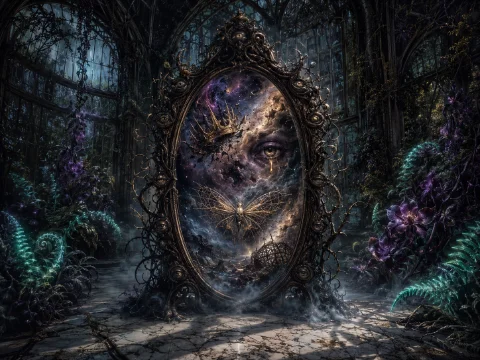
A profoundly deep antagonist does not simply oppose the protagonist. They reflect the protagonist's most deeply buried, terrifying desires. They are a funhouse mirror placed in the middle of a dark, bioluminescent forest.
If your protagonist is desperately seeking control over a chaotic world, your antagonist should not represent pure chaos. Instead, they should represent control taken to its absolute, surreal extreme. Perhaps they are a ruler who has perfectly eliminated all crime by trapping their citizens in a state of euphoric, waking slumber. The antagonist is terrifying not because they are evil, but because they have successfully achieved exactly what the protagonist secretly wants. This shared psychological root creates a magnetic, highly uncomfortable bond between the two characters.
The Architecture of Justification
No one wakes up and decides to be the villain of the story. A complex antagonist operates under a bizarre but entirely unbreakable internal logic. To write them effectively, you must understand the exact architecture of their justification.
You must locate the precise trauma or twisted epiphany that convinced them their horrific actions are actually a supreme form of grace. Imagine a sorcerer who steals the voices of children. In a shallow story, they do it for power. In a deeply psychological narrative, perhaps they do it because they once heard a prophecy that a child's song will awaken a sleeping leviathan that will swallow the world. To the antagonist, stealing voices is an act of agonizing martyrdom. They bear the hatred of the world to keep the world spinning.
When you meticulously draft this internal logic, the reader experiences a sudden, chilling moment of empathy. This is the caliber of storytelling that bypasses cold algorithms and finds a home on intentionally curated platforms like ReadIntent or IndieBookHunt. It rewards the reader's intelligence and demands emotional engagement.
The Tragedy of the Inevitable
Ultimately, the deepest psychological antagonists are tragic figures. Their defeat should not feel like a triumphant parade. It should feel like the necessary, heartbreaking felling of an ancient, diseased tree.
Because you have built them with moral ambiguity and complex justifications, their downfall forces the protagonist to sacrifice a piece of their own soul. The victory is deeply pyrrhic. By forcing your narrative to dwell in these psychologically taxing grey areas, you elevate your story from a simple sequence of events into a resonant exploration of human nature.